Tag: Dining

  • The Heart of Bali: Why Your Best Meal in Bali Won’t Be on Your Own Plate

    The Heart of Bali: Why Your Best Meal in Bali Won’t Be on Your Own Plate

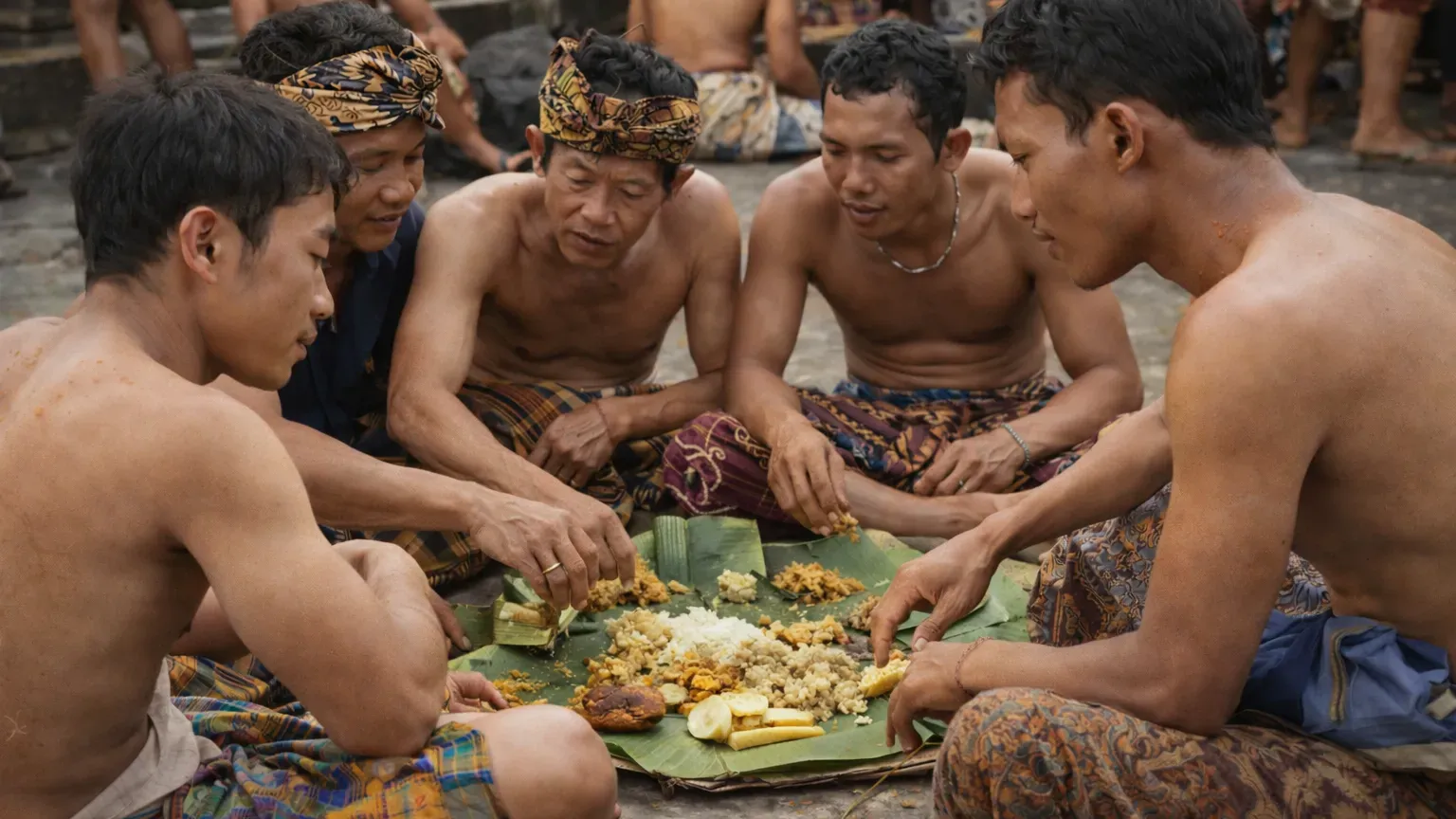
    When you think of Bali, you probably imagine golden sunsets or lush rice terraces. But as a local, if you ask me where the true soul of Bali hides, I’ll point you to a large, steaming platter of rice and spices shared between friends. We call it Megibung.

    In a world where we are often glued to our phones, even at the dinner table, Megibung is our way of pressing “pause.” It is an ancient Balinese communal dining tradition that transforms a simple meal into a powerful act of togetherness. Originating from the royal courts of Karangasem in the 17th century, this isn’t just about eating; it’s about connection.

    The Philosophy: Breaking Barriers, One Bite at a Time

    In Bali, Megibung is the ultimate “social glue.” The word itself comes from gibung, meaning “to share and care for one another.”

    When we sit down for Megibung, status and titles disappear. Everyone sits at the same level, reaching into the same giant platter (called a gibungan). It’s how we’ve kept our communities tight-knit for centuries. By sharing the same rice and the same side dishes, from the zesty Lawar to the smoky Sate Lilit, we aren’t just fueling our bodies; we are strengthening our bonds.

    For us, a meal shared is a friendship honored. And the best part? We’ve opened this tradition to you.

  • Megibung: The Ancient Balinese Art of Sharing a Plate and a Heart

    Megibung: The Ancient Balinese Art of Sharing a Plate and a Heart

    Quick Answer: What is Megibung?

    Megibung is a unique Balinese communal dining tradition originating from the Karangasem Regency. Introduced in 1692 by King I Gusti Agung Anglurah Ketut Karangasem, it involves a group of people (or even just two) eating from one shared plate (a nare, piring or nampan). More than just a meal, Megibung is a symbol of equality, brotherhood, and intimacy, where everyone eats with their hands, regardless of social status.

    A Memory Carved in Wood and Rice

    As a local born and raised in Bali, my earliest memory of “Megibung” isn’t from a grand temple ceremony or a lavish wedding. It dates back to my primary school days, trekking through the bushes with my best friend to collect firewood.

    We didn’t have much, just two kids, a bundle of wood, and the humble lunch boxes our mothers had packed. But we wouldn’t eat separately. We would spread out a leaf or use a single plate, mixing our side dishes together. To us, sharing that one plate meant we were brothers. In Bali, we believe that when you eat from the same vessel, your hearts become one.

    The Royal Roots: A Legacy of the 17th Century

    While I learned the spirit of Megibung in the forests of my childhood, the history of this tradition is quite grand. It was established around 1692 AD (or 1614 Caka) by the legendary King of Karangasem, I Gusti Agung Anglurah Ketut Karangasem.

    Historical records (from karangasemkab.go.id) suggest that the King introduced this during his military campaigns. To ensure his soldiers felt valued and unified, he sat down to eat with them from the same shared portions. By doing this, he broke the barriers of “caste” and “rank.” In that circle of food, there was no King and no servant, there were only people sharing a blessing.

    More Than a Meal: How Megibung Works

    For a traveler visiting Bali, seeing a Megibung session might look chaotic at first, but it is actually a beautifully choreographed ritual of respect.

    • The Shared Plate: Traditionally, a large mound of rice is placed in the center of a circular tray, surrounded by various Balinese delicacies like Lawar (minced meat with vegetables), Sate Lilit, and spicy sambals.
    • The Power of Hands: We don’t use spoons or forks. We use our right hands. There is something incredibly “human” about feeling the texture of the food before it reaches your mouth; it connects you to the earth and the meal in a way plastic utensils never could.
    • The Rule of Two or More: While official ceremonies usually have groups of 5 to 8 people, in my eyes, even two people sharing a single plate is Megibung. It’s the act of sharing, not the number of people, that counts.
    • Wait for the eldest/host. It is polite to wait for the oldest person or the host to take the first bite before you begin.
    • Don’t leave the circle early. Try to finish at a similar pace as the others. If you must leave, ask for permission politely.

    Why You Should Experience It

    If you visit Bali, you will see many beautiful sunsets and beaches. But to truly “taste” the soul of the island, you must try Megibung.

    In a world that is becoming increasingly digital and isolated, Megibung is a reminder of our shared humanity. It forces you to put down your phone, look the person next to you in the eye, and share a physical space. It’s a practice in mindfulness and communal joy. When you sit in a Megibung circle, you aren’t just a tourist; you are a guest at our table, a friend in our circle.

    Megibung Etiquette: A Traveler’s Guide to Sharing a Plate

    To the local Balinese, Megibung is a sacred act of brotherhood. If you are invited to join a circle, following these simple unwritten rules will show great respect for our culture:

    DO:

    • Use your right hand. In Bali, the left hand is traditionally considered “unclean.” Always scoop, mix, and eat with your right hand.
    • Wash your hands before and after. Usually, a bowl of water (kobokan) is provided. Use it, cleanliness is part of the ritual.
    • Take small portions. Start with a little bit of rice and side dishes from the side closest to you. You can always take more later!

    Dont:

    • Don’t drop leftovers back. If you’ve taken a bite of something, do not put the remains back into the shared tray.
    • Don’t talk too much while chewing. While it’s a social event, try to keep the conversation light and respectful of the food being shared.
    • Don’t “scavenge” for the best bits. Avoid picking out only the meat or your favorite parts from the center; eat what is in front of you.

    Final Thoughts

    The next time you find yourself in Karangasem or a local Balinese village, look for the word Megibung. It is an invitation to be part of a 300 years old story of peace and friendship.

    So, I have to ask: Have you ever experienced Megibung? Or perhaps, in your own culture, do you have a way of sharing food that brings people closer together? I’d love to hear your stories.

  • The Story of Lawar Bali, From Sacred Feast to Everyday Flavor

    The Story of Lawar Bali, From Sacred Feast to Everyday Flavor

    In Bali, food is never just about taste — it’s about offering, celebration, and connection. Among the island’s many traditional dishes, Lawar Bali stands as a symbol of harmony between ritual and daily life, between sacredness and simplicity.

    A Dish Born from Ceremony

    Once upon a time, Lawar was a dish reserved for grand ceremonies — the rhythmic pulse of Bali’s spiritual life. During Galungan, when families return home to honor ancestral spirits, the aroma of freshly ground base genep (a rich Balinese spice paste) would fill the air as men gathered in the family courtyard to prepare lawar.

    Lawar was also present in wedding ceremoniesmelaspas (rituals for new buildings), and other sacred celebrations. It wasn’t an everyday dish — it was a luxury, a feast that required effort, cooperation, and costly ingredients. In the past, meat was not easily available. Pigs and chickens were raised with care, often slaughtered only for significant temple days. The preparation of lawar was as much a spiritual duty as a culinary one.

    The Making of Lawar: A Ritual of Balance

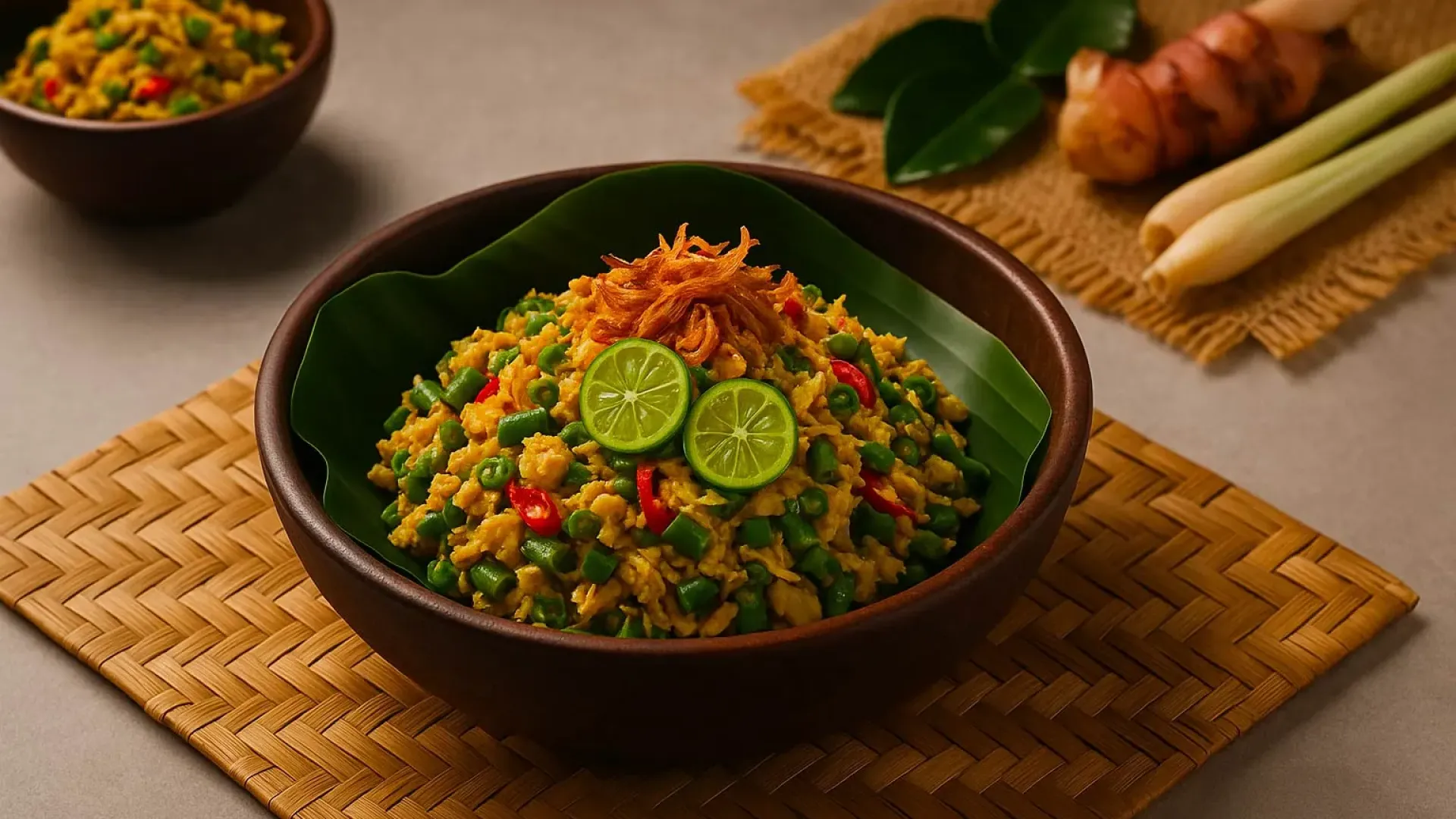
    Every ingredient in Lawar Bali carries meaning. The base genep — a blend of turmeric, galangal, ginger, garlic, shallots, chilies, and shrimp paste — forms the soul of the dish. Freshly grated coconut brings texture and sweetness, while chopped meat adds substance.

    Traditionally, there are two main types:

    • Lawar Putih (White Lawar) – pure and fragrant, made without blood, symbolizing balance and clarity.
    • Lawar Merah or Lawar Bara (Red Lawar) – vibrant and earthy, colored by freshly mixed animal blood, representing life force and strength.

    The act of mixing the ingredients — often by hand — was a communal experience. Villagers would chat, laugh, and share stories while preparing lawar. It was not merely cooking; it was a reaffirmation of kinship and cultural identity.

    From Ceremonial to Common Table

    Today, Lawar Bali has journeyed beyond temple courtyards. You can find it in roadside warung, bustling markets, and even modern Balinese restaurants. What was once sacred is now everyday — yet it still retains the essence of ritual and respect.

    The variations have also evolved. While pork and chicken remain traditional, modern tastes have brought new versions: beef lawargoat lawar, even octopus lawar (lawar gurita) found near coastal villages. Each reinterpretation keeps the spirit alive — local ingredients, local hands, and the same devotion to flavor and balance.

    Lawar Bali in Modern Cuisine

    In recent years, Lawar Bali has stepped into the spotlight of contemporary Balinese and Indonesian gastronomy. From fine dining restaurants in Ubud to fusion cafés in Canggu, chefs are reinventing lawar with creative presentations — pairing it with rice crisps, plating it as an appetizer, or even turning it into a vegan version using young jackfruit or tempeh.

    Yet, beneath the modern garnish, the essence remains: Lawar Bali continues to tell the story of tradition meeting innovation — where sacred recipes adapt, but never lose their soul. This evolution not only preserves cultural heritage but also celebrates the resilience of Balinese cuisine in a changing culinary world.

    Reflections: The Taste of Togetherness

    Eating Lawar Bali today is more than enjoying a local delicacy; it’s tasting a piece of Bali’s living heritage. Each bite carries the island’s story — of community, spirituality, and adaptation.

    In its transformation from sacred feast to everyday meal, lawar mirrors the Balinese way of life: embracing change while preserving the soul of tradition. Whether shared at a temple ceremony or a humble roadside stall, Lawar Bali remains what it has always been — a celebration of life itself.