Tag: Tilem

  • The Sacred Lunar Days of Bali: Purnama and Tilem

    The Sacred Lunar Days of Bali: Purnama and Tilem

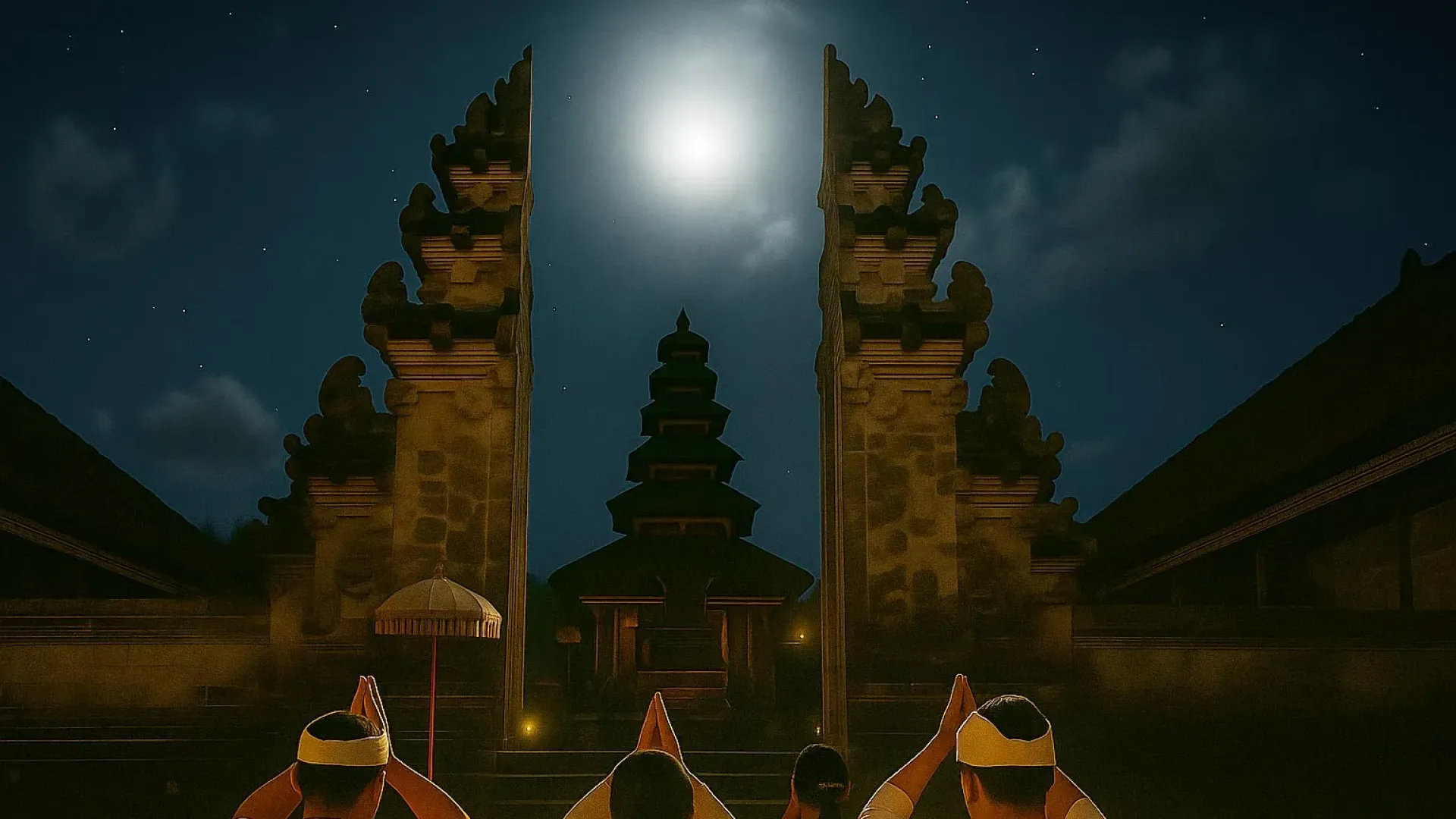
    Bali is an island that moves to the rhythm of nature its tides, its winds, and, most importantly, its moon. Among the many spiritual traditions of the Balinese Hindu calendar, two celestial events stand above all: Purnama (the Full Moon) and Tilem (the New Moon). These are not merely astronomical occurrences; they are sacred times when heaven and earth seem to draw closer, and life itself feels guided by a divine pulse.

    The Divine Energy of Purnama

    Purnama, the Full Moon, illuminates Bali in a silvery light that feels almost alive. On this night, the Balinese believe that divine energy descends to bless the earth, making it a time of gratitude and renewal.

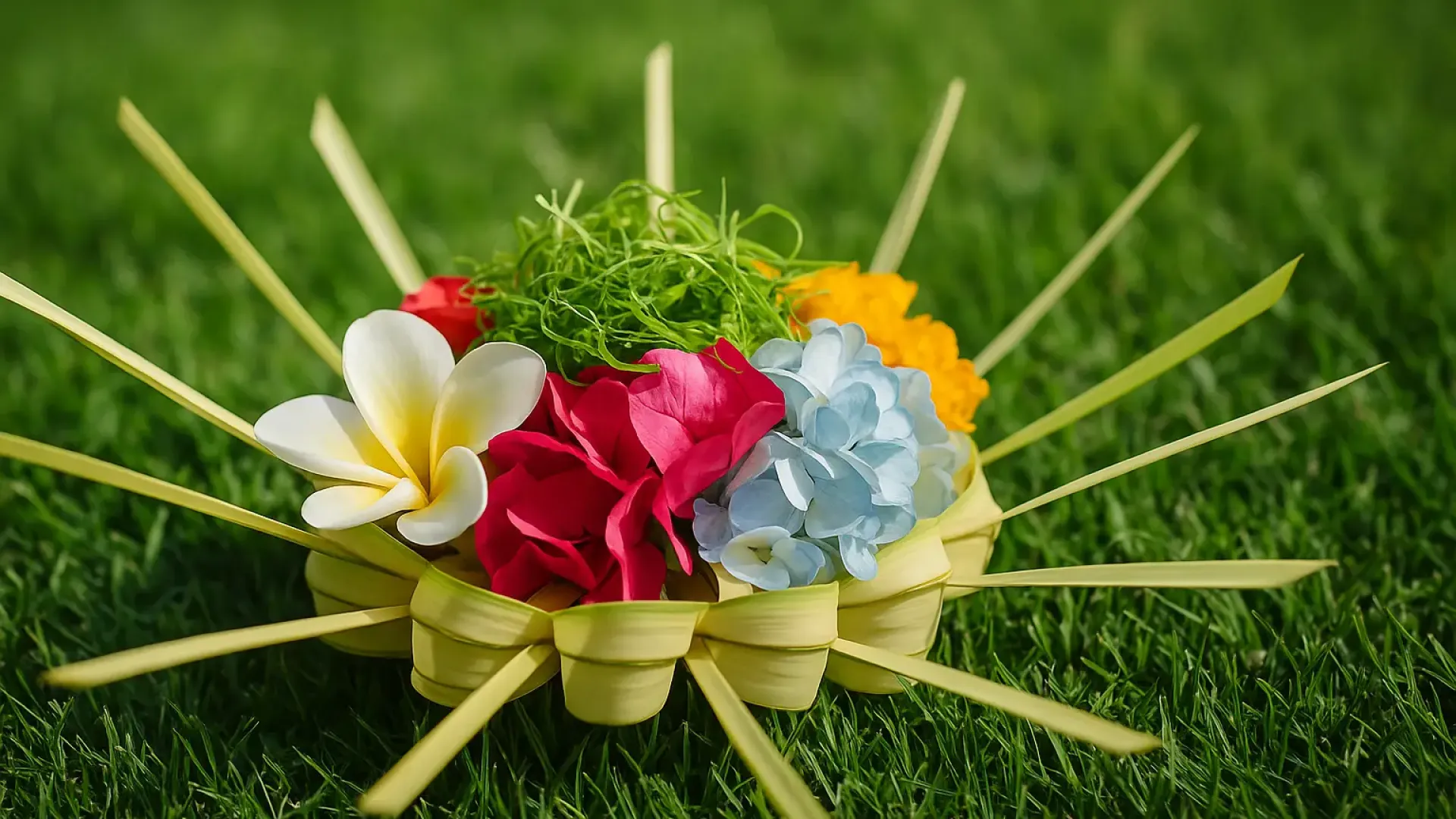
    Temples across the island — from the grand Besakih Temple to the humble shrines in family compounds — come alive with offerings of canang sari, incense smoke, and flower petals. Balinese Hindus pray for prosperity, health, and clarity of mind. The air hums with gamelan music and the murmur of chants, while women in bright kebaya carry woven baskets filled with fruit and flowers to the temple gates.

    Many also visit sacred sites like Pura Tirta Empul in Tampaksiring to perform melukat, a ritual purification using holy spring water. As moonlight ripples across the pools, worshippers immerse themselves, cleansing the body and soul.

    Tilem: A Night of Reflection and Renewal

    Two weeks after Purnama comes Tilem, the New Moon. The distance between Purnama and Tilem is roughly 15 days, marking the complete transition from fullness to emptiness — from light to dark.

    Unlike the brightness of the Full Moon, Tilem is a time of stillness and introspection. The sky is dark, and so too is the inner landscape that Balinese Hindus seek to illuminate through prayer and self-purification. On this day, people pray to Sang Hyang Surya, the Sun God, asking for strength to overcome darkness and ignorance (awidya).

    Families make offerings of protection and gratitude, and many perform melukat at the sea or temples such as Goa Lawah or Pura Luhur Batukaru, believed to hold strong purifying energies. Tilem is also a reminder of balance — that light and dark coexist, and both are needed for life to flourish.

    Cultural Significance and Modern Practice

    In modern Bali, Purnama and Tilem are still deeply respected by all layers of society. Government offices, schools, and private companies often encourage — or even require — employees to wear traditional Balinese attire on these sacred days. Men wear kain kamenudeng (headcloth), and saput, while women don colorful kebayakain kamen and senteng/selendang (sash).

    This practice reflects the Balinese philosophy of Tri Hita Karana — the harmony between humans, nature, and the divine. By honoring these moon days together, the Balinese reaffirm their unity, humility, and spiritual identity.

    The Meaning Behind the Moon

    Purnama and Tilem are more than religious observances; they are living expressions of Rwa Bhineda, the balance between opposites — light and dark, joy and sorrow, birth and death. These days remind the Balinese that spiritual life is a continuous cycle, and each phase carries a lesson.

    Under the glowing Purnama, one celebrates blessings and abundance. Under the quiet Tilem, one turns inward to cleanse and restore. Together, they represent the eternal dance between the seen and the unseen — a rhythm that shapes not only the island’s rituals but also its soul.

    For a deeper understanding of daily offerings in Bali, see the related article on Canang Sari
  • Siwaratri Meaning Explained: The Sacred Night That Changes a Life

    Siwaratri Meaning Explained: The Sacred Night That Changes a Life

    Siwaratri is not a festival of noise or spectacle. It is a night of silence, vigilance, and deep inner reckoning. In Bali, Siwaratri is remembered as the most intimate night in the Hindu calendar, a night when darkness is not feared but embraced as a doorway to awareness. This article explains the meaning of Siwaratri, its spiritual practice in Bali, and the timeless story of Lubdaka that gives this night its deepest human lesson.

    A Night When the World Slows Down

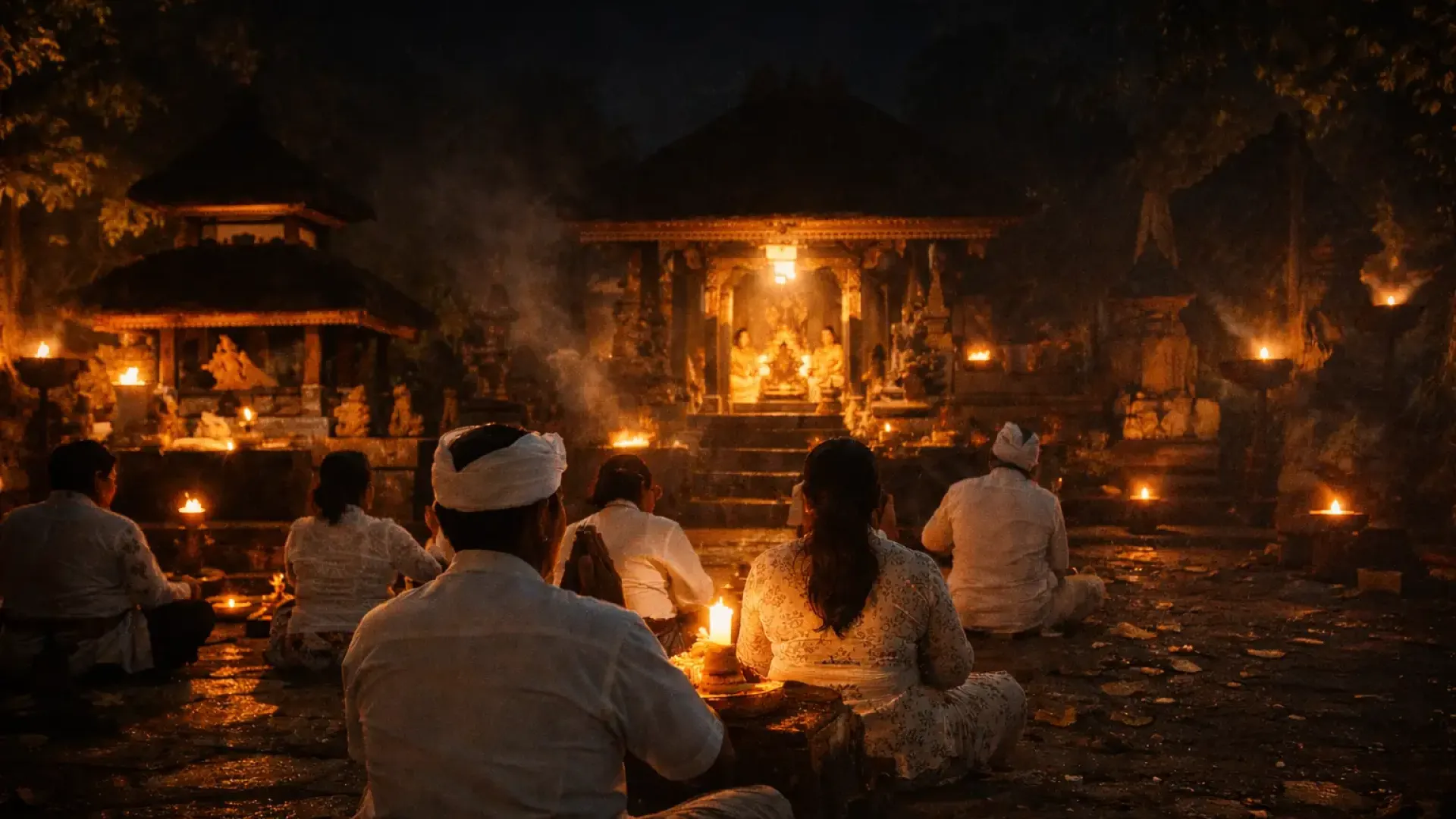
    Siwaratri literally means the night of Siwa. In Balinese Hindu understanding, this night is not about worshiping a distant god but about meeting oneself. As the island settles into darkness, temples remain open, lamps glow softly, and people sit longer with their thoughts.

    Unlike celebratory holy days, Siwaratri feels restrained. The air is quieter. Conversations are softer. For many families, this is the night to step away from routine pleasures and confront habits, regrets, and unspoken intentions. Siwaratri is about awareness rather than appearance.

    The Brata of Siwaratri in Bali

    Traditionally, Siwaratri is observed through self discipline known as brata. Some people stay awake through the night. Others limit food, drink, or sensory distractions. Yet in Bali, elders often remind the young that the heart of Siwaratri is not endurance but sincerity.

    You may sleep and still honor Siwaratri. You may eat and still reflect. What matters is whether the night is used to recognize mistakes, restrain harmful impulses, and restore clarity of mind. This is why Siwaratri resonates across generations. It is not about perfection but honesty.

    The Story of Lubdaka: An Accidental Awakening

    The soul of Siwaratri is inseparable from the story of Lubdaka.

    Lubdaka was a hunter, far from the image of a saint. One night, lost in the forest and surrounded by danger, he climbed a tree beside a lake to save himself from wild animals. Fear kept him awake. Hunger and thirst kept him alert. To stay conscious, he plucked leaves and dropped them into the water below.

    Unbeknownst to him, beneath the water stood a sacred symbol of Siwa. Each falling leaf became an offering. All night long, Lubdaka remained awake, fasting, alert, and inwardly shaken by the thought of death. That night was Siwaratri.

    Lubdaka did not intend to pray. He did not plan a ritual. Yet in that vulnerable state, stripped of habit and arrogance, he became fully aware of his life. According to tradition, that single night of awareness outweighed years of unconscious living. Lubdaka attained liberation not through status or learning, but through presence.

    Why Lubdaka Still Matters Today

    The story of Lubdaka explains why Siwaratri is so deeply personal in Bali. It teaches that spiritual transformation does not require ideal conditions. It can arise from fear, confusion, or crisis, as long as awareness is present.

    In a modern world filled with distractions, Lubdaka feels closer than ever. Many people encounter Siwaratri not in temples, but in moments of exhaustion, loss, or emotional pause. The lesson remains the same. One honest night of reflection can shift the direction of a lifetime.

    Experiencing Siwaratri as a Visitor

    For travelers in Bali, Siwaratri is often invisible at first glance. Shops stay open. Streets remain active. Yet behind closed doors and inside temple courtyards, a quieter Bali emerges. If you notice lights glowing late in family shrines or people sitting still longer than usual, you are witnessing Siwaratri.

    Visitors are not expected to participate in rituals. Respect is shown simply by understanding the atmosphere. Keep noise low near temples at night. Observe rather than intrude. Siwaratri is not performed for an audience.

    The Meaning That Lingers After Dawn

    When morning arrives, Siwaratri ends without fanfare. There are no parades, no fireworks. The change is internal. For those who truly observe it, Siwaratri leaves a subtle trace. A pause before reacting. A softer tone in speech. A renewed awareness of intention.

    That is the quiet power of Siwaratri. It does not demand transformation. It invites it.

  • Tilem Bali: Meaning, Rituals, Origins, and the Deep Spiritual Significance of the Balinese New Moon

    Tilem Bali: Meaning, Rituals, Origins, and the Deep Spiritual Significance of the Balinese New Moon

    Bali is known for its beautiful landscapes and artistic heritage, but at its core, the island moves to the rhythm of rituals. Every phase of the moon, every shift in season, carries spiritual weight. Among these cycles, Tilem Bali, the new moon day, holds an especially profound place in Balinese Hindu life.

    To the Balinese, Tilem is not merely an astronomical phase. It is a moment when the world seems to soften, inviting the heart toward introspection. As the moon fades into complete darkness, the Balinese return to the essence of sunya, the sacred stillness that allows spiritual renewal. Tilem becomes an invitation to let go of burdens, cleanse oneself, and reconnect with Ida Sang Hyang Widhi Wasa, the divine source.

    Across the island, from mountain villages to coastal towns, Hindus in Bali observe Tilem with sincerity. The rituals may differ from one household to another, but the spiritual meaning remains constant: the universe pauses, the soul breathes, and a new cycle quietly begins.

    What Is Tilem Bali?

    Tilem Bali marks the new moon, the moment when the moon is no longer visible in the sky. Yet its cultural and spiritual meaning reaches far deeper. It signifies the end of a lunar cycle and prepares devotees for the return of light in the days ahead.

    Balinese Hinduism sees time as cyclical, echoing the natural world. Just as day becomes night and turns into day again, the moon waxes and wanes in endless repetition. Tilem is the darkest point of this cycle, yet it is also the seed of new beginnings. Darkness becomes the womb of rebirth, the quiet space where transformation begins.

    For the Balinese, this darkness is not emptiness but fullness. It is a moment when the distractions of the material world settle, allowing the spiritual realm to feel closer and more present.

    Origins of Tilem in the Balinese Saka Calendar

    The Balinese Hindu calendar is a unique system that blends lunar and solar cycles. Though adapted from the Indian Saka Calendar, it developed over centuries to align with Balinese cosmology, agriculture, and ritual life.

    Within this calendar, each lunar month consists of two phases:

    1. Shukla Paksha (Kresna Paksa)
    2. The waxing moon, symbolizing expansion and growth.
    3. Krishna Paksha (Pangelong)
    4. The waning moon, symbolizing release and introspection.

    Tilem arrives at the end of the waning phase, when the moon fully disappears. This point of darkness is seen as a cosmic reset, marking the threshold before a new lunar cycle begins.

    Historically, the Saka system spread to Bali between the 8th and 14th centuries, influenced by Indian cosmology. Over time, the Balinese shaped their own interpretation of lunar phases, integrating them into temple cycles, agricultural life, and spiritual teachings. Tilem became a monthly anchor, a point of closure and renewal.

    Rituals of Tilem: A Monthly Ceremony Observed by All Balinese Hindus

    One of the most remarkable aspects of Tilem is its inclusivity. Every Balinese Hindu, regardless of caste, lineage, or village, participates in Tilem rituals. The island’s atmosphere subtly shifts. Tilem is not festive or loud, but quiet, contemplative, and deeply reverent.

    1. Household Prayers (Sanggah or Merajan)

    Families begin Tilem with offerings and prayers at their home temples. Offerings often include canang sari, daksina, pejati, flowers, incense, and holy water. These offerings honor ancestral spirits and cleanse the emotional, spiritual, and physical impurities of the past month.

    2. Temple Prayers Across Bali

    On Tilem night, temples across the island fill with devotees in white ceremonial attire. The ritual, known as Sembahyang Tilem, focuses on inner balance, cleansing, and prayers for the next lunar cycle. Larger temples such as Pura Desa, Pura Puseh, Pura Dalem, Pura Jagatnatha, and Kahyangan Tiga hold regular Tilem prayers.

    3. Ritual Purification

    Many perform light purification practices such as melukat alit, simple cleansing offerings, burning incense to release negativity, or quiet meditation. These acts help align the mind and body with the moon’s impending rebirth.

    4. A Night of Reflection

    Tilem is seen as a night for restraint, clarity, silence, and mindfulness. Some choose to meditate, journal, or recite mantras. With no moonlight, the darkness becomes a symbol of returning to the inner world.

    The Philosophical Meaning of Tilem Bali

    Tilem carries profound spiritual concepts from Balinese Hindu philosophy.

    1. Sunya and the Sacred Emptiness

    Sunya represents a spiritual emptiness that holds infinite potential. Tilem embodies this void, the moment when the old dissolves and the new has yet to emerge.

    2. Rwa Bhineda and the Balance of Opposites

    Balinese philosophy embraces duality: light and darkness, fullness and emptiness, growth and rest. Tilem and Purnama form complete counterparts in the lunar cycle, each balancing the other.

    3. A Return to Purity

    Tilem symbolizes humility, gratitude, and discipline. It is a time to release burdens, acknowledge past actions, and prepare spiritually for the cycle ahead.

    Tilem vs Purnama: Two Poles of the Balinese Lunar Cycle

    AspectTilem (New Moon)Purnama (Full Moon)SymbolDarkness, emptinessLight, abundanceEnergyInward, reflectiveOutward, celebratoryMeaningPurification, renewalProsperity, blessingRitualQuiet prayer, cleansingLarger ceremonies

    Tilem in Modern Bali

    Despite the growth of modern lifestyles and tourism, Tilem remains deeply respected. Schools, offices, and community groups often adjust schedules to accommodate major lunar dates. Many Balinese still consult the lunar calendar before planning ceremonies, engagements, blessings, or temple anniversaries. This loyalty to spiritual timing highlights cultural resilience.

    How Travelers Can Respect Tilem

    Visitors are welcome to witness Tilem rituals if they do so respectfully. Travelers should dress modestly, avoid loud conversation, refrain from flash photography during prayers, and follow temple etiquette. Tilem is not a performance but a sacred moment of connection.

    Conclusion

    Tilem Bali stands as one of the most powerful spiritual moments in the Balinese lunar cycle. Rooted in the Saka Calendar and honored by every Balinese Hindu, Tilem reminds devotees that life moves in cycles. Through purification, reflection, and renewal, Tilem shapes the island’s spiritual rhythm.

    In a fast-moving world, Tilem invites stillness.

    In a life filled with noise, Tilem offers silence.

    In every return of the dark moon, Tilem teaches that renewal is always possible.

    For a deeper understanding of daily offerings in Bali, see the related article on Canang Sari