Category: Article

  • Nyepi Prep: The Sweet Traditions of Balinese Mothers

    Nyepi Prep: The Sweet Traditions of Balinese Mothers

    Quick Answer: What happens 2 days before Nyepi?

    Two days before Nyepi (H-2), Balinese households buzz with a tradition called “making jajanan.” Led by local mothers, families prepare traditional snacks like Jaje Bantal (sweet sticky rice with red beans) and Sumping. These treats are essential because no fires or stoves can be lit on Nyepi day. By the following day (H-1), the focus shifts to creating Segehan offerings to balance spiritual energies before the 24-hour total silence begins.

    The Heartbeat of the Home

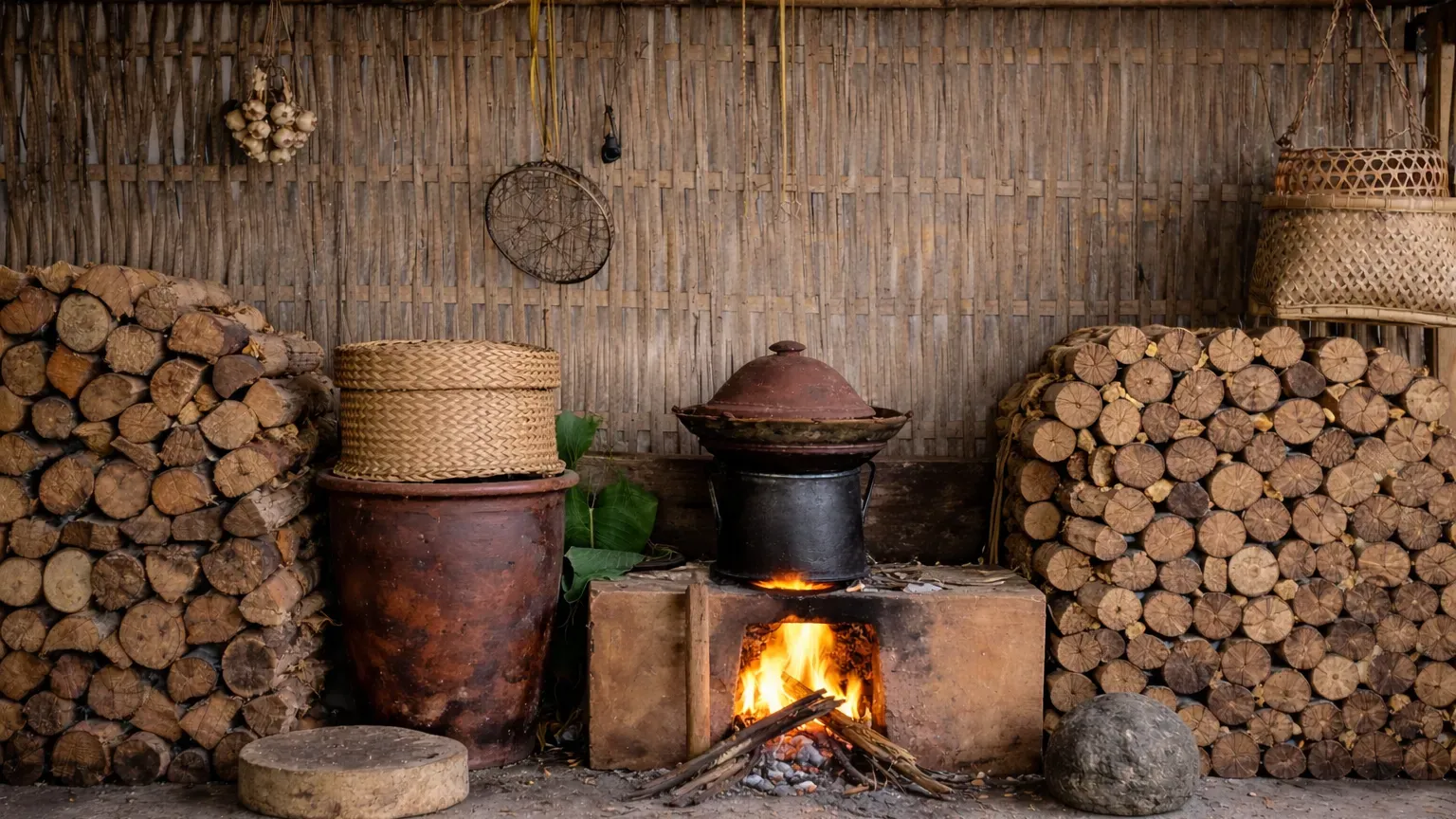
    While most travelers know Bali for its beaches, I know it by the sound of a steaming pot and the scent of singed banana leaves. I was born and raised in the highlands of Kintamani, and for us, the countdown to Nyepi isn’t just a calendar date—it’s a feeling.

    Two days before the “Day of Silence,” our homes transform. If you walk through a Balinese village during this time, you won’t just see the scenery; you’ll smell it. This is the time of the mothers. They are the silent engines of our culture, and H-2 is when their magic happens in the kitchen.

    The Ritual of the “Little Pillows”

    The main event two days before Nyepi is making traditional snacks, or jajanan. Since we aren’t allowed to light fires on Nyepi (a rule called Amati Geni), we have to cook everything in advance.
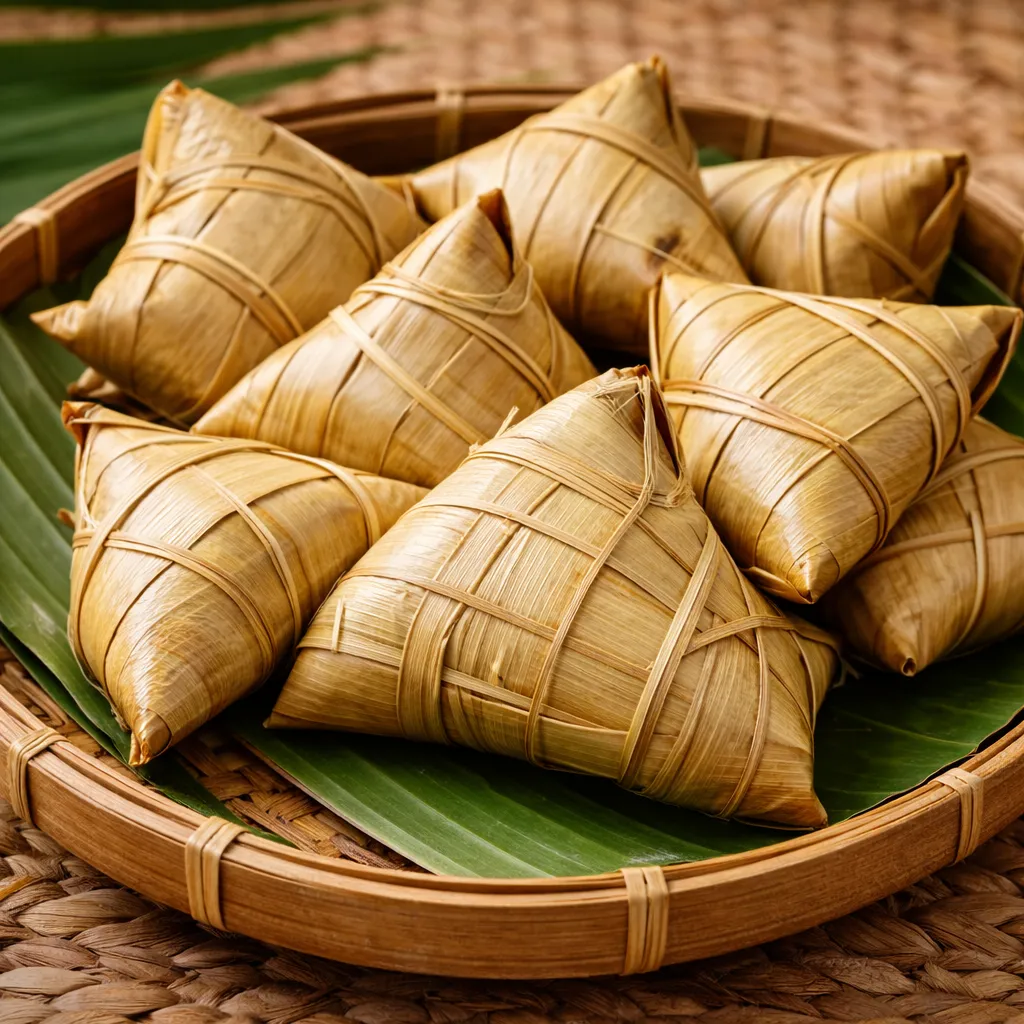
    Jaje Bantal

    The star of the kitchen is undoubtedly Jaje Bantal. In our language, Bantal means pillow. These are tiny, delicious “pillows” made from sticky rice, grated coconut, and red beans. We wrap them in janur (young coconut leaves) and tie them with thin bamboo strings. It’s a slow, communal process. My mother and the neighborhood women sit together, talking and laughing while their hands move with a speed that only decades of practice can give.
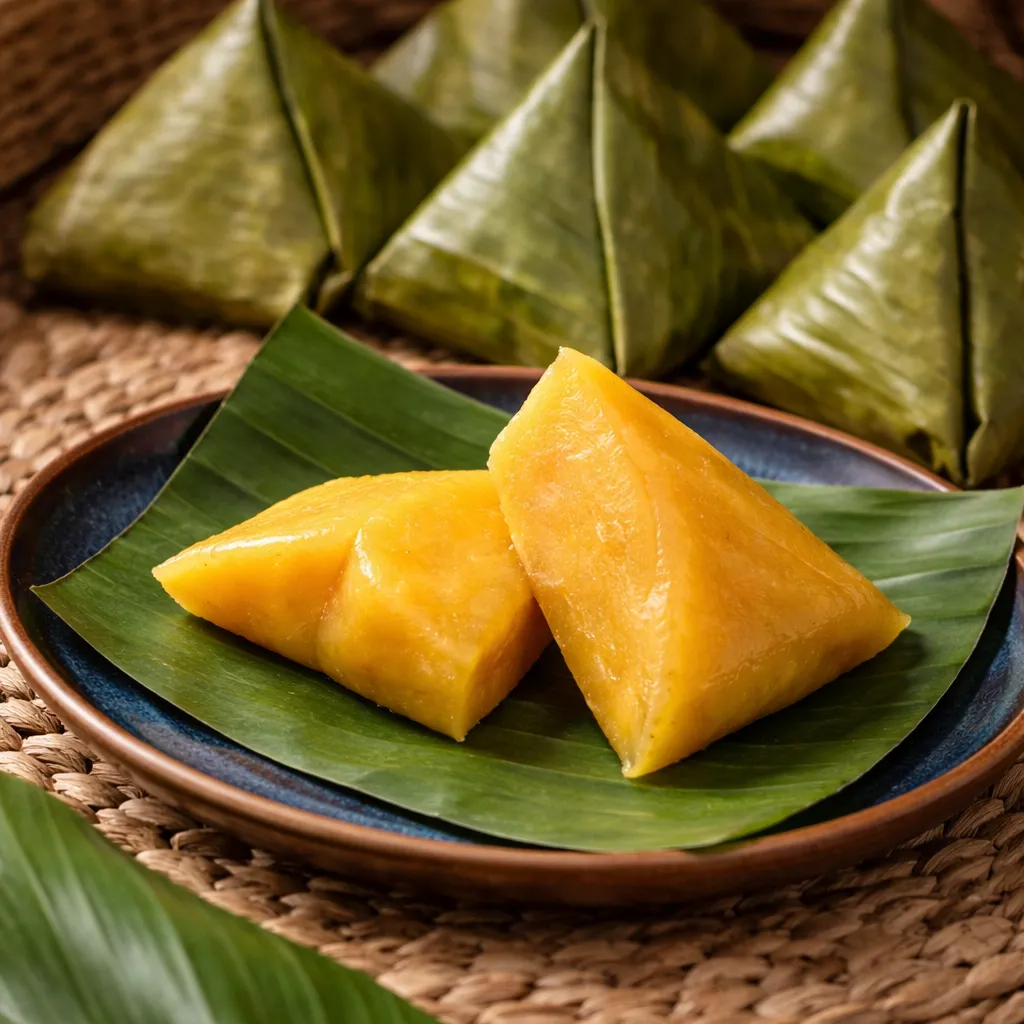
    Sumping tabu atau waluh khas bali

    We also make Sumping, a soft rice flour cake steamed in banana leaves, usually hiding a sweet slice of banana or jackfruit inside. These aren’t just snacks to us; they are a labor of love that keeps the family fed and the gods honored during the long silence.

    H-1: Spiritual Diplomacy

    As we move to the day before Nyepi, the atmosphere shifts. The kitchen work is mostly done, and the focus moves to the ground. This is when our mothers prepare Segehan.

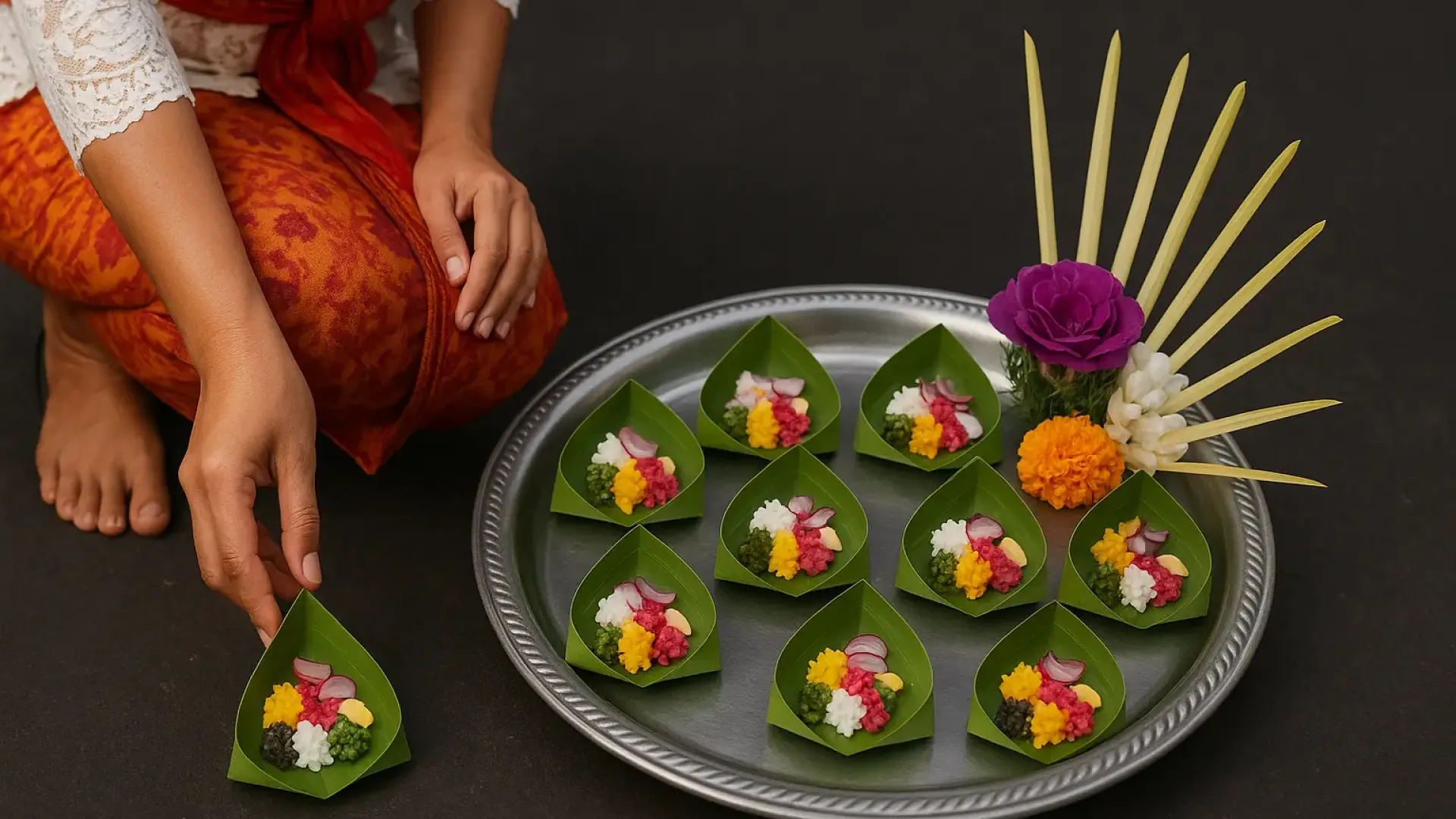
    To a visitor, a segehan might look like a simple tray of colorful rice and flowers placed on the road. But to us, it’s a form of spiritual diplomacy. We believe in keeping a balance between the seen and the unseen. By placing these offerings at our gates, our mothers are asking for peace and protection, ensuring that the “lower energies” are satisfied so we can enter our day of meditation without any disturbance.

    Every Village Has a Different Soul

    One thing I always tell friends is that Bali isn’t a monolith. We live by a principle called Desa, Kala, Patra—which means tradition changes depending on the place, time, and situation.

    Growing up in Kintamani, our rituals feel a bit different than they do in the coastal heat of Kuta Selatan. In the mountains, we use what the earth gives us there. Our snacks might be a little different, and our ceremonies might feel more rugged and ancient. While the big cities are famous for their giant Ogoh-Ogoh statues, many of our mountain villages prefer a quieter, deeper connection to the old ways. This variety is what makes Bali so beautiful; every village has its own heartbeat.

    A Note to Our Guests

    If you are lucky enough to be in Bali during this time, take a moment to look past the closed shops and empty streets. Think of the mothers who spent their days weaving leaves and boiling rice.

    When you see a small offering on the ground or smell the faint scent of steamed coconut, you are witnessing the backbone of Balinese life. Nyepi is a day of silence, but it is built on days of devotion, hard work, and the sweetest snacks you’ll ever taste.
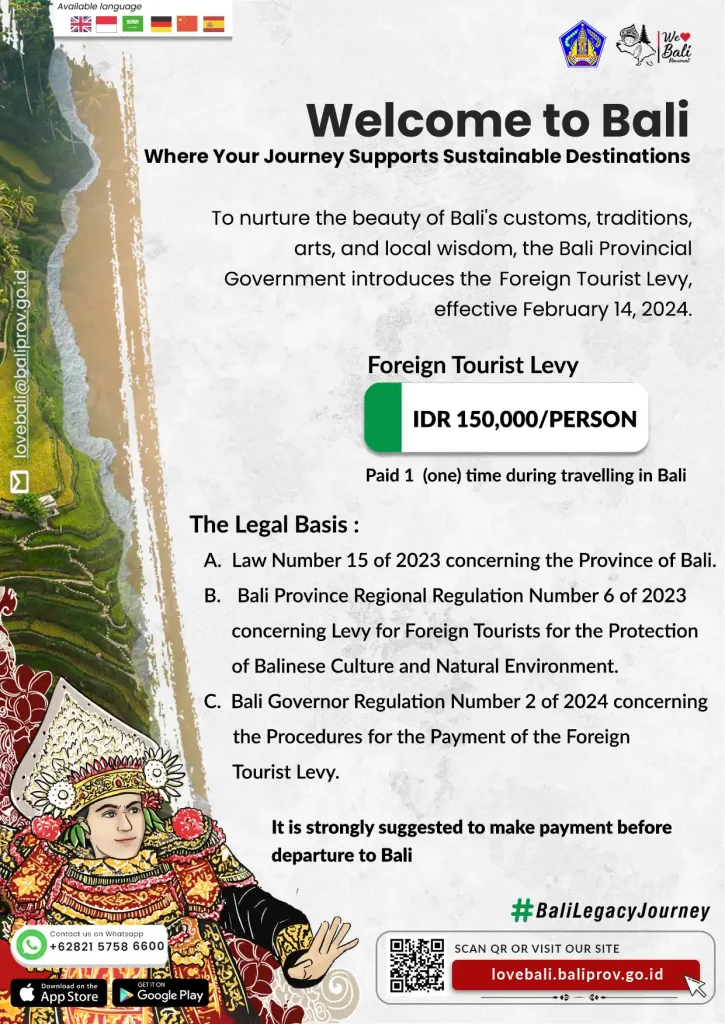
  • Bali Tourist Levy: A Complete Guide to Your #BaliLegacyJourney

    Bali Tourist Levy: A Complete Guide to Your #BaliLegacyJourney

    Why Bali Is More Than Just a Destination

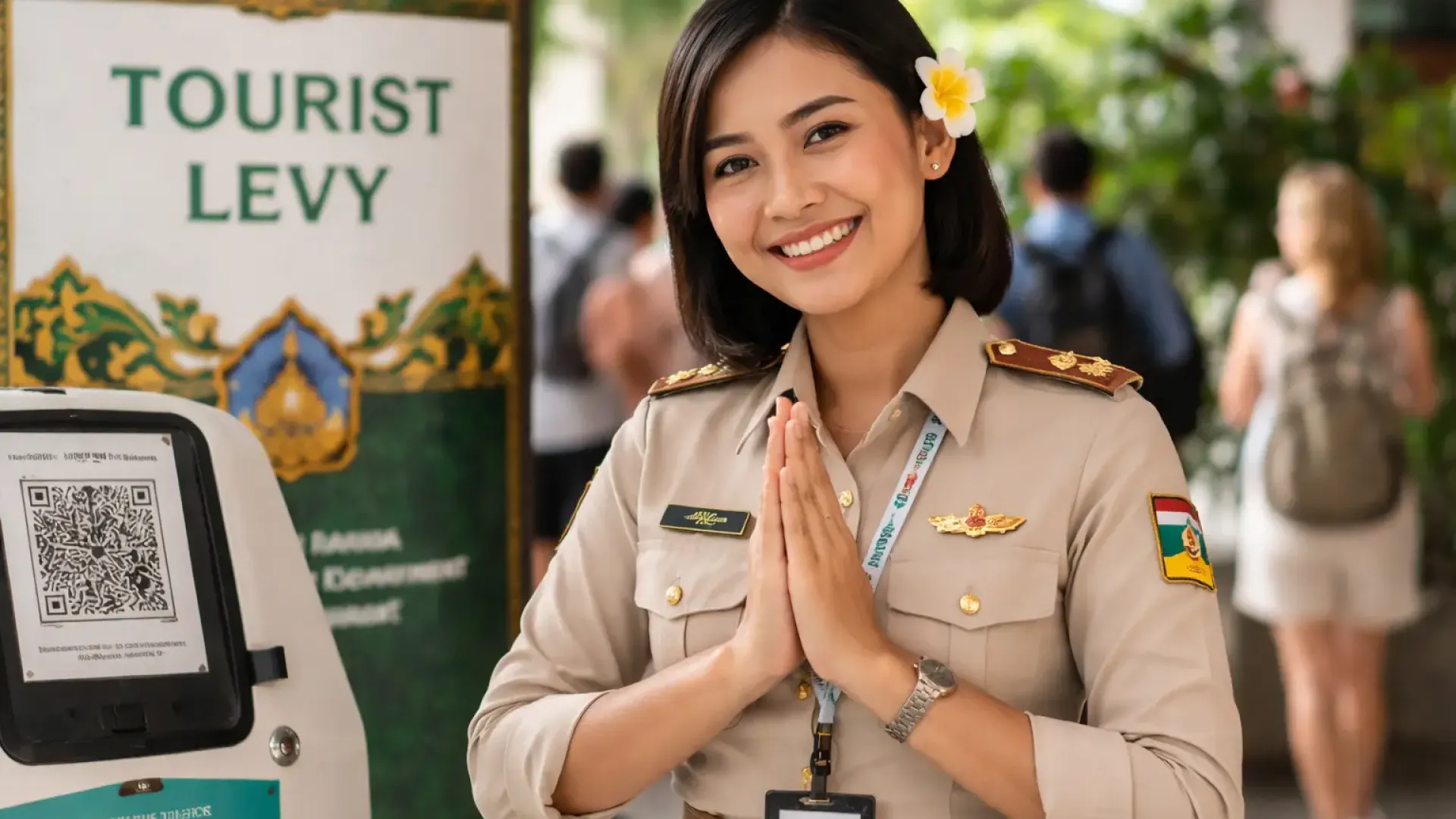
    Bali Tourist Levy is not just another travel requirement. It is a reflection of how deeply Bali values its culture, land, and future.

    For many travelers, Bali is more than a pin on the map. It is the scent of incense drifting from temple gates at dawn. It is farmers greeting the sun in Tegallalang’s rice terraces. It is ceremonies that quietly remind us that life here moves in harmony with nature.

    As a Balinese born and raised on this island, I have seen how tourism can be both a blessing and a burden. That is why the Bali Provincial Government introduced the Foreign Tourist Levy, an initiative designed to protect what makes Bali feel alive rather than overrun.

    This levy is not about restriction. It is about responsibility.

    What Is the Bali Foreign Tourist Levy?

    Effective from February 14, 2024, every foreign visitor entering Bali is required to pay a one-time fee of IDR 150,000 per person. This applies regardless of how long you stay or how often you move around the island.

    The policy is regulated under Law Number 15 of 2023 and is built upon three core pillars:

    • Preserve Heritage Safeguarding Balinese customs, rituals, arts, and local wisdom that have survived for centuries.
    • Nurture Nature Protecting beaches, forests, rivers, and sacred landscapes that form the spiritual backbone of Bali.
    • Elevate Experience Improving tourism governance, infrastructure, and visitor safety so travel feels meaningful rather than chaotic.

    In simple terms, the Bali Tourist Levy is an investment in balance.

    How to Pay the Bali Tourist Levy Step by Step

    To ensure a smooth arrival, the government strongly recommends paying before you fly to Bali.

    For Individual Travelers

    1. Visit lovebali.baliprov.go.id or download the Love Bali App from the Play Store or App Store.
    2. Enter your passport number, full name as shown on your passport, email address, and arrival date.
    3. Select your preferred payment method: Visa, Mastercard, JCB, AMEX, BCA Virtual Account, or QRIS.
    4. Receive your Levy Voucher via email.
    5. Save the QR code on your phone and present it when requested at checkpoints.

    For Group Bookings or Travel Agents

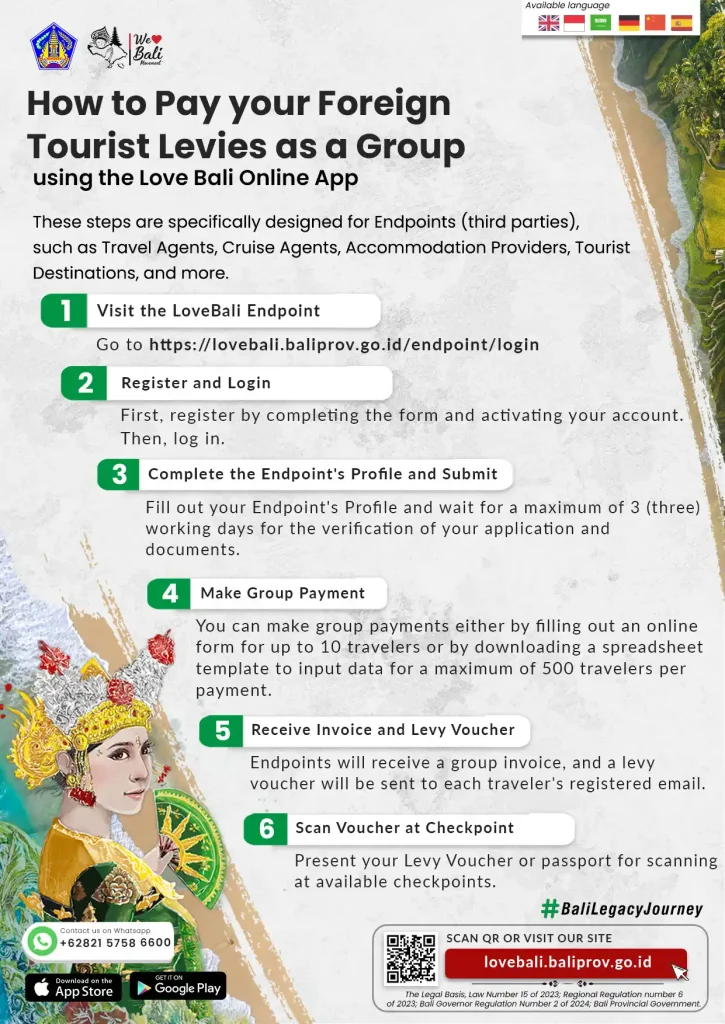
    Travel agents or tour operators can register as an Endpoint on the Love Bali platform. This allows payment management for up to 500 travelers in one transaction, making it ideal for group tours and corporate travel.

    Who Is Exempt from the Bali Tourist Levy?

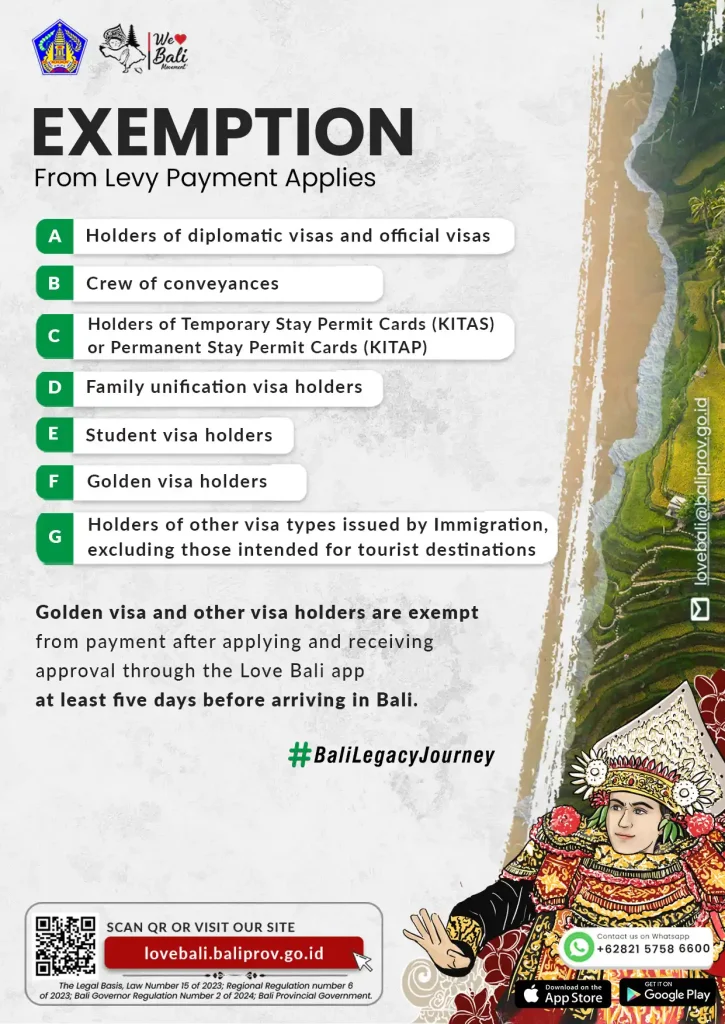
    Certain visitors are exempt from paying the levy, including:

    • Diplomatic and official visa holders
    • Crew members of transportation services
    • KITAS and KITAP holders
    • Family unification visa holders
    • Student visa holders
    • Golden Visa holders

    Important: Exempt travelers must still apply for exemption approval through the Love Bali system at least five days before arrival.

    Why Your Contribution Truly Matters

    When you pay the Bali Tourist Levy, you are not funding bureaucracy. You are funding continuity.

    Your IDR 150,000 supports cleaner beaches, temple restoration, cultural education, and community-based tourism programs that keep villages thriving rather than displaced.

    By joining the #BaliLegacyJourney, you step into Bali not just as a guest, but as a temporary guardian of the island.

    Share your journey, your respect, and your mindful moments using #BaliLegacyJourney, and help redefine what responsible travel looks like.

    Conclusion and Call to Action

    Do not let small formalities cloud your island escape. Take a few minutes to secure your Bali Tourist Levy voucher before departure and arrive with peace of mind.

    You will land knowing that your presence contributes to Bali’s future, not just its popularity.

    Pay Your Bali Tourist Levy Now

    For assistance, contact official support via WhatsApp at +62 821 5758 6600 or email lovebali@baliprov.go.id

    Travel well. Tread gently. Bali will thank you.

  • Why Ogoh-Ogoh Exist in Bali and the Story of What They Really Symbolize Before Nyepi

    Why Ogoh-Ogoh Exist in Bali and the Story of What They Really Symbolize Before Nyepi

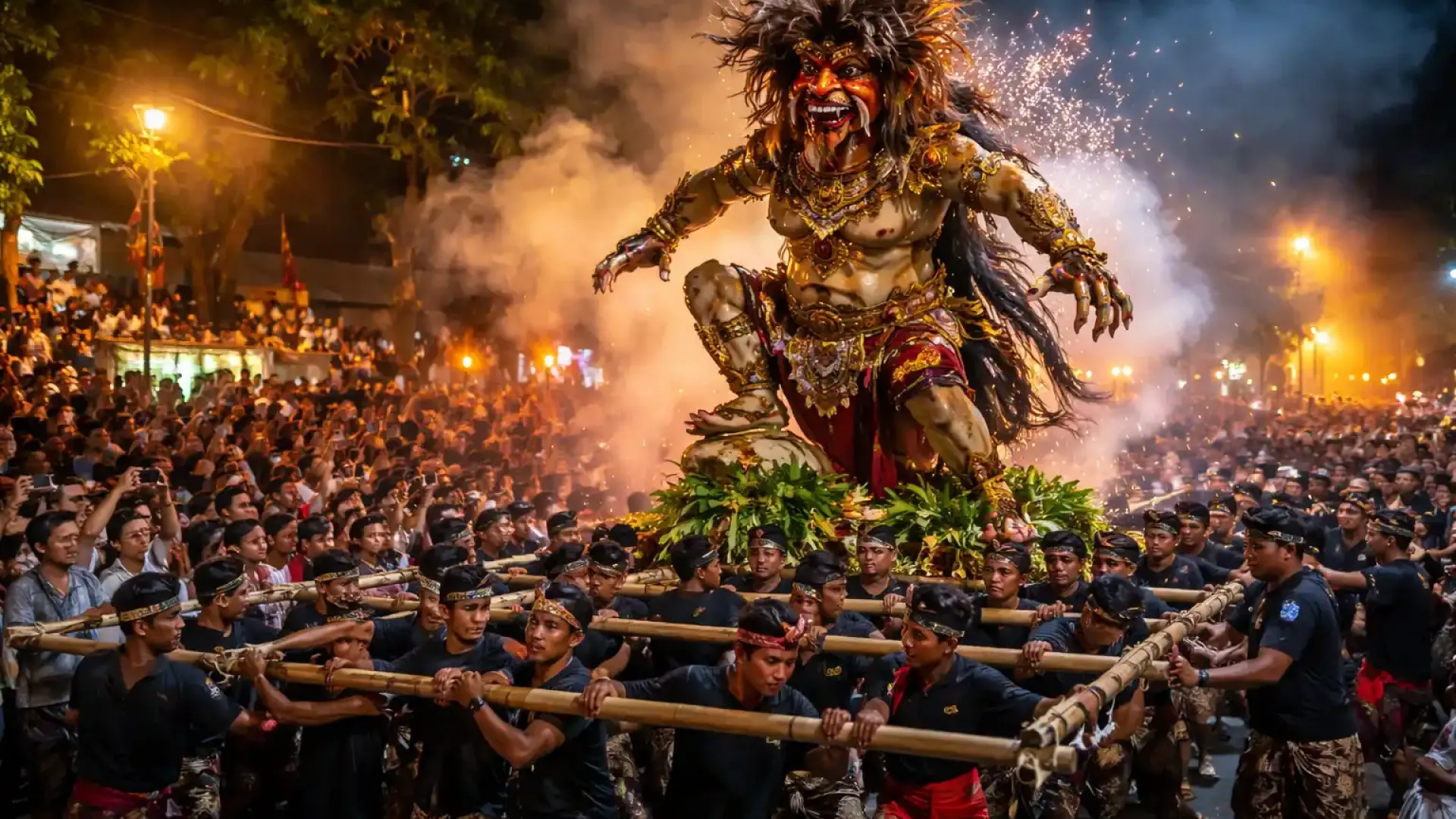
    Why Ogoh-Ogoh exist in Bali is a question many travelers ask after witnessing the island’s loudest, wildest night. On the eve of Nyepi, Bali erupts in fire, noise, and towering demon statues paraded through the streets. Then, suddenly, everything stops. Silence takes over the next day. To understand Ogoh-Ogoh is to understand how Balinese culture confronts darkness, not by denying it, but by acknowledging it openly.

    I grew up in Bali, and for us, Ogoh-Ogoh were never just scary statues built to impress tourists. They were mirrors. Reflections of human chaos, ego, anger, and imbalance, brought into physical form so they could be faced together as a community.

    The Origin Story of Ogoh-Ogoh

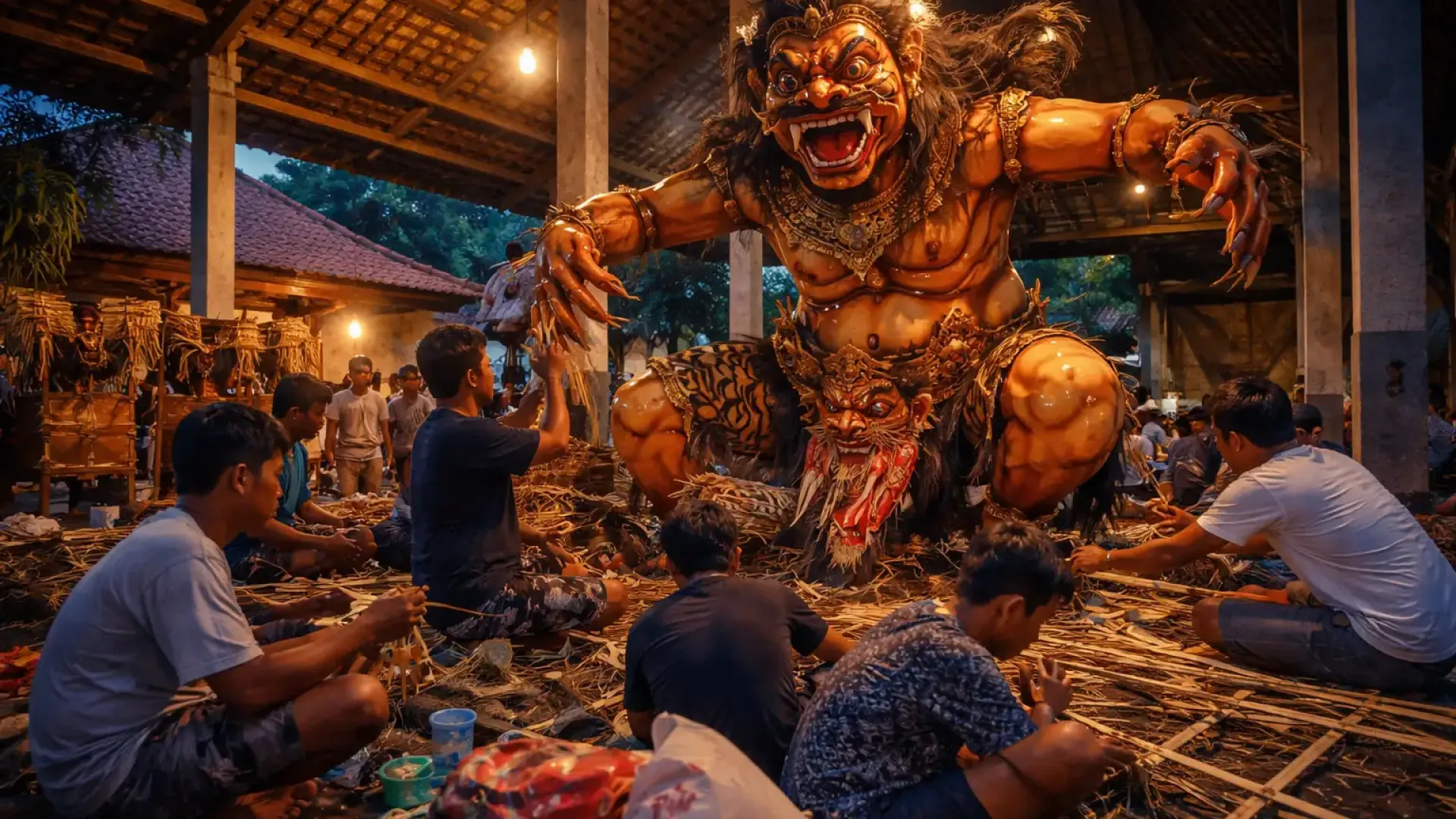
    Ogoh-Ogoh are giant effigies traditionally made from bamboo, paper, foam, and paint. They usually depict Bhuta Kala, symbolic beings that represent negative forces, uncontrolled desires, and destructive energy. In Balinese belief, these forces are not evil in the Hollywood sense. They are part of nature, part of humans, and part of the universe.

    The tradition is closely tied to Tawur Kesanga, a purification ritual held one day before Nyepi, Bali’s Day of Silence. The goal is not to eliminate darkness, but to restore balance between the seen world and the unseen world. Ogoh-Ogoh exist because balance cannot be achieved by pretending chaos does not exist.

    Why They Are Paraded at Night

    The Ogoh-Ogoh parade always takes place after sunset. There is a reason for this. Night symbolizes the unseen realm. It is when emotions feel heavier, fears feel louder, and instincts take over logic. By parading Ogoh-Ogoh through villages at night, accompanied by gamelan, shouting, and fire, the community symbolically calls out negative energy.

    The statues are often shaken violently, spun at crossroads, and carried with exaggerated movements. This is not for spectacle alone. Crossroads are believed to be spiritually significant points where energies intersect. The chaos is intentional. It confuses and neutralizes negative forces before Nyepi begins.

    If you want to understand how powerful this night feels as a lived experience, this article captures it vividly: Experience the Ogoh Ogoh Parade in Bali, a Once-in-a-Lifetime Night

    Why Ogoh-Ogoh Are Destroyed

    One of the most misunderstood aspects is why Ogoh-Ogoh are burned or dismantled after the parade. Months of work are destroyed in a single night. For outsiders, this feels wasteful. For Balinese people, it is the point.

    Ogoh-Ogoh symbolize impermanence. They remind us that anger, pride, and ego are temporary if we choose not to cling to them. Burning the effigies is an act of release. It is a declaration that negativity has been acknowledged and let go, not stored or celebrated.

    In some villages today, Ogoh-Ogoh are not burned but stored or exhibited due to regulations or tourism considerations. While practical, this shift also sparks debate among locals about preserving meaning versus preserving objects.

    From Sacred Ritual to Cultural Expression

    Ogoh-Ogoh as we know them today are relatively modern. The tradition expanded significantly in the 1980s, when Balinese youth groups, known as banjar, began turning the ritual into a form of artistic competition. Creativity exploded. Demons became more elaborate, dynamic, and expressive.

    This evolution does not weaken the tradition. It reflects Balinese adaptability. Culture here is not frozen in time. It evolves while keeping its philosophical core intact. Ogoh-Ogoh exist not only to scare spirits, but to teach cooperation, discipline, and collective responsibility among young people.

    The Silence That Follows

    To truly understand Ogoh-Ogoh, you must see them in contrast with Nyepi. After the loudest night of the year comes a full day of silence. No flights. No traffic. No entertainment. Even the internet slows down.

    The chaos of Ogoh-Ogoh empties the emotional container. Nyepi refills it with stillness. This contrast is deliberate. You cannot appreciate silence without noise. You cannot reset without release.

    Ogoh-Ogoh exist so Nyepi can exist meaningfully.

    What Ogoh-Ogoh Really Symbolize Today

    For locals, Ogoh-Ogoh symbolize self-awareness. They ask us to identify what we need to let go of before entering a new year. For visitors, they are an invitation to look beyond surface-level spectacle and witness how spirituality, art, and community intersect in Bali.

    Ogoh-Ogoh are not about fear. They are about honesty. About admitting that darkness exists within us all, and that balance comes not from denial, but from acknowledgment and release.

    When you watch an Ogoh-Ogoh parade, you are not just seeing a tradition. You are seeing a philosophy in motion.

  • The Sacred Lunar Days of Bali: Purnama and Tilem

    The Sacred Lunar Days of Bali: Purnama and Tilem

    Bali is an island that moves to the rhythm of nature its tides, its winds, and, most importantly, its moon. Among the many spiritual traditions of the Balinese Hindu calendar, two celestial events stand above all: Purnama (the Full Moon) and Tilem (the New Moon). These are not merely astronomical occurrences; they are sacred times when heaven and earth seem to draw closer, and life itself feels guided by a divine pulse.

    The Divine Energy of Purnama

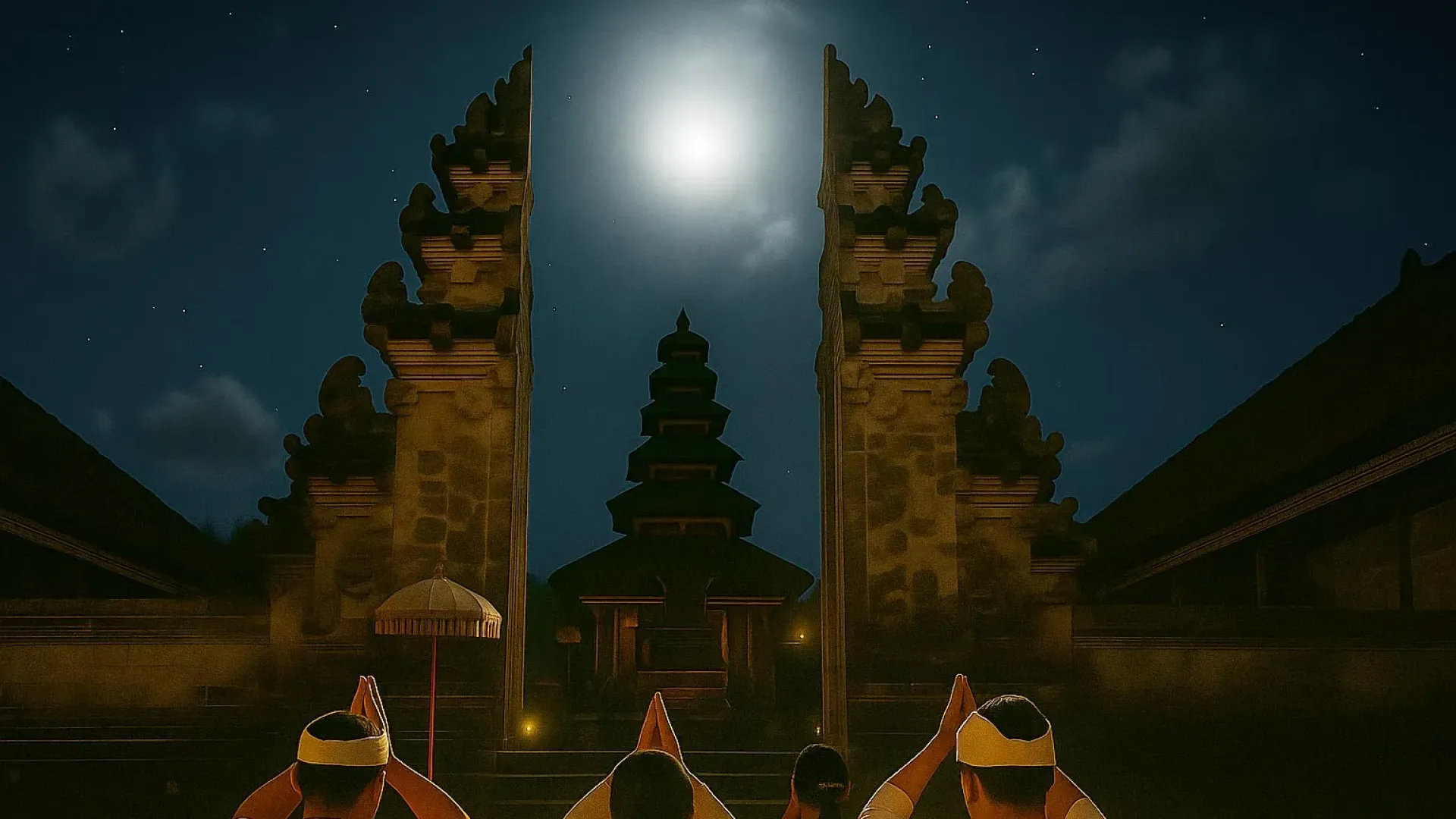
    Purnama, the Full Moon, illuminates Bali in a silvery light that feels almost alive. On this night, the Balinese believe that divine energy descends to bless the earth, making it a time of gratitude and renewal.

    Temples across the island — from the grand Besakih Temple to the humble shrines in family compounds — come alive with offerings of canang sari, incense smoke, and flower petals. Balinese Hindus pray for prosperity, health, and clarity of mind. The air hums with gamelan music and the murmur of chants, while women in bright kebaya carry woven baskets filled with fruit and flowers to the temple gates.

    Many also visit sacred sites like Pura Tirta Empul in Tampaksiring to perform melukat, a ritual purification using holy spring water. As moonlight ripples across the pools, worshippers immerse themselves, cleansing the body and soul.

    Tilem: A Night of Reflection and Renewal

    Two weeks after Purnama comes Tilem, the New Moon. The distance between Purnama and Tilem is roughly 15 days, marking the complete transition from fullness to emptiness — from light to dark.

    Unlike the brightness of the Full Moon, Tilem is a time of stillness and introspection. The sky is dark, and so too is the inner landscape that Balinese Hindus seek to illuminate through prayer and self-purification. On this day, people pray to Sang Hyang Surya, the Sun God, asking for strength to overcome darkness and ignorance (awidya).

    Families make offerings of protection and gratitude, and many perform melukat at the sea or temples such as Goa Lawah or Pura Luhur Batukaru, believed to hold strong purifying energies. Tilem is also a reminder of balance — that light and dark coexist, and both are needed for life to flourish.

    Cultural Significance and Modern Practice

    In modern Bali, Purnama and Tilem are still deeply respected by all layers of society. Government offices, schools, and private companies often encourage — or even require — employees to wear traditional Balinese attire on these sacred days. Men wear kain kamenudeng (headcloth), and saput, while women don colorful kebayakain kamen and senteng/selendang (sash).

    This practice reflects the Balinese philosophy of Tri Hita Karana — the harmony between humans, nature, and the divine. By honoring these moon days together, the Balinese reaffirm their unity, humility, and spiritual identity.

    The Meaning Behind the Moon

    Purnama and Tilem are more than religious observances; they are living expressions of Rwa Bhineda, the balance between opposites — light and dark, joy and sorrow, birth and death. These days remind the Balinese that spiritual life is a continuous cycle, and each phase carries a lesson.

    Under the glowing Purnama, one celebrates blessings and abundance. Under the quiet Tilem, one turns inward to cleanse and restore. Together, they represent the eternal dance between the seen and the unseen — a rhythm that shapes not only the island’s rituals but also its soul.

    For a deeper understanding of daily offerings in Bali, see the related article on Canang Sari

  • Tipping in Bali Is a Gentle Way to Say Thank You, Never an Obligation

    Tipping in Bali Is a Gentle Way to Say Thank You, Never an Obligation

    Tipping in Bali is not guided by strict rules or social pressure. It is guided by feeling. In Bali, you are welcome to tip in hotels and restaurants, but you are never expected to. A tip is simply a soft expression of gratitude when service feels warm, thoughtful, and sincere.

    As someone born and raised on this island, I have seen how Balinese hospitality grows from everyday culture, not from expectation. Long before tourism, welcoming others was already part of daily life.

    Hospitality Comes From Culture, Not Obligation

    In Balinese culture, service is deeply connected to values of harmony, respect, and balance. Welcoming guests is not seen as a performance. It is an extension of how people treat family, neighbors, and strangers alike.

    When a hotel staff member greets you with a calm smile or a restaurant server patiently waits while you decide, it is not because they are hoping for a tip. It is because showing care is considered proper behavior. This is why tipping in Bali feels optional rather than required.

    Tipping in Bali Hotels

    In hotels across Bali, service feels natural and unforced. Bell staff help with luggage without rushing. Housekeeping works quietly, often unnoticed. Concierge teams assist with genuine attention.

    If a staff member goes beyond what feels routine, perhaps remembering your name or helping solve an unexpected problem, you may feel a sincere desire to say thank you. In these moments, a small tip becomes meaningful.

    There is no standard amount. Many guests offer a modest sum in local currency, handed discreetly. Others choose not to tip at all. Both choices are equally acceptable. Service does not change, and respect remains the same.

    Tipping in Bali Restaurants and Cafés

    Dining in Bali follows the same gentle rhythm. Most restaurants already include a service charge and tax in the bill. This means staff are already compensated, and tipping is not built into the system.

    If service makes your meal feel more personal or memorable, you may leave a small additional tip or round up the bill. In casual cafés and local eateries, tipping is uncommon. Food is served with pride, not expectation.

    No one will question you. No one will feel offended. Gratitude here is never forced.

    The Emotional Meaning Behind a Tip

    When a tip is given in Bali, it carries emotion rather than obligation. It quietly says I felt welcome here. I felt comfortable. I felt cared for.

    Often, the gesture matters more than the amount. A smile, eye contact, and a sincere thank you create a moment of connection. Many Balinese service workers remember these moments deeply, because recognition touches dignity and pride.

    In Balinese culture, appreciation is usually expressed softly. Loud gestures are unnecessary. Sincerity is enough.

    Common Worries Travelers Have

    Many visitors worry that not tipping might seem impolite. In Bali, it does not. Hospitality is offered freely, not conditionally.

    Others worry about tipping too little. There is no minimum and no judgment. Any amount, or none at all, is perfectly fine.

    What truly matters is attitude. Politeness, patience, and humility are forms of respect that resonate strongly with local culture.

    Reflection on Gratitude

    Tipping in Bali reflects a deeper way of seeing gratitude. Appreciation does not always need money. It can be felt through kindness, calm behavior, and simple words.

    When you tip because your heart feels full, it is warmly received. When you choose not to, you are still welcomed with the same grace. This balance keeps Bali hospitality human, gentle, and emotionally honest.

    Closing Thoughts

    As you travel through Bali, let tipping come from feeling, not pressure. Give when it feels right. Do not give when it feels forced.

    In Bali, gratitude lives in many forms. Sometimes it is a small note of thanks. Often, it is simply a shared smile that lingers a little longer

  • Experience the Ogoh Ogoh Parade in Bali, a Once-in-a-Lifetime Night

    Experience the Ogoh Ogoh Parade in Bali, a Once-in-a-Lifetime Night

    If you are planning your first trip to the island, the Ogoh Ogoh Parade in Bali is something you should experience at least once in your lifetime. This is not a performance staged for tourists, not a ticketed show, and not something you can easily replicate elsewhere. Ogoh-ogoh exists only in Bali, and it belongs to the people who live here.

    I was born and raised on this island. Long before travelers started searching for Ogoh Ogoh on Google, the sound of bamboo being cut and laughter echoing from village halls was already part of my childhood. Ogoh-ogoh is not an event you attend. It is a night you step into.

    A Night That Belongs Only to Bali

    Ogoh-ogoh appears only once a year, on the eve of Nyepi, the Balinese Day of Silence. Across the island, almost every banjar, the smallest traditional community unit in Bali, builds its own ogoh-ogoh. There is no single center. The parade unfolds everywhere at once.

    For travelers, this is what makes the experience unforgettable. One street may erupt in cheers as a towering demon sways above the crowd, while just a few meters away another banjar prepares its own creation, completely different in shape, expression, and story. No two ogoh-ogoh are the same.

    This tradition exists nowhere else. It was born in Bali, shaped by local values, and carried forward by each generation.

    Built from Bamboo, Paper, and Collective Energy

    Months before the parade, ogoh-ogoh begins as raw bamboo frames tied together by hand. Paper, paint, and recycled materials slowly give the figures their dramatic forms. Despite their massive size, most ogoh-ogoh are intentionally temporary, fragile, and handmade.

    Local artists often guide the design, but the work itself belongs to the community. Night after night, villagers gather to build, paint, argue, laugh, and refine every detail. What you see on parade night is the result of collective patience, not factory production.

    For travelers used to polished cultural shows, this rawness is part of the magic. You are witnessing living culture, not a finished product designed for consumption.

    Funded by the Community, Not by Spectacle

    Ogoh-ogoh is not sponsored in the commercial sense. Some banjar receive limited support from local authorities. Many rely on voluntary donations from residents, small fundraisers, and personal contributions.

    This matters because it explains the atmosphere. No one is being paid to perform. Everyone involved has given time, energy, and money because the tradition matters to them. As a visitor, you are stepping into something deeply personal.

    The Role of Sekaa Truna Truni

    At the heart of ogoh-ogoh are the sekaa truna truni, the youth groups of each banjar. These young men and women carry the responsibility of building, funding, and parading the ogoh-ogoh.

    On parade night, they lift the statues onto bamboo platforms and move them through the streets with synchronized steps, spinning them at crossroads to confuse negative forces according to tradition. The energy is intense, emotional, and sometimes chaotic.

    For first-time visitors, this is often the moment when Bali reveals itself beyond beaches and resorts. You see pride, discipline, creativity, and youthful fire all moving together under torchlight and street lamps.

    What Travelers Should Know Before Watching

    There are no grandstands and no assigned viewing areas. You stand among families, children, elders, and other travelers. Traffic stops. Streets fill. Patience is essential.

    Respect matters. This is a sacred cultural moment tied to Nyepi, not a carnival. Dress modestly, follow local guidance, and observe before raising your camera.

    And remember, the next day the island will fall completely silent. That contrast is intentional. The loudest night leads into the quietest day.

    Why This Night Stays with You

    Long after travelers forget beach clubs and sunset bars, many still remember the Ogoh Ogoh Parade in Bali. Not because it was comfortable or polished, but because it felt real.

    It is the sound of bamboo on asphalt. The sight of young villagers sweating under massive statues. The knowledge that this tradition exists only here, carried forward by communities who expect nothing in return.

    If you experience it once, you will understand why no photo or video ever feels complete.

  • Kajeng Kliwon: Discover Bali’s Sacred Day of Hindu Rituals

    Kajeng Kliwon: Discover Bali’s Sacred Day of Hindu Rituals

    Kajeng Kliwon occupies a revered space in the Balinese Hindu cycle, a keramat (tenget) day marked by offerings, stillness, and the reminder that spiritual life underpins daily existence. Observed every fifteen days, this sacred moment is dedicated to honoring Sanghyang Widhi Wasa, the Supreme God, and all divine manifestations believed to guard and guide humanity.

    The Spiritual Core of Kajeng Kliwon

    As part of the Dewa Yadnya rituals, Kajeng Kliwon is a day of sacred offerings meant to maintain cosmic harmony. Many Balinese believe that on this specific day, Sanghyang Siwa enters a deep state of meditation, increasing the island’s spiritual sensitivity. The atmosphere often feels more contemplative, as though the air holds an ancient memory of devotion.

    Kajeng Kliwon is also a time to seek protection, neutralize negative forces, and express gratitude. Its rituals serve as a bridge between the visible and invisible worlds, an acknowledgment that life is shaped by energies beyond what the eye can see.

    Ritual Offerings that Define the Day

    The essence of Kajeng Kliwon lies in the offerings placed at household shrines, intersections, entrances, and workplaces. These offerings symbolize both reverence and the hope for continued safety and wellbeing.

    Nasi Kepel Lima Warna

    A distinctive hallmark of the day, the offering contains five symbolic colors:

    • Red
    • Yellow
    • Black
    • Brown
    • White

    Each hue reflects specific cosmic forces and divine aspects. Together, they create a symbolic unity representing balance and the wholeness of life.

    Traditional Elements of Purification

    In many regions, particularly in households that continue ancestral traditions, additional elements are included:

    • Bawang merah (shallots)
    • Jahe (ginger)
    • Garam (salt)

    These ingredients function as purifying components, simple and natural items long associated with cleansing energy and protection. Their presence in Kajeng Kliwon offerings reinforces the intention of safeguarding the home and aligning the family with positive forces.

    Offerings are also directed to Sang Hyang Dhurga Dewi, a manifestation associated with protection and the neutralization of disruptive energies. Through these acts, families express gratitude for past blessings and pray for future wellbeing.

    A Day the Balinese Regard as Keramat (Tenget)

    Among Hindu Balinese communities, Kajeng Kliwon is widely viewed as a hari keramat, a sacred and powerful day where spiritual currents intensify. Daily routines continue, yet many people move with a certain quietness, respecting the unseen world that feels closer than usual.

    A special variation known as Kajeng Kliwon Pemelastali or Watugunung Runtuh carries deeper ritual resonance and symbolizes a process of cosmic cleansing and renewal.

    Why Kajeng Kliwon Matters in Modern Bali

    Even as Bali evolves with tourism, technology, and global influences, Kajeng Kliwon remains one of the island’s cultural anchors. It represents the continuity of ancestral wisdom and underscores the Balinese worldview: harmony must be maintained through awareness, gratitude, and ritual intent.

    Kajeng Kliwon reminds its practitioners that spiritual balance is not a grand event but a consistent practice performed with sincerity, humility, and deep cultural understanding.

    For observers and learners, the day offers a window into Bali’s living spirituality, quiet, organic, and profoundly meaningful.

  • Step-by-Step: How to Pay the Bali Tourist Tax Online

    Step-by-Step: How to Pay the Bali Tourist Tax Online

    This is exactly what the official poster outlines, translated into a traveler-friendly flow.

    Step 1: Visit the Official Website or Download the App

    Go to lovebali.baliprov.go.id

    Or download the Love Bali App from the App Store or Google Play.

    Always use the official platform. Avoid third-party websites that charge extra fees.

    Step 2: Enter Your Personal and Travel Information

    You will be asked to provide:

    • Passport number
    • Full name (as in passport)
    • Email address
    • Planned arrival date in Bali

    Then choose your preferred payment method.

    Step 3: Receive Your Levy Voucher

    After successful payment, a digital levy voucher with a QR code will be sent to your email.

    Make sure:

    • Your email is active
    • You save the QR code on your phone
    • You keep a screenshot as backup

    Step 4: Scan the Voucher at Designated Checkpoints

    At certain checkpoints, you may be asked to scan or show your QR code. This can happen at:

    • Airport arrival areas
    • Selected tourist attractions
    • Future compliance checks

    The process is quick and non-intrusive if you already have your voucher ready.

    Who Needs to Pay the Bali Tourist Tax?

    The tax applies to all foreign tourists, including:

    • Adults and children
    • Short-term visitors
    • Long-stay tourists without residency permits

    Some visa holders such as KITAS, KITAP, diplomatic, or official visas may be exempt, but exemptions must be processed officially.

    A Local Reflection: Why This Matters

    Growing up in Bali, tourism was never just business. It was relationship. Guests were welcomed because they respected the island, not because they paid for it.

    The Bali Tourist Tax is a modern extension of that philosophy. A small contribution that helps ensure ceremonies still happen, temples remain cared for, and Bali does not lose its soul under its popularity.

    IDR 150,000 is less than a sunset cocktail in Seminyak, yet its impact stretches far beyond a single holiday.

    Final Tip Before You Fly

    Pay the Bali Tourist Tax before departure. Save the QR code. Arrive calmly.

    Bali will meet you halfway, as it always has.

  • Siwaratri Meaning Explained: The Sacred Night That Changes a Life

    Siwaratri Meaning Explained: The Sacred Night That Changes a Life

    Siwaratri is not a festival of noise or spectacle. It is a night of silence, vigilance, and deep inner reckoning. In Bali, Siwaratri is remembered as the most intimate night in the Hindu calendar, a night when darkness is not feared but embraced as a doorway to awareness. This article explains the meaning of Siwaratri, its spiritual practice in Bali, and the timeless story of Lubdaka that gives this night its deepest human lesson.

    A Night When the World Slows Down

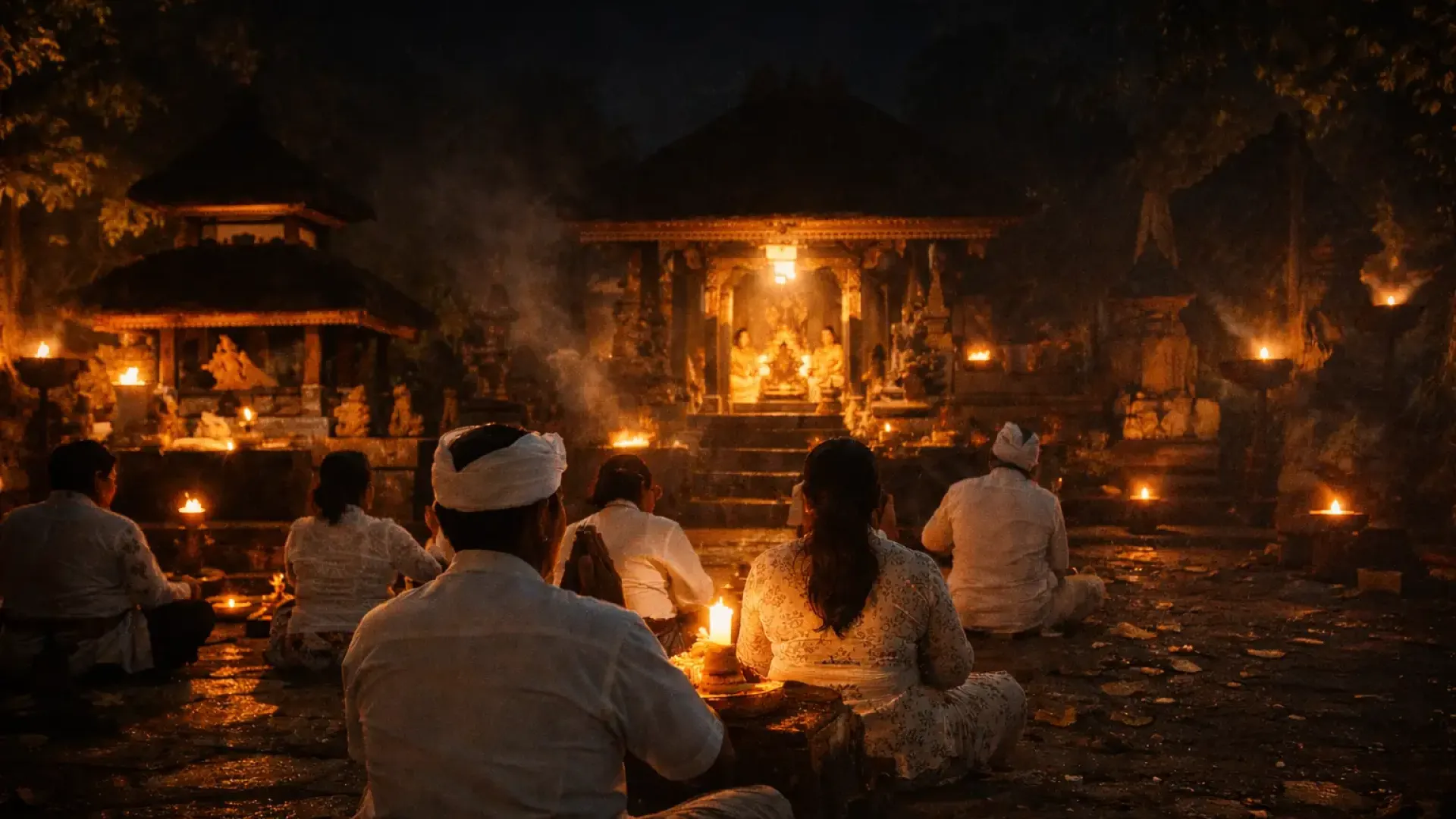
    Siwaratri literally means the night of Siwa. In Balinese Hindu understanding, this night is not about worshiping a distant god but about meeting oneself. As the island settles into darkness, temples remain open, lamps glow softly, and people sit longer with their thoughts.

    Unlike celebratory holy days, Siwaratri feels restrained. The air is quieter. Conversations are softer. For many families, this is the night to step away from routine pleasures and confront habits, regrets, and unspoken intentions. Siwaratri is about awareness rather than appearance.

    The Brata of Siwaratri in Bali

    Traditionally, Siwaratri is observed through self discipline known as brata. Some people stay awake through the night. Others limit food, drink, or sensory distractions. Yet in Bali, elders often remind the young that the heart of Siwaratri is not endurance but sincerity.

    You may sleep and still honor Siwaratri. You may eat and still reflect. What matters is whether the night is used to recognize mistakes, restrain harmful impulses, and restore clarity of mind. This is why Siwaratri resonates across generations. It is not about perfection but honesty.

    The Story of Lubdaka: An Accidental Awakening

    The soul of Siwaratri is inseparable from the story of Lubdaka.

    Lubdaka was a hunter, far from the image of a saint. One night, lost in the forest and surrounded by danger, he climbed a tree beside a lake to save himself from wild animals. Fear kept him awake. Hunger and thirst kept him alert. To stay conscious, he plucked leaves and dropped them into the water below.

    Unbeknownst to him, beneath the water stood a sacred symbol of Siwa. Each falling leaf became an offering. All night long, Lubdaka remained awake, fasting, alert, and inwardly shaken by the thought of death. That night was Siwaratri.

    Lubdaka did not intend to pray. He did not plan a ritual. Yet in that vulnerable state, stripped of habit and arrogance, he became fully aware of his life. According to tradition, that single night of awareness outweighed years of unconscious living. Lubdaka attained liberation not through status or learning, but through presence.

    Why Lubdaka Still Matters Today

    The story of Lubdaka explains why Siwaratri is so deeply personal in Bali. It teaches that spiritual transformation does not require ideal conditions. It can arise from fear, confusion, or crisis, as long as awareness is present.

    In a modern world filled with distractions, Lubdaka feels closer than ever. Many people encounter Siwaratri not in temples, but in moments of exhaustion, loss, or emotional pause. The lesson remains the same. One honest night of reflection can shift the direction of a lifetime.

    Experiencing Siwaratri as a Visitor

    For travelers in Bali, Siwaratri is often invisible at first glance. Shops stay open. Streets remain active. Yet behind closed doors and inside temple courtyards, a quieter Bali emerges. If you notice lights glowing late in family shrines or people sitting still longer than usual, you are witnessing Siwaratri.

    Visitors are not expected to participate in rituals. Respect is shown simply by understanding the atmosphere. Keep noise low near temples at night. Observe rather than intrude. Siwaratri is not performed for an audience.

    The Meaning That Lingers After Dawn

    When morning arrives, Siwaratri ends without fanfare. There are no parades, no fireworks. The change is internal. For those who truly observe it, Siwaratri leaves a subtle trace. A pause before reacting. A softer tone in speech. A renewed awareness of intention.

    That is the quiet power of Siwaratri. It does not demand transformation. It invites it.

  • Kecak Dance in Bali: Sacred Fire Dance at Sunset in Uluwatu

    Kecak Dance in Bali: Sacred Fire Dance at Sunset in Uluwatu

    Kecak Dance in Bali: When Fire, Chanting, and Sunset Become a Sacred Performance

    If you hear the word kecak dance for the first time, you might imagine a typical cultural show with costumes, music, and choreography. But standing on a cliff in southern Bali, as the sun melts into the Indian Ocean, you realize this is something entirely different. The kecak dance is not performed to entertain alone. It is chanted, breathed, and shared. It is one of the most visceral cultural experiences you can witness in Bali.

    I was born and raised on this island, and no matter how many times I hear the rhythmic “cak… cak… cak…” echo through the air, it still sends a quiet shiver down my spine.

    The First Sound You Never Forget

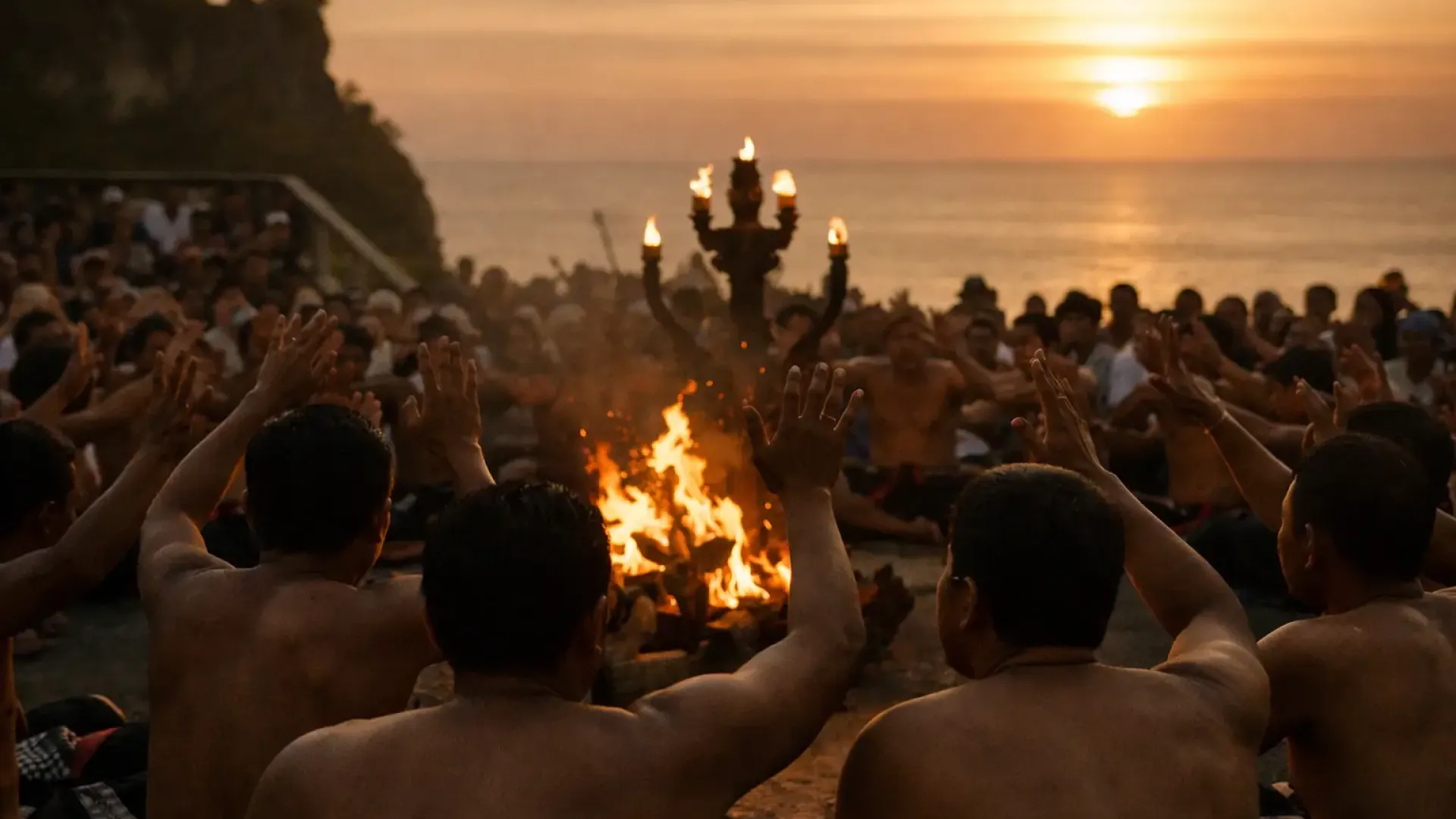
    Your first encounter with the kecak dance rarely begins with sight. It begins with sound. A low, pulsating chant rises from a circle of men, bare-chested, seated shoulder to shoulder. There are no instruments. No drums. No gamelan. Only voices. Human breath becomes rhythm, rhythm becomes energy.

    As dusk settles, torches flicker. Shadows stretch across ancient stone. When the fire is lit, the atmosphere shifts. This is not a stage performance in the modern sense. It feels closer to a ritual that happens to allow visitors to observe.

    Why the Kecak Dance Is Different From Other Balinese Dances

    Most traditional Balinese dances are accompanied by gamelan orchestras and refined hand gestures learned over years of disciplined training. The kecak dance breaks that rule entirely.

    Its roots lie in ancient trance rituals known as sanghyang, where chanting was used to invite spiritual protection. Over time, this sacred vocal rhythm merged with episodes from the Ramayana epic, transforming the ritual into the performance travelers recognize today.

    There is no orchestra because the human voice is the orchestra. Each “cak” acts like a drumbeat, building tension, releasing it, then pulling you back in. The absence of instruments makes the performance feel raw and primal, something that belongs to the earth rather than a palace.

    Watching Kecak at Uluwatu: Bali’s Most Iconic Setting

    Today, the most famous place to experience the kecak dance is at Uluwatu Temple. Perched on a dramatic limestone cliff, the open-air amphitheater faces the sea, allowing sunset to become part of the choreography.

    As the sky turns orange and then deep violet, the chanting intensifies. Flames dance higher. When Hanuman leaps through fire, sparks drift into the night air, carried by ocean wind. It is cinematic, yes, but it never feels artificial.

    This setting is why Uluwatu dominates search results, ticket pages, and travel itineraries. Yet even here, the performance still carries echoes of something older than tourism.

    Beyond the Cliff: Kecak as Living Tradition

    What many visitors do not realize is that the kecak dance is not exclusive to Uluwatu. In villages across Bali, kecak is still practiced in community spaces, often with fewer performers and no grand backdrop. These versions feel more intimate, sometimes closer to ritual than spectacle.

    In these settings, the chanting is slower, the fire smaller, and the audience often sits just meters away. You begin to notice individual voices, subtle rhythms, and the communal focus that defines Balinese culture. Kecak, at its core, is about togetherness. No single dancer dominates. The power lies in collective movement and sound.

    Fire, Trance, and the Human Voice

    Fire plays a crucial role in the kecak dance, not as a special effect, but as a symbol. In Balinese belief, fire represents purification and transformation. When performers step through flames, it reflects a spiritual passage rather than a stunt.

    The chanting itself can induce a trance-like state, not only for performers but also for viewers. Many visitors describe losing track of time, feeling absorbed by rhythm and repetition. This is no accident. Kecak was never designed to be passive entertainment. It was meant to involve everyone present, if only emotionally.

    Why the Kecak Dance Leaves a Lasting Impression

    Long after the final chant fades, silence lingers. People do not rush to speak. They stand, look at the dark ocean, and breathe. That pause is important. It is the moment when performance ends and reflection begins.

    The kecak dance stays with you because it bypasses language. You do not need to understand the Ramayana to feel its intensity. You do not need cultural knowledge to sense its power. It communicates through sound, fire, and shared presence.

    A Local Reflection

    As someone who grew up seeing kecak performed not for cameras, but for community, I believe its strength lies in its honesty. Even in its most touristic form, it retains a pulse that cannot be scripted.

    In Bali, culture is not something locked behind glass. It adapts, breathes, and sometimes performs at sunset for strangers. The kecak dance is proof that tradition can survive modern attention without losing its soul.

    Closing Thoughts

    If you plan to experience the kecak dance in Bali, come with open senses. Watch the fire, listen to the voices, and allow yourself to feel rather than analyze. This is not merely a show you check off a list.

    In Bali, the Kecak Dance is not something you simply watch.

    It is something you carry with you, long after the chanting ends.