Category: Article

  • Monsters on Parade: Everything You Need to Know About Bali’s Ogoh-Ogoh Night

    Monsters on Parade: Everything You Need to Know About Bali’s Ogoh-Ogoh Night

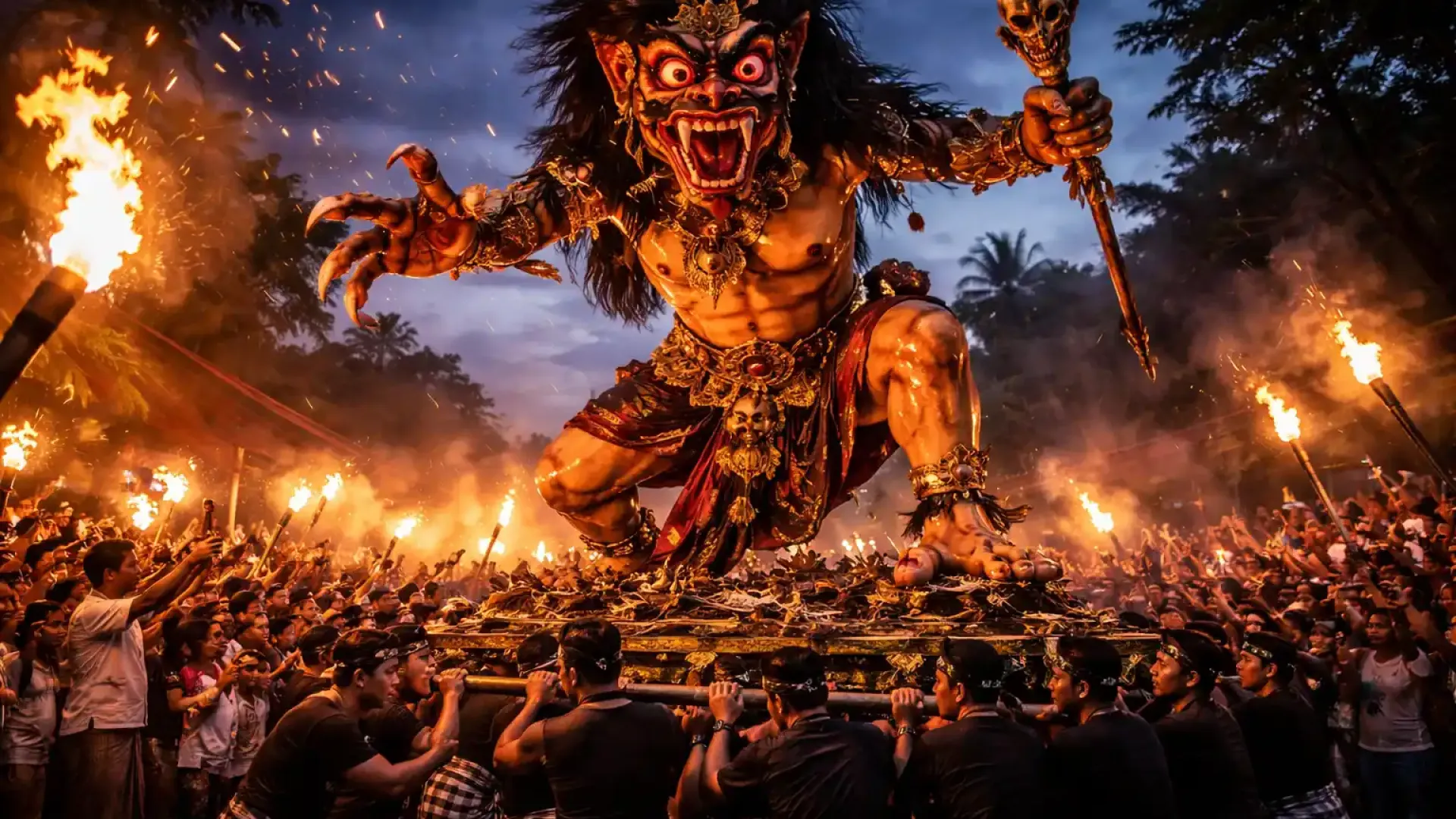
    Every year, on the eve of Nyepi, Bali explodes into sound, fire, and movement. Streets that will be completely silent the next day suddenly fill with drums, shouting, laughter, and towering demons carried high above the crowd. This is the Ogoh-Ogoh Parade Bali, a ritual night where chaos is not feared, but invited, confronted, and finally released.

    As someone born and raised on this island, I can tell you that Ogoh-Ogoh night is not entertainment in the usual sense. It is collective energy given form. A moment when Bali allows itself to be loud so it can truly be quiet the next day.

    The Myth Behind the Monsters: Bhuta Kala Unleashed

    The giant figures you see are called Ogoh-Ogoh, physical representations of Bhuta Kala. In Balinese Hindu belief, Bhuta Kala embodies untamed forces of nature and human emotion. Anger, greed, arrogance, fear. Everything that disrupts balance.

    Rather than denying these forces, Balinese philosophy teaches us to acknowledge them. Ogoh-Ogoh are intentionally exaggerated, grotesque, and intimidating. Bulging eyes, sharp fangs, twisted bodies. They are mirrors of excess. By parading Bhuta Kala through the streets, negative energies are drawn out, recognized, and symbolically neutralized before Nyepi begins.

    This is why Ogoh-Ogoh are not designed to be beautiful. They are designed to be honest.

    Every Banjar Has Its Own Demon

    What many visitors do not realize is that almost every banjar in Bali creates its own Ogoh-Ogoh. This is not a centralized festival with a few official statues. It is decentralized, local, and deeply personal.

    Each banjar pours its creativity, labor, and identity into a single creation. Some Ogoh-Ogoh are inspired by ancient epics. Others reflect social criticism, moral warnings, or even contemporary satire. This diversity is what makes the Ogoh-Ogoh Parade Bali feel alive. No two statues are ever the same, because no two communities are the same.

    Long before the parade, young men gather night after night in banjar halls, working under dim lights, sharing jokes, arguments, and pride. Rivalry exists, but it is playful. Every banjar wants to create something unforgettable.

    From Bamboo to Beast: The Handmade Process

    Traditionally, Ogoh-Ogoh begin with a bamboo framework, carefully balanced to be both strong and lightweight. Over this skeleton, paper, foam, and other materials are shaped by hand. Muscles are sculpted. Faces are painted. Details are obsessed over.

    At the same time, the gamelan baleganjur is rehearsed relentlessly. Rhythm and movement must align. When the Ogoh-Ogoh sways, spins, or jerks violently at intersections, it is not random. It is choreography powered by collective strength.

    Before any Ogoh-Ogoh is carried through the streets, however, there is one crucial step that cannot be skipped.

    Mlaspas: Bringing the Ogoh-Ogoh to Life

    Before the parade begins, each Ogoh-Ogoh undergoes a ritual called Mlaspas. This ceremony purifies and spiritually activates the statue. Until Mlaspas is performed, the Ogoh-Ogoh is considered incomplete. It is only an object.

    During Mlaspas, offerings are prepared, prayers are recited, and holy water is sprinkled. Through this ritual, the Ogoh-Ogoh is symbolically aligned with the unseen world. Only after Mlaspas can it be paraded, rotated at crossroads, or displayed publicly.

    This sequence matters deeply in Balinese culture. Creation comes first. Purification follows. Only then does public expression take place. It reflects a core belief that nothing should enter communal space without first being harmonized with spiritual forces.

    For travelers, understanding Mlaspas adds depth to what you witness later. The roaring demon dancing under torchlight has already passed through silence, prayer, and ritual.

    Ngrupuk Night: Fire, Noise, and Controlled Chaos

    The parade itself takes place on Ngrupuk night, the evening before Nyepi. As the sun sets, Bali transforms.

    Ogoh-Ogoh are lifted onto bamboo platforms carried by dozens of young men. At crossroads, the statues are spun violently to confuse negative spirits. Firecrackers explode. Torches light the way. Gamelan rhythms pound faster and louder.

    This is the loudest night of the year in Bali. Children sit on shoulders. Elders observe calmly from the sidelines. Visitors stand wide-eyed, often forgetting to film, simply absorbing the moment.

    Despite the intensity, there is discipline. Each banjar follows unwritten rules. This is chaos with boundaries. Energy with intention.

    Where to Watch the Ogoh-Ogoh Parade Bali

    For a large-scale, high-energy experience, head to Puputan Badung Square. Many of the most elaborate Ogoh-Ogoh gather here, and the atmosphere is electric.

    If you prefer something more intimate, explore local banjars in Seminyak or Canggu. In these neighborhoods, Ogoh-Ogoh pass close enough to feel the heat of the torches and hear the chants clearly.

    Choose one area and stay there. Roads close, traffic stops, and the best moments happen when you let the parade come to you.

    After the Fire Comes Silence

    What makes the Ogoh-Ogoh Parade Bali unforgettable is what follows. Within hours, the island enters Nyepi. No lights. No vehicles. No noise.

    After witnessing such intensity, the silence feels almost physical.

    This contrast is intentional. Chaos cleanses. Silence resets.

    Ogoh-Ogoh night is Bali at its most honest. Loud, spiritual, communal, and alive. It is not staged for tourists. It is a conversation between the seen and unseen, and if you are here, you are invited to witness it.

    Experience it fully. Then respect the silence that follows.
  • Chasing the Sacred: A Guide to Bali’s Melasti Purification Ritual

    Chasing the Sacred: A Guide to Bali’s Melasti Purification Ritual

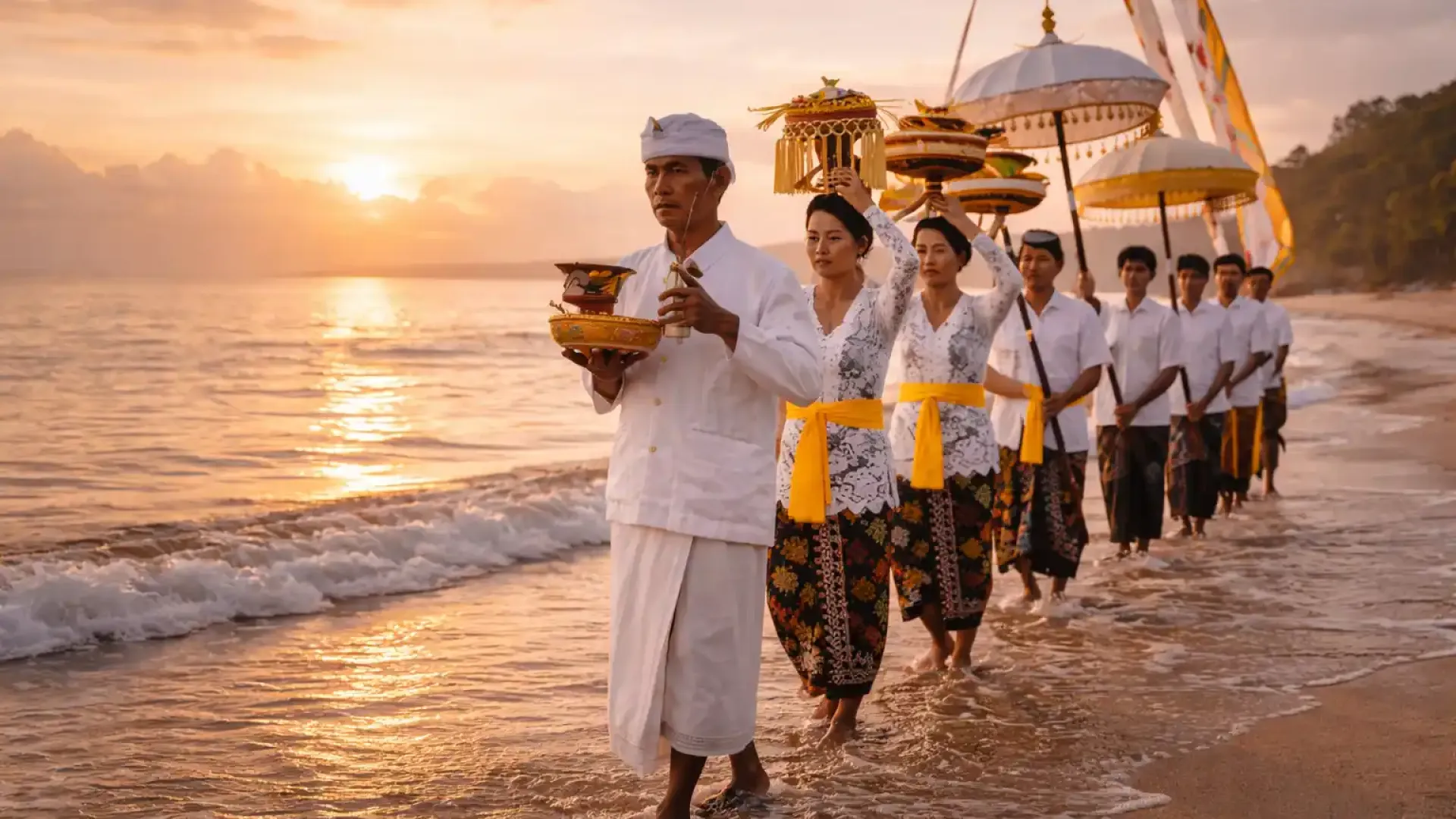
    The Melasti ceremony is often described as Bali’s most poetic contradiction. It is loud yet meditative, communal yet deeply personal. As a Balinese who grew up watching these processions long before they became a point of fascination for international travelers, I still feel the same quiet awe each time I see white-clad villagers walking toward the sea at dawn.

    For visitors, Melasti is more than a photo opportunity. It is best understood as purification before silence, a collective act of cleansing that prepares the island spiritually for Nyepi, Bali’s Day of Silence. To witness Melasti respectfully is to momentarily step inside Bali’s inner rhythm, where ritual is not a performance but a necessity of balance.

    Melasti: Purification Before Silence

    In the Balinese Hindu calendar, Melasti takes place three to four days before Nyepi. Entire villages leave their temples and move together toward the sea or other sacred water sources. The ocean, in Balinese cosmology, is not chaotic or profane. It is a vast purifier, capable of absorbing spiritual impurities accumulated over the year.

    Sacred temple objects, heirlooms, and effigies are carried carefully in long processions. These items are believed to hold spiritual energy, which must be ritually cleansed before the island enters Nyepi’s complete stillness. Melasti is therefore not a standalone ceremony. It is a necessary passage. Without purification, silence would be empty.

    Walking beside these processions, you sense intention rather than spectacle. Every step, chant, and offering carries weight. The ceremony reminds us that balance is not achieved through grand gestures, but through repetition, humility, and shared responsibility.

    A Living Visual Spectacle

    From a visual perspective, Melasti is unforgettable. Entire coastlines transform into moving canvases of white. Men, women, and children wear traditional white clothing, symbolizing purity and spiritual readiness. Umbrellas, banners, and ceremonial cloths sway gently in the sea breeze.

    The soundscape is equally immersive. Gamelan orchestras accompany the processions, their metallic rhythms echoing against cliffs and waves. At the shoreline, prayers are offered as holy water is drawn from the sea, sprinkled over participants, and symbolically returned to the ocean.

    For photographers, this is Bali at its most cinematic. Yet what makes Melasti powerful is not composition or color. It is continuity. The same rituals have unfolded here for centuries, long before cameras arrived.

    Three Beaches Where Melasti Is Especially Moving

    While Melasti happens across the island, certain beaches offer especially memorable settings due to scale, accessibility, and atmosphere.

    Melasti Beach

    Set beneath dramatic limestone cliffs in South Bali, Melasti Beach hosts large-scale ceremonies from surrounding villages. The contrast between white-clad worshippers and turquoise water is striking, especially in the early morning light.

    Canggu

    Canggu’s Melasti ceremonies are more intimate, reflecting the area’s village roots despite its modern reputation. Here, rituals unfold against volcanic sand beaches, creating a quieter, more grounded experience.

    Sanur

    Sanur’s calm shoreline and sunrise orientation make it ideal for witnessing Melasti in a contemplative mood. Many villages from Denpasar and eastern Bali converge here, creating long, graceful processions along the water’s edge.

    Practical Tips for Visitors

    Witnessing Melasti comes with unspoken responsibilities. Respect is not optional. It is expected.

    What to Wear

    Visitors should wear modest clothing. A sarong and sash are strongly recommended, even if you are only observing. White clothing is acceptable but not required for non-participants.

    Photography Etiquette

    Maintain a respectful distance, especially during prayers. Avoid blocking processions or stepping in front of offerings. If unsure, observe quietly first. The best images often come when you stop chasing them.

    Timing Your Visit

    Melasti usually takes place three to four days before Nyepi, but dates vary according to the Balinese calendar. Ceremonies often begin early in the morning and can last several hours. Arriving before sunrise offers both softer light and fewer crowds.

    Reflection: Why Melasti Matters

    For many travelers, Melasti becomes their first real encounter with Balinese spirituality beyond temples and performances. It reveals a culture where religion is not confined to sacred spaces but woven into daily life and geography.

    As someone raised here, I see Melasti as a reminder that Bali’s beauty is not accidental. It is maintained through rituals that ask people to pause, cleanse, and realign. The ceremony teaches patience, humility, and collective care. Values that feel increasingly rare in a fast-moving world.

    Witness, Don’t Consume

    If you are fortunate enough to be in Bali during Melasti, consider it an invitation rather than an attraction. Stand quietly. Watch the waves receive centuries of prayers. Let the rhythm slow you down.

    In a world obsessed with noise, Melasti prepares Bali for silence. And in doing so, it offers visitors something rare: a chance to witness devotion without spectacle, and beauty without ownership.

  • Rent a Scooter in Bali Safely: Why an International Driving Permit Is Now Mandatory

    Rent a Scooter in Bali Safely: Why an International Driving Permit Is Now Mandatory

    The International Driving Permit in Bali is no longer a grey area. It is now a clear legal requirement if you plan to rent and ride a scooter or motorbike on the island. Many travelers still arrive assuming a local license or confidence on two wheels is enough. It is not.

    As someone born and raised in Bali, I have seen how quickly things change here, especially when safety and regulation become priorities. Today, riding without the correct documents can turn a beautiful day into a costly and stressful experience.

    Why the International Driving Permit in Bali Matters

    If you are asking, “Do I really need an International Driving Permit in Bali?”, the answer is simple. Yes.

    Bali’s police have become far stricter with international tourists who do not follow local traffic laws. If you want to rent a scooter or motorbike, you must carry both your national driving license and an International Driving Permit in Bali at all times.

    Police checkpoints are no longer rare. They appear in popular tourist areas, near beaches, and on main roads connecting destinations. If you cannot show a valid IDP, fines are common, insurance claims can be rejected, and rental agreements may become invalid.

    This shift is not about targeting tourists. It is about safety. Bali sees thousands of motorbike accidents every year, many involving visitors unfamiliar with local road conditions.

    Riding a Scooter in Bali Is Not as Simple as It Looks

    From the outside, Bali looks easy to ride. Scooters flow through narrow roads, villages, and beach towns like a quiet river of movement. But beneath that rhythm is an unspoken system locals grow up with.

    Road rules here mix written law and cultural instinct. Priority is negotiated, not enforced by traffic lights. For visitors, this can be overwhelming. That is why the government now insists on proper licensing.

    The International Driving Permit in Bali is proof that you are legally qualified to ride. Without it, you are considered unlicensed, regardless of how skilled you feel.

    What If You Did Not Arrange an IDP Before Arriving in Bali?

    Many travelers realize this requirement too late. Flights are booked, hotels confirmed, and suddenly the question appears after landing.

    If you do not have an IDP and could not arrange one before arrival, there is still a solution.

    You can safely purchase an International Driving Permit online through a licensed and accredited provider. With the right partner, you can receive a digital PDF version within minutes and have a printed copy delivered directly to your hotel in Bali.

    This option exists for convenience, but it must be done carefully.

    Be Careful of Online Scams and Unlicensed Providers

    Bali has seen a rise in online scams targeting tourists. These include fake visas, invalid driving permits, tourist tax shortcuts, and unofficial services advertised even through search engines.

    Not all websites selling IDPs are legally recognized. An invalid permit will not protect you during a police check or accident.

    If you need an International Driving Permit in Bali, only choose accredited providers and follow official government references or trusted partners. Avoid offers that feel rushed, unusually cheap, or unclear about legal recognition.

    A Responsible Way to Explore Bali

    Riding a scooter gives freedom. You can stop at roadside temples, reach quiet beaches, and explore villages far from tour buses. But freedom in Bali comes with responsibility.

    Having an International Driving Permit in Bali is not just about avoiding fines. It is about respecting local law, protecting yourself, and ensuring your travel insurance remains valid.

    Bali welcomes visitors warmly, but the island also asks that you ride responsibly. Prepare properly, follow the rules, and your journey will remain what it should be: smooth, safe, and memorable.

  • Don’t Miss This Before You Fly: Pay Your Bali Tourist Tax Now!

    Don’t Miss This Before You Fly: Pay Your Bali Tourist Tax Now!

    When you’re planning an unforgettable escape to Bali, the Island of the Gods, there’s one new travel requirement every international visitor must know about before stepping off the plane: the Bali Tourist Tax. This levy isn’t just another fee; it’s part of Bali’s vision to preserve its culture, environment, and future as a world-class destination.

    What Is the Bali Tourist Tax?

    Bali introduced a mandatory tourist levy for all international visitors known officially as the international tourism tax. It is charged by the Bali Provincial Government and applies to all foreign tourists arriving on the island, whether you’re coming from abroad or from another Indonesian province.

    This is a local tax specific to Bali and separate from Indonesia’s national visa fees.

    How Much Do You Pay?

    Every international traveler is required to pay IDR 150,000 per person, which is roughly USD 10 / AUD 15.

    Here are a few key points:

    • The tax is payable once per Bali trip.
    • Children and adults alike pay the same fee, there’s no age discount.
    • If you leave Bali and return later on the same trip, you’ll not have to pay again as long as you haven’t exited Indonesia.

    Why Bali Is Charging This Tax

    The levy isn’t just a travel bureaucracy, it’s part of a broader effort to support:

    • Preservation of Balinese culture, traditions, and arts
    • Protection of the island’s unique natural environment
    • Improvement in tourism services and visitor experiences
    • Long-term sustainability of Bali’s tourism sector

    In essence, every visitor contributes to keeping Bali beautiful, authentic, and welcoming for generations to come.

    How and When to Pay

    You have two options for payment:

    1. Online (Recommended)

    Pay in advance via the official Love Bali (lovebali.baliprov.go.id) website before you arrive. This is the safest and easiest way to secure your tourist tax QR code ahead of time.

    2. On Arrival

    If the government portal isn’t working or you couldn’t pay ahead, you can also settle the tax at designated counters at airports or seaports when you arrive.

    ⚠️ Important: Don’t pay through third-party websites that claim to handle the tax for you, they may be scams charging much higher fees. Always use the official government site.

    Who Is Exempt From Paying?

    Certain visitors do not have to pay the tax, including:

    • Diplomatic and official visa holders
    • Crew members of international flights and ships
    • Residents with KITAS or KITAP (temporary or permanent stay permits)
    • People on student visas or family reunification visas
    • Some foreign visa categories may be exempt after applying in advance.

    If you think you qualify for an exemption, apply at least 5 days before arrival via the official portal.

    What Happens If You Don’t Pay?

    While routine checks at immigration aren’t strictly enforced yet, authorities may enforce payment checks at popular tourist sites or departure points in the future. That means you could risk fines or complications if you haven’t paid the levy.

    Paying early not only saves time but can help you avoid unexpected stress during your holiday.

    Final Word

    The Bali Tourist Tax is a small fee for a big purpose. By contributing just IDR 150,000, you help protect Bali’s culture, environment, and quality of life for both locals and visitors. Whether you’re dreaming of emerald rice terraces, sacred temples, or sapphire-blue seas, this levy ensures that Bali remains a paradise worth returning to.

  • Escape Bali the Right Way

    Escape Bali the Right Way

    A Mood-Based Guide to Kintamani, Tegallalang, Penebel, and Manggis Karangasem

    Not every traveler comes to Bali for excitement. Many arrive carrying invisible weight. Burnout. Noise. Emotional fatigue. And while Ubud has long been known as Bali’s spiritual heart, it no longer offers the silence many people are seeking.

    If your intention is escape in Bali, real escape, not just a change of scenery, choosing the right place matters more than choosing the most famous one. Bali is rich with forests, villages, and sacred landscapes, but each area holds a different emotional tone.

    This guide compares four Ubud-like destinations through one lens only: your mood. Not popularity. Not Instagram. Just how you actually feel.

    Kintamani

    For clarity, distance, and mental space

    Kintamani sits high above the island, shaped by volcanic land, pine forests, and cold mountain air. The landscape feels open and honest. There is nowhere to hide here, and that is what makes it powerful.

    This is not the Bali of comfort. It is the Bali of perspective. When you stand facing Mount Batur and Lake Batur at sunrise, your problems do not vanish, but they shrink. Thoughts slow down naturally because the space around you is vast.

    Choose Kintamani if you feel mentally overwhelmed and need distance from everything familiar. It is ideal for solo travelers, writers, and anyone seeking clarity rather than emotional warmth.

    Tegallalang

    For balance without isolation

    Tegallalang is often misunderstood. Most visitors only see the famous rice terraces, but the real magic lies deeper in the villages and forested valleys nearby.

    Here, rivers flow quietly, jungle paths invite slow walks, and village life continues without performance. You are not cut off from the world, but you are no longer consumed by it.

    Tegallalang is perfect if Ubud feels too busy but total isolation feels intimidating. It offers a gentle transition. Nature is present, but life is still close enough to feel reassuring.

    This area suits couples, first time visitors to Bali, and travelers who want calm without disappearing completely.

    Penebel

    For deep rest and true silence

    Penebel is not curated. It does not try to impress. That is exactly why it works.

    Located in Tabanan, this area is defined by endless rice fields, ancient subak irrigation, and villages that move at their own pace. There are no crowds and no pressure to do anything.

    This is where your nervous system finally exhales.

    Penebel is best for those experiencing burnout, emotional exhaustion, or decision fatigue. Days here feel long in the healthiest way. Walking slows. Breathing deepens. Silence becomes restorative rather than empty.

    If your idea of escape in Bali is to truly rest, not consume, Penebel is one of the island’s strongest answers.

    Manggis

    For emotional grounding and gentle healing

    Manggis sits quietly in East Bali, framed by hills, rivers, and a distant connection to the sea. The energy here feels softer and more intimate than the highlands.

    Villages in Manggis are calm and welcoming without intrusion. The landscape holds you rather than challenges you. Reflection comes naturally, supported by warmth instead of silence alone.

    Choose Manggis if you are not escaping pain, but processing it. This area suits travelers who need emotional grounding, creative recovery, or a sense of being gently supported by their surroundings.

    It is a powerful place for long stays, slow mornings, and inward journeys.

    How to Choose the Right Escape in Bali

    Ask yourself one honest question before booking anything.

    What do I need right now?

    • Mental space and clarity → Kintamani
    • Calm with connection → Tegallalang
    • Deep rest and silence → Penebel
    • Emotional grounding → Manggis Karangasem

    Bali does not heal by default. It heals when the place matches your inner state.

    Final Reflection

    True escape in Bali is not about running away. It is about choosing a landscape that supports where you are emotionally.

    When you stop chasing destinations and start listening to yourself, Bali reveals its quieter side. One that does not entertain you, but restores you.

    If Ubud no longer feels right, that is not a failure. It is a sign you are ready for a different kind of stillness.

    Ready to escape Bali the right way?

    Choose the place that meets you where you are, not where travel trends tell you to go.

  • Finding Your Perfect New Year in Bali 2025: Party, Peace, or Adventure

    Finding Your Perfect New Year in Bali 2025: Party, Peace, or Adventure

    One of the quiet truths about Bali is that it never forces you into a single way of celebrating. The island adjusts itself to your character, almost as if it has been waiting for you. New Year in Bali 2025 can be loud, silent, spiritual, or entirely off-grid—depending on the traveler you are.

    For the Party Seekers

    You’ll find your rhythm in Canggu, Seminyak, Kuta, and Uluwatu.

    Here, the countdown feels like electricity humming in the air. Fireworks, dancing, neon reflections on the sea—perfect for those who think a new year should start with motion, music, and the thrill of being surrounded by strangers who feel like friends for one night.

    For the Reflective Souls

    Ubud holds space for those who want a gentler entry into the year.

    Think candlelit meditations, sound baths, breathwork circles, and quiet conversations under palm shadows. New Year in Bali 2025 becomes a soft turning of the page, not an explosion. Here, silence is not empty; it is restorative.

    For the Dreamers and Romantics

    You might find your place on the shores of Sanur, where sunrise feels like a private blessing. Or on a rooftop in Seminyak watching fireworks ripple across distant coastlines. Romantics thrive where the light shifts slowly, where the night blends into morning like a watercolor.

    For the Off-Grid Wanderers

    Some travelers aren’t looking for parties or ceremonies. They want space.

    Nusa Penida, Amed, Sidemen, Pemuteran, or even a quiet guesthouse near the rice terraces become sanctuaries. No countdown, no crowds—just the sound of geckos, wind brushing through bamboo, and your own thoughts unfolding freely.

    Starting New Year in Bali 2025 off-grid feels like choosing yourself before choosing the world.

    For the Adventurers

    The hikers and sunrise-chasers begin the year on Mount Batur.

    There is no fireworks show, only the slow bloom of orange light across the horizon. The first breath of the year tastes like volcanic air and possibility.

    For Families

    Families find comfort in Nusa Dua, where celebrations are warm, organized, and child-friendly. Safe beaches, curated dinners, synchronized fireworks—perfect for those who want to celebrate without chaos.

    Where You Celebrate Shapes How You Begin

    Adding this personalization deepens the entire article because it says something true:

    New Year in Bali 2025 is not one experience. It is a mirror. It reflects the traveler’s mood, needs, and inner landscape.

    Some need noise, some need quiet.

    Some need crowds, some need solitude.

    Some need healing, some need adventure.

    Some need to feel alive, some need to feel safe.

  • Gebogan: Meaning, Structure, and Philosophy in Balinese Hindu Offerings

    Gebogan: Meaning, Structure, and Philosophy in Balinese Hindu Offerings

    Defining Gebogan

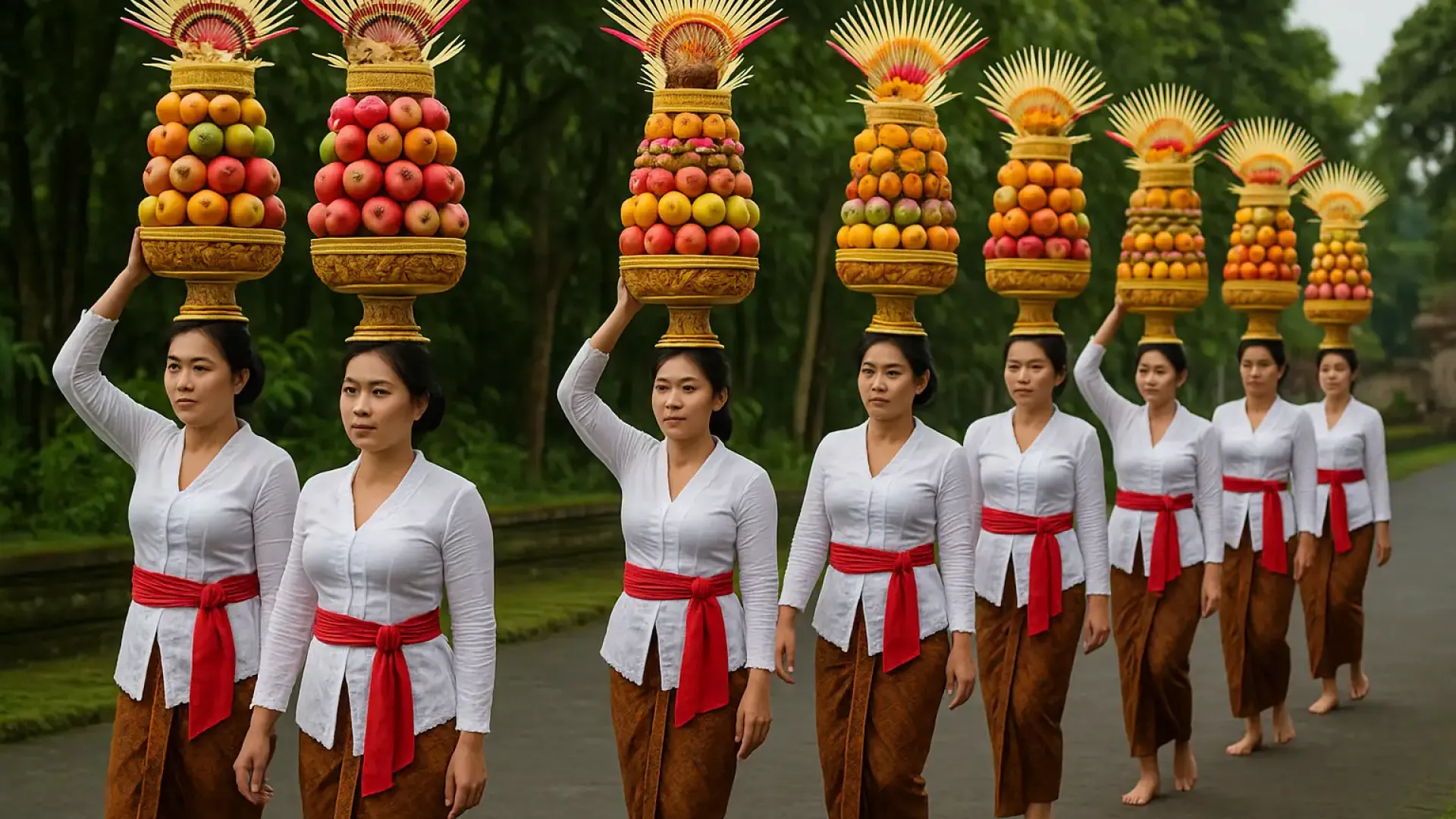
    Gebogan—also known as Pajegan—is one of the most iconic offering forms in Balinese Hinduism. It consists of carefully arranged fruits, traditional cakes (jajan), and flowers, placed on a dulang (a wooden ceremonial tray). The structure is typically carried on the head by Balinese women as part of ritual processions toward the temple.

    As a central component of ceremonial life, Gebogan represents devotion, gratitude, and the harmonious connection between humans, nature, and the divine.

    Cultural and Religious Significance of Gebogan

    Gebogan holds an important place in Balinese ceremonial expression. It reflects principles of yadnya (sacrifice), bhakti (devotion), and rasa syukur (gratitude). The offering is not merely symbolic; it is a tangible demonstration of the Balinese commitment to maintaining cosmic balance through ritual practice.

    Key Cultural Functions:

    • Representation of abundance: Fruits and cakes symbolize prosperity and sustenance granted by nature.
    • Expression of devotion: The height and precision of the arrangements reflect dedication toward the divine.
    • Communal identity: The preparation of Gebogan strengthens intergenerational knowledge and collective responsibility within Balinese families and communities.

    Structure and Components of Gebogan

    Gebogan is built vertically, ascending in layers that create a conical form. The structure typically consists of:

    1. The Base (Dulang)

    A round wooden tray that acts as the foundation. Its stability symbolizes grounding, humility, and the interconnectedness of all creation.

    2. The Arrangement of Fruits and Cakes

    Fruits and traditional sweets form the core elements. They are arranged tightly upward to form a tower-like structure. The aesthetic of neatness, symmetry, and harmony is essential, reflecting principles of Balinese artistry.

    3. The Peak (Canang Sari and Sampyan)

    At the top, a small offering called Canang Sari is placed, often accompanied by Sampyan—a decorative arrangement made of young coconut leaves (janur). This crown symbolizes the culmination of devotion and serves as the final gesture of gratitude to Ida Sang Hyang Widhi Wasa.

    Symbolism of the Cone-Shaped Form

    The tapering, mountain-like shape of the Gebogan carries profound philosophical meaning:

    1. Representation of Mount Meru

    The conical form symbolizes Mount Meru, the sacred cosmic axis in Hindu cosmology. It reflects the Balinese understanding of the universe as layered, ascending toward the divine source.

    2. Movement Toward Purity

    The upward narrowing structure represents spiritual elevation. Each layer signifies the journey from the earthly realm (bhur), through the middle world (bwah), toward the highest divine realm (swah).

    3. Balance Between Aesthetic and Devotion

    While aesthetically impressive, the true value lies in intention. Balinese teachings emphasize that Gebogan’s worth is not measured by height or cost but by sincerity and purity of heart.

    Panca Rengga: The Philosophical Basis for Fruit Selection

    Traditional Gebogan follows the principle of Panca Rengga, the five categories of fruits symbolizing the diversity of nature’s gifts. Each type represents a different botanical origin:

    1. Fruits Born from Flowers

    Examples: mango, apple, orange, guava

    Meaning: gratitude for natural cycles of blooming and fruition.

    2. Fruits That Bear Once Before the Plant Dies

    Example: banana

    Meaning: acknowledgment of impermanence and life’s transitions.

    3. Fruits That Grow Directly on the Trunk or Branches

    Examples: jackfruit, durian, langsat, lychee

    Meaning: connection between earthly nourishment and spiritual sustenance.

    4. Scaly Fruits

    Examples: pineapple, salak, dragon fruit

    Meaning: diversity in form and the complexity of creation.

    5. Root-Based Fruits

    Examples: yam, bengkuang, ketela

    Meaning: grounding elements of life derived from the earth’s depths.

    This categorization reinforces balance, completeness, and respect for the natural world.

    Ritual Context and Usage of Gebogan

    Gebogan is used in a wide range of religious ceremonies, both family-centered and communal. It is most commonly seen during:

    • Odalan (temple anniversaries)
    • Galungan and Kuningan
    • Piodalan besar (major temple festivals)
    • Weddings and tooth-filing ceremonies (Metatah)
    • Offerings to ancestral shrines (Sanggah / Merajan)

    During these rituals, women dressed in traditional kebaya carry the Gebogan gracefully on their heads in vibrant ceremonial processions, reflecting discipline, balance, and devotion.

    Aesthetic Considerations and Artistic Value

    Gebogan is not merely functional; it is a form of ritual artistry. Key aesthetic principles include:

    • Symmetry and neatness
    • Color harmony between fruits, cakes, and flowers
    • Visual balance from base to peak

    While artistic expression is appreciated, Balinese philosophy emphasizes that sincerity outweighs complexity. The aesthetic is secondary to devotion.

    Gebogan stands as a comprehensive symbol of Balinese spirituality, ecology, artistry, and gratitude. Its form, components, and ritual use reveal a sophisticated integration of religious philosophy and cultural identity. By understanding the meanings embedded in this offering, one gains deeper insight into Bali’s living tradition of maintaining harmony between humans, nature, and the divine.

  • Canang Sari: Meaning, Structure, and Symbolism in Balinese Hinduism

    Canang Sari: Meaning, Structure, and Symbolism in Balinese Hinduism

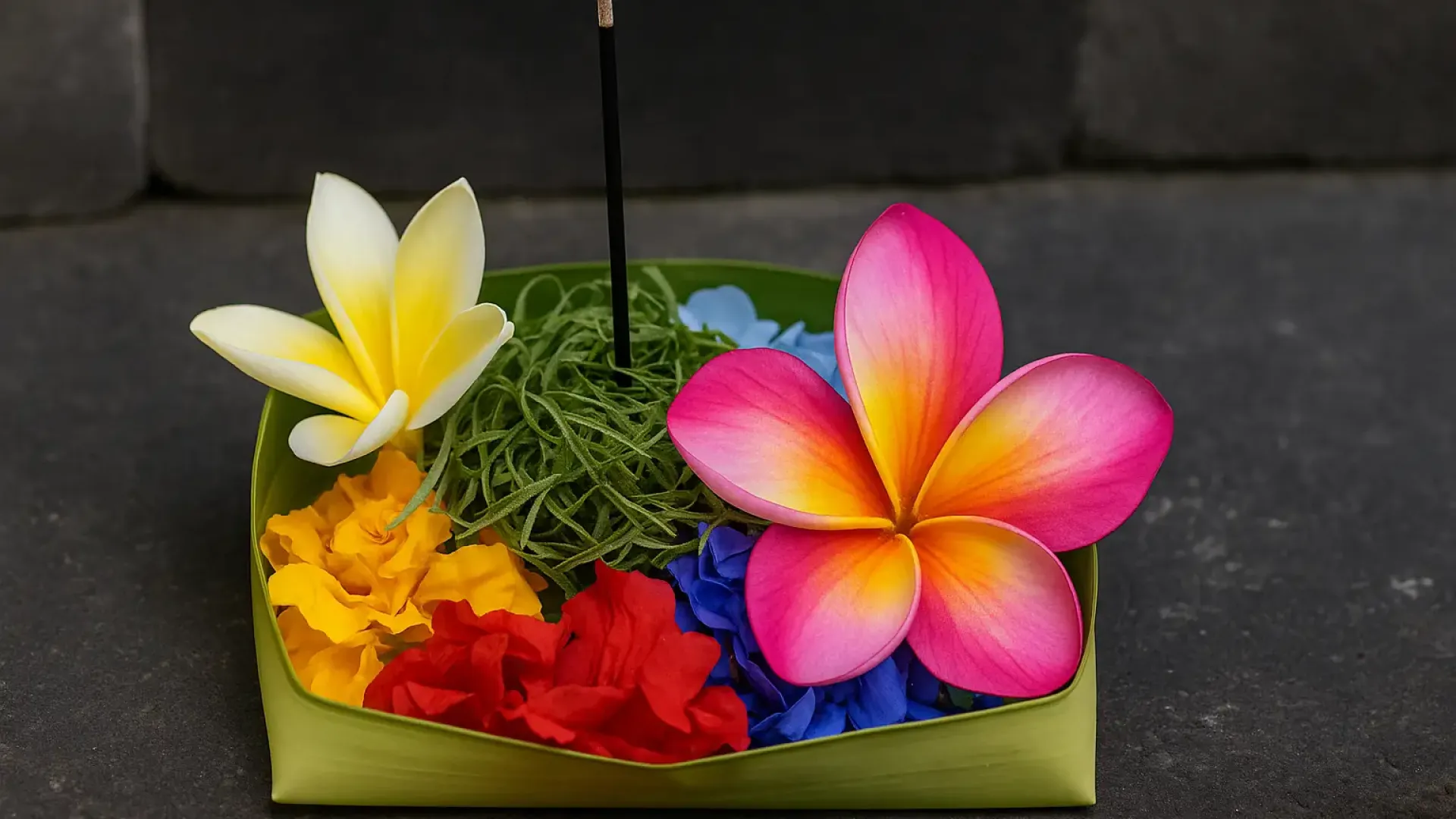
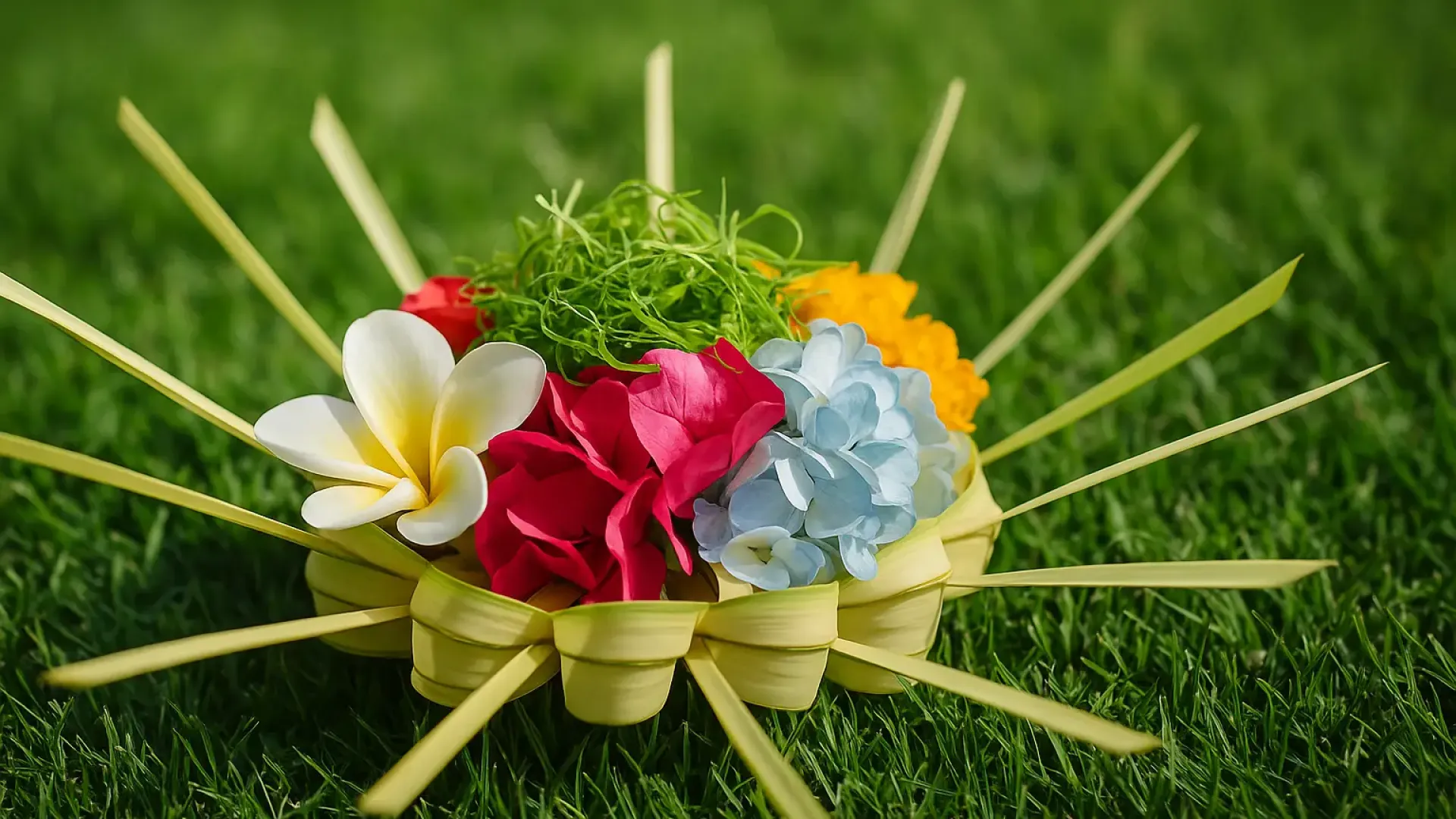
    Canang Sari is one of the most essential daily offerings in Balinese Hinduism. Used in homes, temples, shrines, businesses, and public spaces, it represents gratitude, devotion, and harmony. As part of the broader category of banten (offerings), Canang Sari combines symbolic elements that embody core philosophical concepts in Balinese spirituality.

    This long-format article explains the definition, history, structure, materials, and symbolic meanings of Canang Sari without using narrative or storytelling elements.

    1. Definition of Canang Sari

    Canang Sari is a daily upakāra (ritual offering) created to honor Ida Sang Hyang Widhi Wasa, the supreme God in Balinese Hinduism. It is placed at shrines, temples, entryways, streets, or even on vehicles as a form of devotional expression, seeking balance between the physical and spiritual worlds.

    The offering belongs to a group of canang, a category of small woven-leaf containers filled with symbolic components. Variations of canang include Canang Genten, Canang Burat Wangi, Lenge Wangi, Canang Sari, and Canang Meraka.

    Among these, Canang Sari is the most widely used in daily worship.

    2. Etymology

    The term canang sari derives from:

    • Sari – meaning “essence” or “core.”
    • Canang – referring to the small container made from young coconut leaves (janur).
    • In Balinese linguistic tradition, canang is connected to the word “sirih” (betel leaf), once considered a valuable item of respect and honor.

    Another interpretation comes from Balinese priest Ida Pedanda Gede Made Gunung, who explained that canang comes from two Old Javanese (Kawi) syllables:

    • ca meaning “beautiful,”
    • nang meaning “purpose.”

    Thus, canang can be understood as an offering aimed toward beauty or divine harmony, directed to the Devata Nawa Sanga, the nine deities guarding the cardinal directions.

    3. Components and Symbolism of Canang Sari

    A complete Canang Sari consists of several structured elements. Each component carries philosophical and spiritual meaning. The offering is not only decorative but represents the structure of life, the human body, the cosmos, and the qualities needed for spiritual balance.

    3.1 Ceper

    • The base of the offering.
    • A square tray symbolizing the angga-sarira (physical body).
    • Its four sides represent:
    • Panca Maha Bhuta (five great elements),
    • Panca Tan Matra (subtle elements),
    • Panca Buddhindriya (five senses),
    • Panca Karmendriya (five organs of action).
    • Symbolizes Ardha Candra (crescent moon) when paired with certain shapes, representing balance and cosmic order.

    3.2 Rice (wija)

    • Represents Sang Hyang Atma, the divine soul or life force.
    • Symbolizes the seed of life originating from God.

    3.3 Porosan

    A crucial element made of:

    • Betel leaf (sirih),
    • Lime paste (kapur),
    • Areca nut (jambe/gambir).

    Symbolism:

    • Represents Tri Premana — thought (bayu), speech (sabda), and action (idep).
    • Symbolizes the Trimurti:
    • Shiva (lime),
    • Vishnu (betel leaf),
    • Brahma (areca nut).
    • Encourages a heart filled with love, compassion, and gratitude.

    3.4 Cakes, sugarcane, and banana

    • Symbolize Tedong Ongkara, expressing the forces of creation (utpatti), preservation (sthiti), and dissolution (pralina).
    • Represent the cycle of life in the universe.

    3.5 Sampian Uras

    • A circular arrangement of coconut leaves.
    • Usually crafted with eight segments.
    • Represents the wheel of life and the Asta Iswarya, the eight divine qualities that guide human existence.

    3.6 Flowers (Bunga)

    Flowers are arranged according to the four cardinal directions:

    ColorDirectionRepresentsWhiteEastIswaraRedSouthBrahmaYellowWestMahadevaBlue/GreenNorthVishnu

    In the center:

    • Mixed flowers (kembang rampai) represent Panca Dewata, the five manifestations of God.

    Flowers symbolize purity, sincerity, harmony, and peace.

    3.7 Kembang Rampai

    • A mixture of various flowers placed on top.
    • Represents wisdom.
    • Symbolizes the duality of life — pleasant and unpleasant experiences — reminding humans to remain wise and centered.

    3.8 Lepa

    • A fragrant paste (boreh miyik).
    • Symbolizes good conduct and moral behavior.

    3.9 Scented Oil (miyik-miyikan)

    • Represents calmness, self-control, and inner peace.
    • Encourages individuals to approach life with clarity and composure.

    3.10 Pis Bolong or Money

    • A small coin (traditional uang kepeng, or “pis” in Balinese) or a small note.
    • Represents the sari (essence) of the offering.
    • Symbolizes sincerity and the human effort to give something of value.

    4. Purpose and Function

    The primary purposes of Canang Sari include:

    • Expressing gratitude to God for life and prosperity.
    • Maintaining balance between the seen (sekala) and unseen (niskala) worlds.
    • Neutralizing negative energies.
    • Honoring deities associated with specific directions.
    • Showing respect to ancestral spirits.
    • Sustaining the harmony known as Tri Hita Karana:
    • Human–God relationship,
    • Human–human relationship,
    • Human–nature relationship.

    Canang Sari is not intended to ask for material blessings but primarily serves as an expression of thankfulness and spiritual balance.

    5. Placement and Ritual Practice

    • Canang Sari is placed on household shrines (sanggah), temples (pura), workplaces, vehicles, and public spaces.
    • Placement depends on the intention:
    • On the ground: to neutralize negative elements.
    • On a shrine/table: to honor gods and divine manifestations.
    • Completed with the ritual act of mantra and sprinkling holy water (tirta).

    Canang Sari represents one of the most distinctive and meaningful elements of Balinese Hindu tradition. Through its components and symbolism, it reflects core spiritual principles: purity of intention, harmony between realms, gratitude, and moral conduct. As a daily practice, it strengthens the spiritual balance of individuals and the broader community.

  • Manis Galungan and Manis Kuningan The Sweet Closings of Bali’s Sacred Cycle

    Manis Galungan and Manis Kuningan The Sweet Closings of Bali’s Sacred Cycle

    In Balinese Hindu tradition, major ceremonial days are often followed by a moment of calm that allows families to reconnect after the intensity of prayer. Two of the most important examples are Manis Galungan and Manis Kuningan, gentle follow up days that bring a sense of warmth and togetherness to the broader Galungan and Kuningan celebrations.

    What is Manis Galungan

    Manis Galungan, also known as Umanis Galungan, takes place one day after Galungan, on Wraspati Umanis Wuku Dungulan. While Galungan itself is a major spiritual milestone that honors the triumph of dharma over adharma, Manis Galungan is quieter. The mood becomes lighter and the focus shifts from ritual intensity to human connection.

    On this day, Balinese Hindus usually:

    • Visit family and relatives for simakrama, the tradition of strengthening relationships.
    • Share food and blessings as a continuation of gratitude.
    • Stroll through villages or visit temples in a relaxed way.
    • Offer light prayers to maintain balance and harmony.

    Manis Galungan is often described as a day of sweetness. It marks the moment when homes open to relatives and the atmosphere becomes gentle after the sacred peak of Galungan.

    What is Manis Kuningan

    Manis Kuningan takes place one day after Kuningan, which occurs ten days after Galungan. Kuningan is believed to be the day when ancestral spirits return to the heavens after visiting their descendants. Manis Kuningan, therefore, is a calm and reflective closing to the entire Galungan period.

    The activities on Manis Kuningan are similar in spirit to Manis Galungan, although the mood is slightly more contemplative. People often:

    • Visit family to share the final joy of the festival cycle.
    • Pray lightly in gratitude for blessings received.
    • Spend peaceful time at home as the ceremonial season concludes.

    Many Balinese describe Manis Kuningan as the gentle farewell to the divine presence that has been honored over the previous days.

    Why These Days Matter

    While Galungan and Kuningan carry deep ritual significance, Manis Galungan and Manis Kuningan focus on social harmony and emotional balance. They remind the community that spiritual life is not only about offerings and ceremonies but also about nurturing relationships, gratitude and peaceful coexistence.

    These sweet follow up days serve as a bridge between sacred celebration and everyday life. They close the ritual cycle with warmth and allow families to return to their routines with a refreshed sense of unity.

  • Tilem Bali: Meaning, Rituals, Origins, and the Deep Spiritual Significance of the Balinese New Moon

    Tilem Bali: Meaning, Rituals, Origins, and the Deep Spiritual Significance of the Balinese New Moon

    Bali is known for its beautiful landscapes and artistic heritage, but at its core, the island moves to the rhythm of rituals. Every phase of the moon, every shift in season, carries spiritual weight. Among these cycles, Tilem Bali, the new moon day, holds an especially profound place in Balinese Hindu life.

    To the Balinese, Tilem is not merely an astronomical phase. It is a moment when the world seems to soften, inviting the heart toward introspection. As the moon fades into complete darkness, the Balinese return to the essence of sunya, the sacred stillness that allows spiritual renewal. Tilem becomes an invitation to let go of burdens, cleanse oneself, and reconnect with Ida Sang Hyang Widhi Wasa, the divine source.

    Across the island, from mountain villages to coastal towns, Hindus in Bali observe Tilem with sincerity. The rituals may differ from one household to another, but the spiritual meaning remains constant: the universe pauses, the soul breathes, and a new cycle quietly begins.

    What Is Tilem Bali?

    Tilem Bali marks the new moon, the moment when the moon is no longer visible in the sky. Yet its cultural and spiritual meaning reaches far deeper. It signifies the end of a lunar cycle and prepares devotees for the return of light in the days ahead.

    Balinese Hinduism sees time as cyclical, echoing the natural world. Just as day becomes night and turns into day again, the moon waxes and wanes in endless repetition. Tilem is the darkest point of this cycle, yet it is also the seed of new beginnings. Darkness becomes the womb of rebirth, the quiet space where transformation begins.

    For the Balinese, this darkness is not emptiness but fullness. It is a moment when the distractions of the material world settle, allowing the spiritual realm to feel closer and more present.

    Origins of Tilem in the Balinese Saka Calendar

    The Balinese Hindu calendar is a unique system that blends lunar and solar cycles. Though adapted from the Indian Saka Calendar, it developed over centuries to align with Balinese cosmology, agriculture, and ritual life.

    Within this calendar, each lunar month consists of two phases:

    1. Shukla Paksha (Kresna Paksa)
    2. The waxing moon, symbolizing expansion and growth.
    3. Krishna Paksha (Pangelong)
    4. The waning moon, symbolizing release and introspection.

    Tilem arrives at the end of the waning phase, when the moon fully disappears. This point of darkness is seen as a cosmic reset, marking the threshold before a new lunar cycle begins.

    Historically, the Saka system spread to Bali between the 8th and 14th centuries, influenced by Indian cosmology. Over time, the Balinese shaped their own interpretation of lunar phases, integrating them into temple cycles, agricultural life, and spiritual teachings. Tilem became a monthly anchor, a point of closure and renewal.

    Rituals of Tilem: A Monthly Ceremony Observed by All Balinese Hindus

    One of the most remarkable aspects of Tilem is its inclusivity. Every Balinese Hindu, regardless of caste, lineage, or village, participates in Tilem rituals. The island’s atmosphere subtly shifts. Tilem is not festive or loud, but quiet, contemplative, and deeply reverent.

    1. Household Prayers (Sanggah or Merajan)

    Families begin Tilem with offerings and prayers at their home temples. Offerings often include canang sari, daksina, pejati, flowers, incense, and holy water. These offerings honor ancestral spirits and cleanse the emotional, spiritual, and physical impurities of the past month.

    2. Temple Prayers Across Bali

    On Tilem night, temples across the island fill with devotees in white ceremonial attire. The ritual, known as Sembahyang Tilem, focuses on inner balance, cleansing, and prayers for the next lunar cycle. Larger temples such as Pura Desa, Pura Puseh, Pura Dalem, Pura Jagatnatha, and Kahyangan Tiga hold regular Tilem prayers.

    3. Ritual Purification

    Many perform light purification practices such as melukat alit, simple cleansing offerings, burning incense to release negativity, or quiet meditation. These acts help align the mind and body with the moon’s impending rebirth.

    4. A Night of Reflection

    Tilem is seen as a night for restraint, clarity, silence, and mindfulness. Some choose to meditate, journal, or recite mantras. With no moonlight, the darkness becomes a symbol of returning to the inner world.

    The Philosophical Meaning of Tilem Bali

    Tilem carries profound spiritual concepts from Balinese Hindu philosophy.

    1. Sunya and the Sacred Emptiness

    Sunya represents a spiritual emptiness that holds infinite potential. Tilem embodies this void, the moment when the old dissolves and the new has yet to emerge.

    2. Rwa Bhineda and the Balance of Opposites

    Balinese philosophy embraces duality: light and darkness, fullness and emptiness, growth and rest. Tilem and Purnama form complete counterparts in the lunar cycle, each balancing the other.

    3. A Return to Purity

    Tilem symbolizes humility, gratitude, and discipline. It is a time to release burdens, acknowledge past actions, and prepare spiritually for the cycle ahead.

    Tilem vs Purnama: Two Poles of the Balinese Lunar Cycle

    AspectTilem (New Moon)Purnama (Full Moon)SymbolDarkness, emptinessLight, abundanceEnergyInward, reflectiveOutward, celebratoryMeaningPurification, renewalProsperity, blessingRitualQuiet prayer, cleansingLarger ceremonies

    Tilem in Modern Bali

    Despite the growth of modern lifestyles and tourism, Tilem remains deeply respected. Schools, offices, and community groups often adjust schedules to accommodate major lunar dates. Many Balinese still consult the lunar calendar before planning ceremonies, engagements, blessings, or temple anniversaries. This loyalty to spiritual timing highlights cultural resilience.

    How Travelers Can Respect Tilem

    Visitors are welcome to witness Tilem rituals if they do so respectfully. Travelers should dress modestly, avoid loud conversation, refrain from flash photography during prayers, and follow temple etiquette. Tilem is not a performance but a sacred moment of connection.

    Conclusion

    Tilem Bali stands as one of the most powerful spiritual moments in the Balinese lunar cycle. Rooted in the Saka Calendar and honored by every Balinese Hindu, Tilem reminds devotees that life moves in cycles. Through purification, reflection, and renewal, Tilem shapes the island’s spiritual rhythm.

    In a fast-moving world, Tilem invites stillness.

    In a life filled with noise, Tilem offers silence.

    In every return of the dark moon, Tilem teaches that renewal is always possible.

    For a deeper understanding of daily offerings in Bali, see the related article on Canang Sari