Archives: Destinations

  • Penglipuran Village Bali: The Cleanest Village in the World Hidden in Kubu, Bangli

    Penglipuran Village Bali: The Cleanest Village in the World Hidden in Kubu, Bangli

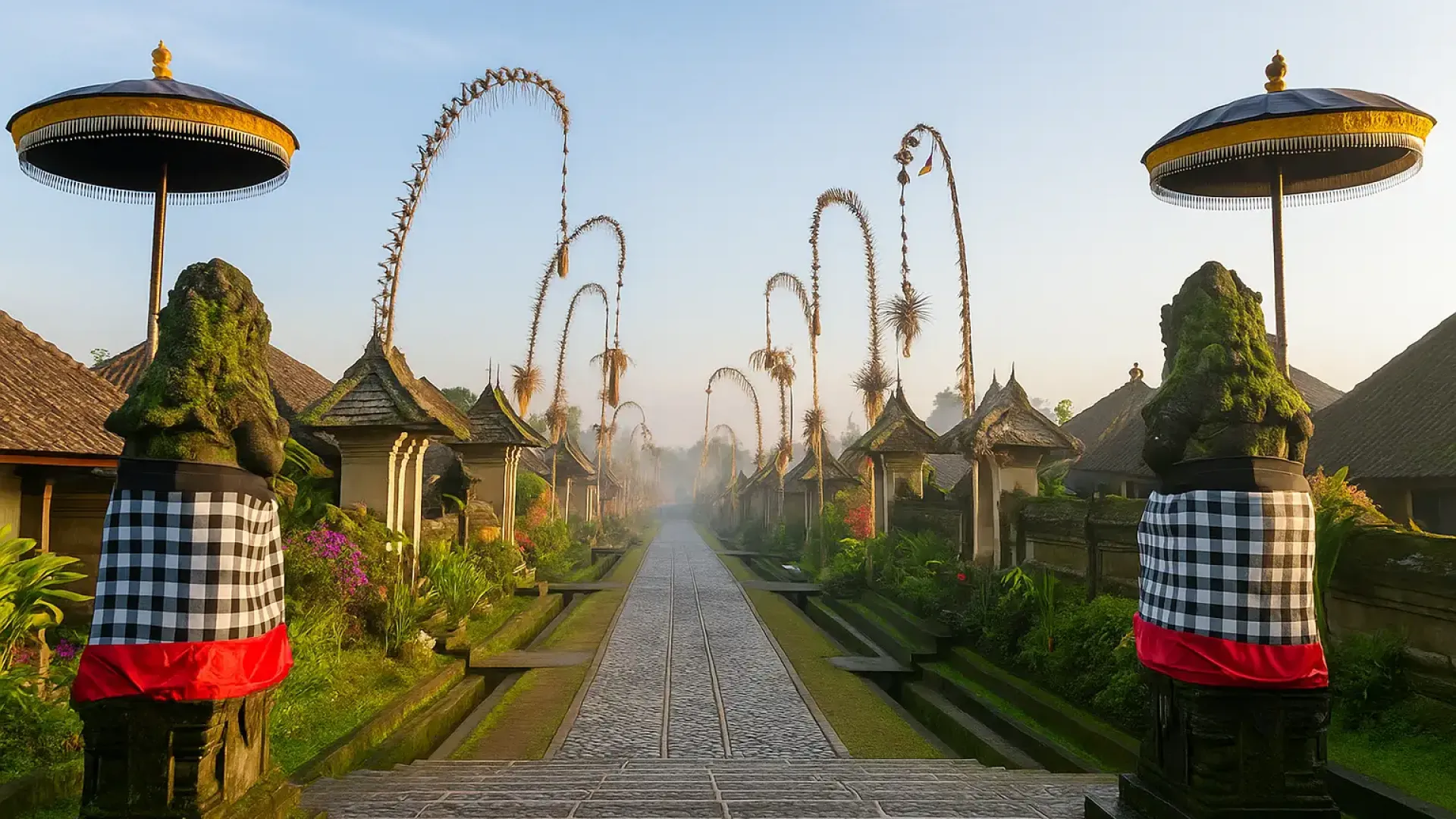
    Nestled in the cool highlands of Kubu, Bangli, lies Penglipuran Village Bali, a serene and picture-perfect settlement often hailed as the cleanest village in the world. With its neatly aligned traditional houses, cobblestone paths, and a sprawling bamboo forest, Penglipuran offers visitors a glimpse into the essence of Bali, where culture, community, and sustainability blend beautifully.

    A Village that Honors Tradition

    The name Penglipuran originates from Pengeling Pura, meaning a place to remember the ancestors. Established centuries ago by loyal subjects of the Bangli Kingdom, its village design reflects the Balinese philosophy of Tri Hita Karana — harmony between humans, nature, and the divine.

    Every home in Penglipuran follows a uniform layout, with gates facing the central path adorned with flower offerings and bamboo ornaments. Strolling down this path feels like stepping into another era, free from modern distractions and surrounded by the calm rhythm of village life.

    The Enchanting Bamboo Forest of Penglipuran

    Just beyond the village’s northern edge lies the Penglipuran Bamboo Forest, a 45-hectare sanctuary that serves as both an ecological protector and a cultural treasure. Part of the greater Kubu area, this lush forest provides bamboo for building homes, making tools, and crafting ceremonial decorations, all through sustainable harvesting practices.

    Morning sunlight filtering through the towering bamboo creates a golden, dreamlike atmosphere, ideal for short walks, serene photography, or simply breathing in the cool mountain air.

    Life and Culture in Penglipuran Village

    Despite increasing tourism, Penglipuran’s 200+ families continue to preserve their traditional Balinese lifestyle. Motor vehicles are prohibited inside the main street, maintaining clean air and peaceful surroundings.

    The village follows a communal cleaning and waste management system, earning it recognition as one of the world’s cleanest villages, alongside counterparts in Japan and Switzerland.

    During festivals, men wear udeng headcloths and women carry offerings in colorful kebaya. These are not performances; they are daily acts of devotion rooted in heritage.

    Things to Do in Penglipuran Village

    1. Stroll the Main Path

    Explore the scenic central street lined with beautifully preserved Balinese homes.

    2. Visit the Bamboo Forest

    Immerse yourself in the serenity of Penglipuran’s bamboo forest, perfect for nature lovers and photographers.

    3. Learn Local Crafts

    Join workshops in bamboo weaving, herbal drink (loloh cemcem), or traditional carving.

    4. Taste Local Delicacies

    Sample homemade tipat cantoklawar, and freshly brewed Balinese coffee at small family stalls.

    5. Join a Local Ceremony

    If your visit coincides with a festival, you may witness authentic Balinese rituals and offerings.

    Location, Ticket Price & How to Get There

    Address: Penglipuran Village, Kubu, Bangli, Central Bali

    Opening Hours: 08:00 AM – 05:00 PM

    Entrance Fee:

    • IDR 25,000 (Local Visitors)
    • IDR 50,000 (International Visitors)

    Getting There:

    • From Ubud: Approximately 1 hour by car.
    • From Denpasar: Around 1.5 hours.

    The easiest option is to hire a private driver or join a day tour that includes nearby attractions such as KintamaniMount Batur, or Tukad Cepung Waterfall.

    Travel Tips & Visitor Etiquette

    • Dress modestly, especially when near temples.
    • Ask for permission before entering private compounds.
    • Dispose of waste properly, as cleanliness is part of the village’s sacred identity.
    • Visit between 8–10 AM or 4–5 PM for softer light and fewer visitors.
    • Avoid flying drones without local authorization.

    Where to Stay and Eat Near Penglipuran

    Stay at one of the eco-friendly homestays inside the village for an authentic Balinese experience that is simple, cozy, and surrounded by nature. Alternatively, accommodations in Bangli or Ubud offer easy access to Penglipuran.

    Local eateries serve traditional dishes made from fresh, locally sourced ingredients. Don’t miss lawartipat cantok, and strong Balinese coffee brewed the traditional way.

    Nearby Attractions

    • Kintamani & Mount Batur: Stunning mountain and lake views perfect for sunrise trips.
    • Tukad Cepung Waterfall: Hidden waterfall with mystical light rays, 30 minutes away.
    • Kehen Temple: One of Bali’s oldest temples, with exquisite stone carvings and historic charm.

    Why You Should Visit Penglipuran Village Bali

    Penglipuran Village Bali is more than just a travel destination. It is a living testament to balance, respect, and harmony. Every pathway, offering, and bamboo stalk tells a story of how tradition and sustainability can coexist beautifully.

    Whether you come for the lush bamboo forest, authentic culture, or its inspiring cleanliness, Penglipuran will leave you with a deeper appreciation of Bali’s timeless soul.

    Plan your visit to Penglipuran Village in Kubu, Bangli, and see for yourself why it is known as the cleanest village in the world.
  • Penelokan Kintamani Bali – Best Viewpoint to See Mount and Lake Batur from Above

    Penelokan Kintamani Bali – Best Viewpoint to See Mount and Lake Batur from Above

    Penelokan Kintamani Bali – The Best Viewpoint to See Mount and Lake Batur

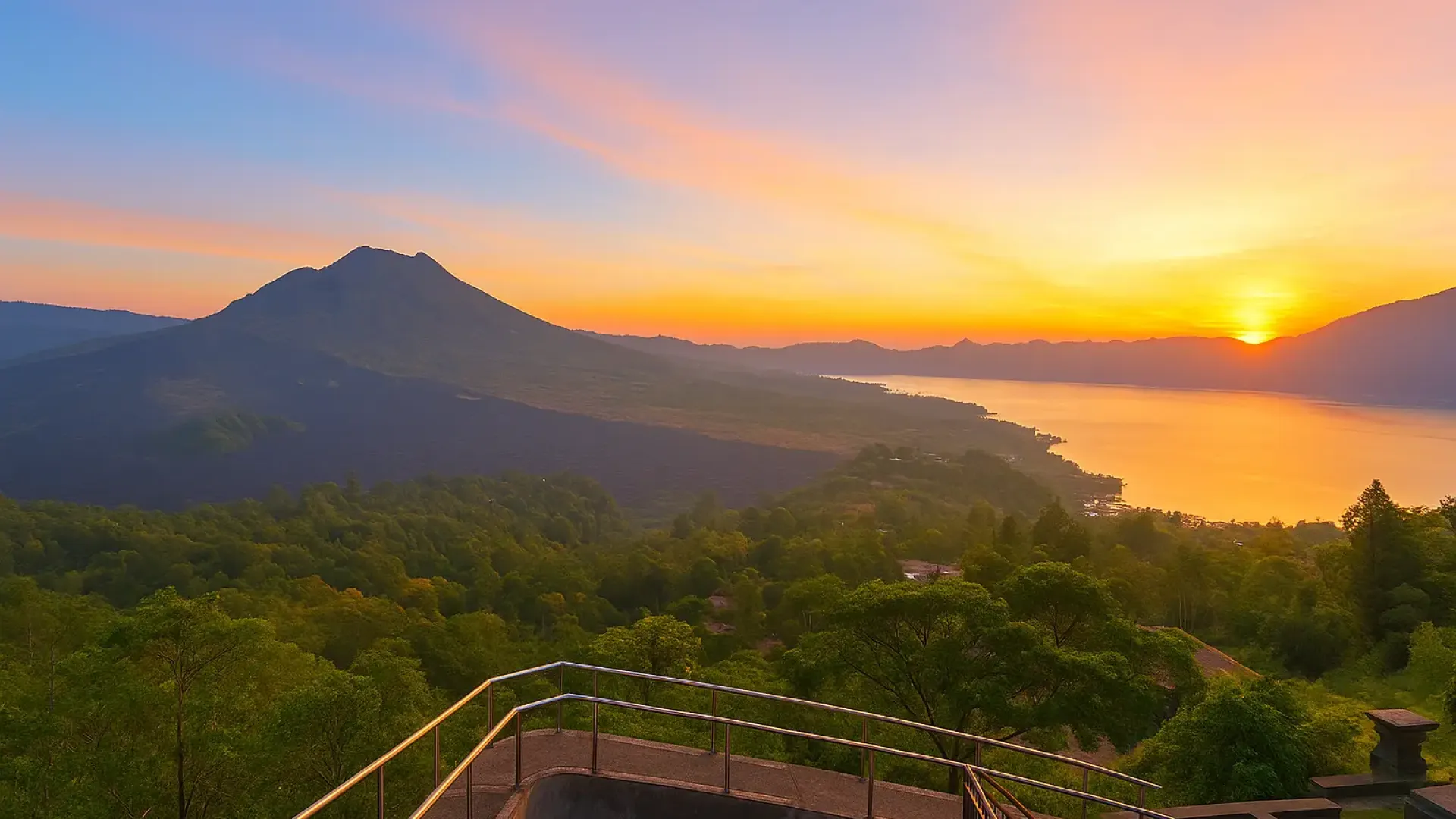
    Penelokan Kintamani Bali is one of the most breathtaking highland viewpoints in the island’s interior. Located in Bangli Regency, this scenic spot sits around 1,400 meters above sea level, offering a sweeping panorama of Mount Batur, Lake Batur, and the vast volcanic caldera that shapes this dramatic landscape.

    From the viewpoint, the early morning mist slowly lifts, revealing the twin beauty of mountain and lake. The still surface of Lake Batur mirrors the sky, while Mount Batur stands quietly in the distance, exuding both strength and calm. It is the kind of place that reminds you to breathe a little deeper and slow down.

    Distance from Penglipuran Village to Penelokan Kintamani Bali

    If you are coming from Penglipuran Village, Penelokan Kintamani Bali is conveniently close, only about 13 kilometers away or a 25-minute drive. The route passes through green hills, bamboo forests, and rural farmland, giving you a glimpse of local life along the way.

    Both Penglipuran and Penelokan are part of Bangli Regency, making them easy to combine in one trip that blends culture, tradition, and nature. Many travelers visit Penglipuran in the morning to explore its cultural charm, then continue to Penelokan for lunch or an afternoon coffee with a mountain view.

    Top Spots to Visit Around Penelokan Kintamani Bali

    1. Penelokan Main Viewpoint

    The main attraction of Penelokan Kintamani Bali is its 180-degree view of Mount and Lake Batur. Along the road, you’ll find small cafés, local warungs, and souvenir shops. The air is crisp, the wind gentle, and every direction seems to open into another layer of the mountain’s story.

    Best time to visit: Morning, between 7 and 9 AM, when the air is clear and the light golden.

    2. Museum Gunung Api Batur (Caldera Geo Museum)

    Located just a short distance from the main viewpoint, this museum tells the geological story of Mount Batur. You’ll learn about its ancient eruptions and how the caldera became part of the UNESCO Global Geopark Batur.

    Distance from Penglipuran: about 14 km

    From Penelokan: about 1 km

    3. Pura Ulun Danu Batur

    Only 5 to 10 minutes away from Penelokan, Pura Ulun Danu Batur is one of Bali’s most sacred temples. It is dedicated to Dewi Danu, the goddess of the lake. After the 1926 eruption, the temple was rebuilt higher up, where it now overlooks the caldera with quiet dignity.

    Distance from Penglipuran: about 16 km

    4. Kintamani Restaurants and Coffee Shops with a View

    The Penelokan Kintamani strip is well known for its restaurants and coffee shops that serve meals and drinks with a view. Some favorites include Grand Puncak Sari, The Amora, and Akasa Kintamani Coffee. Whether you come for a cup of coffee or a full meal, sitting here while watching clouds drift across Mount Batur is an experience in itself.

    Search trends such as “Kintamani restaurant with Mount Batur view” and “Kintamani coffee with volcano view” are among the most popular keywords related to Penelokan Kintamani Bali.

    Nearby Attractions Beyond Penelokan Kintamani

    If you wish to explore more of Kintamani’s highlands, there are several destinations worth visiting.

    Toya Bungkah Hot Spring (Batur Natural Hot Spring)

    About 23 kilometers or 45 minutes from Penelokan, this area offers natural hot springs right beside Lake Batur, perfect for relaxing after a day of sightseeing.

    Batur Caldera Sunrise Point

    Around 30 kilometers or one hour away, this spot offers one of Bali’s most stunning sunrise treks, with views stretching across the eastern caldera and Mount Abang.

    Best Time to Visit Penelokan Kintamani Bali

    Morning, between 6.30 and 9.00 AM, is the best time for clear views and soft lighting. Around midday, between 10.00 and 12.00 PM, the area is ideal for visiting the Caldera Museum or enjoying brunch with a view.

    The dry season from April to October offers the clearest skies and most comfortable weather. If possible, avoid visiting after 2 PM, as the mountain is often covered by clouds and mist later in the day.

    How to Get to Penelokan Kintamani Bali

    From Penglipuran Village, take the northbound route via Jalan Kubu – Kintamani. The journey takes about 25 minutes through rolling hills and farmland. The road is well-paved and suitable for both motorbikes and cars.

    Simply search “Penelokan Kintamani Viewpoint” on Google Maps. The area is part of the official Kintamani Geopark, recognized by UNESCO as one of Bali’s most important natural landmarks.

    Reflection

    Standing on the edge of Penelokan Kintamani Bali, you can feel how vast and alive the island truly is. The mountain, the lake, and the clouds seem to move in harmony. It is a moment that reminds you of Bali’s deeper rhythm, where nature and spirit are never far apart.

    For travelers seeking more than just a beautiful photo, Penelokan offers something quieter and more lasting: a sense of connection to the island’s timeless landscape.

  • A First-Timer’s Step-by-Step Guide to Melukat at Tirta Empul Temple

    A First-Timer’s Step-by-Step Guide to Melukat at Tirta Empul Temple

    Everything You Need to Know Before Entering Bali’s Most Sacred Water Temple

    For many travelers, Tirta Empul Temple is not just another stop on a Bali itinerary. It is a moment of pause, a quiet encounter with something deeply spiritual. Yet for first-timers, the idea of joining a purification ritual can feel confusing or even intimidating. What should you wear? How much does it cost? And most importantly, how do you do it respectfully?

    This guide is written for those who want to experience melukat not as a rushed activity, but as a meaningful ritual. By understanding the steps, the etiquette, and the flow of the temple, you allow the experience to unfold naturally.

    What Is Melukat and Why It Matters

    Melukat is a traditional Balinese purification ritual using holy water to cleanse negative energy from the body and mind. It is not about religion in a strict sense, but about balance. Locals perform melukat during important life moments, periods of emotional heaviness, or simply as spiritual maintenance.

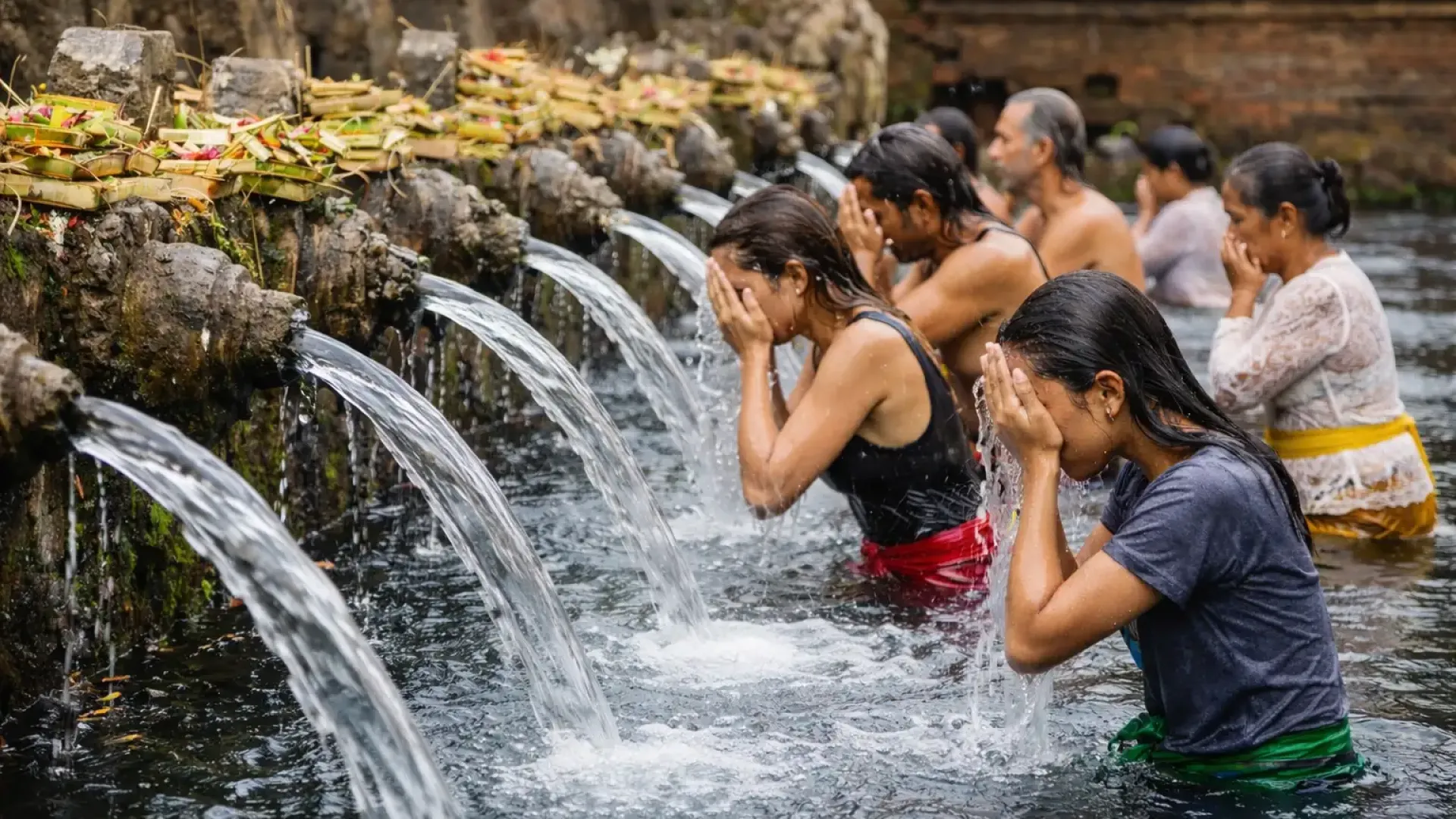
    At Tirta Empul, the ritual takes place directly in the holy spring pools. Water flows from ancient stone spouts into long bathing pools, each spout believed to carry a different intention. Visitors are welcome to participate, provided they follow the customs with sincerity and respect.

    Step 1: Arriving at Tirta Empul Temple

    Before anything else, slow down. This is not a place to rush.

    Upon arrival, you will purchase an entrance ticket, usually ranging between 50,000 and 75,000 IDR for international visitors. This fee helps maintain the temple and its facilities. After entering, take a few minutes to observe the surroundings, the offerings, and how local worshippers move through the space.

    Notice the atmosphere. Even with many visitors, there is a natural rhythm that guides you inward.

    Step 2: Changing Into a Sarong

    Sarongs are mandatory inside the temple. Even if you bring your own, for melukat you must wear a specific green sarong provided on-site. This ensures uniformity and respect for the ritual.

    You will be directed to the changing area, where lockers are available for approximately 15,000 IDR. Place all valuables inside, including phones and cameras. Melukat is best experienced without distractions.

    Before entering the pools, take a moment to set an intention. It does not need to be complex. It can be as simple as clarity, peace, or letting go.

    Step 3: Understanding the Flow of the Pools

    The purification pools are entered from one end and exited at the other. The ritual follows a specific order, and it is important not to skip spouts randomly.

    Each spout has a purpose. Some are for cleansing negative thoughts, others for healing, and some are traditionally reserved for specific ceremonies. If you are unsure, observe the locals or follow the guidance of temple attendants.

    Move slowly. Bow slightly before each spout. This small gesture of humility matters more than perfect technique.

    Step 4: Performing Melukat Step by Step

    Stand beneath the first spout and let the water flow over your head. Most people rinse their head three times while quietly praying or focusing on their intention. The water is cool, often surprisingly so, and it immediately sharpens awareness.

    After finishing at one spout, move to the next without rushing. Avoid splashing or loud conversation. This is not a bathing area but a sacred ritual space.

    It is normal to feel emotional shifts during the process. Some people feel calm, others reflective. There is no right or wrong response.

    Step 5: Completing the Ritual

    After finishing all designated spouts, exit the pool and dry off. You will then proceed to the prayer area, where incense and offerings are often provided. This final step seals the ritual.

    Sit quietly, even for just a few minutes. Let your breath settle. This pause is as important as the water itself.

    Many visitors make the mistake of rushing out immediately. Staying present allows the experience to integrate.

    Etiquette Every First-Timer Should Know

    Respect is the foundation of melukat. Avoid excessive photography, especially of people praying. Never enter the pools if you are menstruating, as this is considered spiritually impure in Balinese custom.

    Keep your voice low. Follow the flow. If unsure, observe first. The ritual is forgiving, but intention and behavior matter.

    Remember that this is not a performance. You are stepping into someone else’s sacred space.

    Managing Expectations

    Tirta Empul is popular, and crowds are common, especially midday. This does not invalidate the experience, but it does require patience. Early mornings offer a calmer atmosphere for those seeking deeper quiet.

    Also be aware that after exiting the temple, you will pass through a long local market. Consider it part of the transition back to the everyday world rather than an interruption.

    A Ritual That Stays With You

    Melukat at Tirta Empul Temple is not about doing everything perfectly. It is about showing up with openness. Many first-timers arrive nervous and leave grateful, carrying a sense of lightness they did not expect.

    If you approach the ritual slowly, respectfully, and with genuine intention, Tirta Empul offers something rare in modern travel: a moment of true presence.

  • A Complete Breakdown of Besakih Temple Entrance Fees & Facilities (Know Before You Go)

    A Complete Breakdown of Besakih Temple Entrance Fees & Facilities (Know Before You Go)

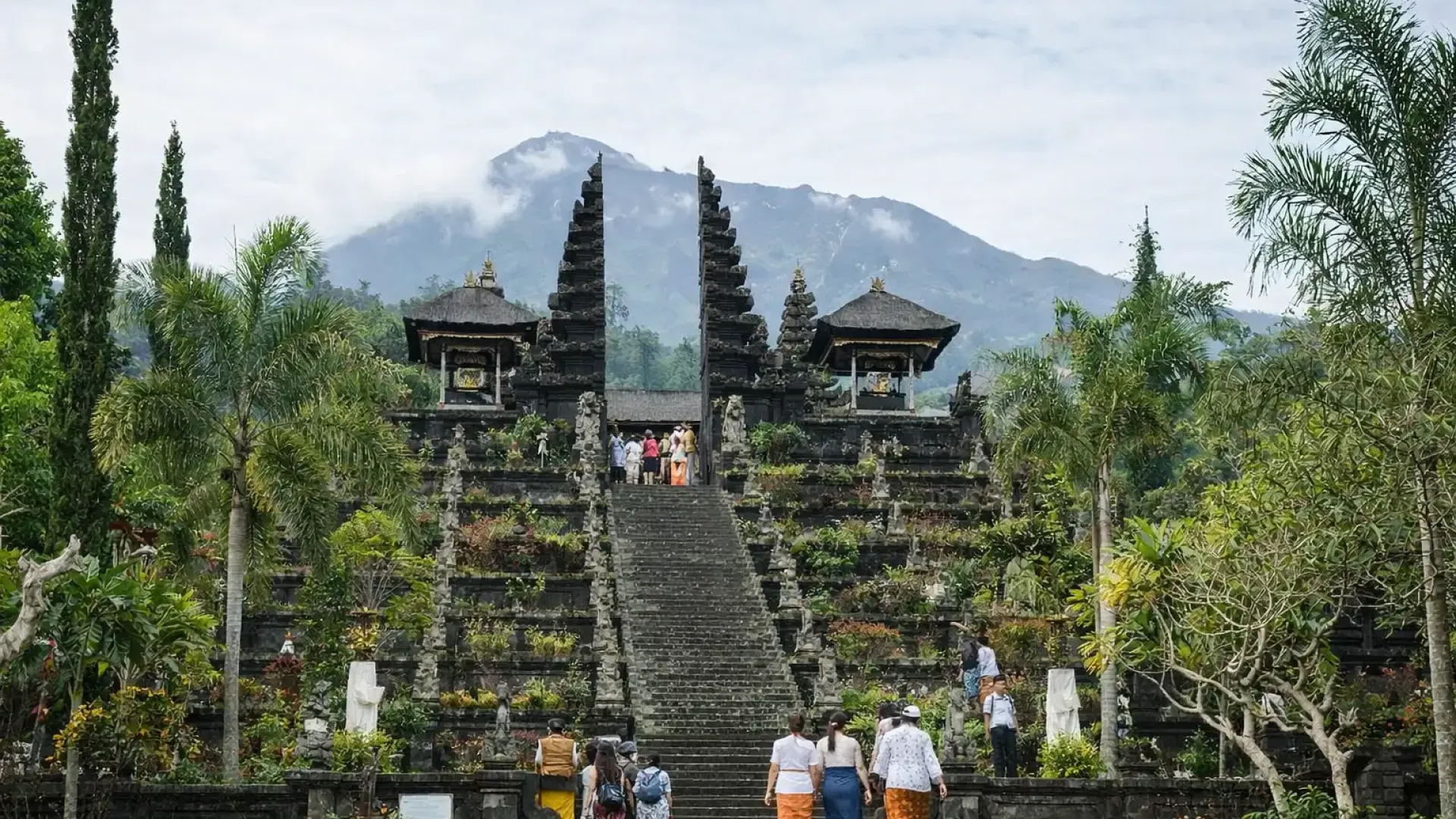
    Before visiting Besakih Temple, many travelers ask the same practical question: How much does it cost, and what do I actually get? As the Bali Mother Temple, Besakih has undergone significant improvements to make visits more organized, respectful, and comfortable without losing its sacred character.

    This guide breaks down entrance fees, facilities, and logistics so you can arrive prepared and focus on the experience rather than the confusion.

    Entrance Fees at Besakih Temple

    At Pura Besakih, the entrance system is centralized and transparent. IDR 80, 000 for domestic, and IDR 150, 000 for foreign tourist (https://www.besakih.org/).

    Your ticket typically includes:

    • Official entrance fee
    • Sarong and sash rental
    • Insurance coverage
    • Access to main temple zones

    This system helps protect visitors while maintaining temple dignity.

    What’s Included in the Ticket (And Why It Matters)

    Unlike many temples in Bali, Besakih’s ticket is designed to reduce hidden costs.

    Included benefits:

    • No need to rent sarongs separately
    • No repeated donation requests inside main areas
    • Organized entry reduces random solicitation

    For first-time visitors, this makes the experience far less stressful.

    Shuttle Bus and Buggy System

    One of the most appreciated upgrades is the shuttle and buggy service.

    How it works:

    • Large parking area at the base
    • Electric buggies transport visitors uphill
    • Drop-off near the main temple complex

    This system:

    • Reduces physical strain
    • Limits vehicle congestion
    • Preserves the sacred environment

    It also makes Besakih more accessible for families and older travelers.

    Facilities You Can Expect

    Besakih Temple now offers facilities that match its importance.

    Available on-site:

    • Clean restrooms
    • Designated walking paths
    • Clear signage
    • Staff assistance

    These improvements allow visitors to move calmly through the complex without disrupting religious activity.

    The Role of Local Guides

    Local guides are present and can be extremely informative.

    What they offer:

    • Explanation of temple hierarchy
    • Cultural and spiritual context
    • Guidance through large complex areas

    Traveler tip:

    • Guides are optional
    • Politely agree on tipping expectations early
    • A short guided session is often enough

    For deeper cultural insight, see The Most Sacred Ceremonies at Pura Besakih.

    Hidden Costs to Be Aware Of

    While the main ticket covers most needs, keep small cash for:

    • Optional guide tips
    • Small offerings
    • Snacks or drinks near the parking area

    Knowing this upfront prevents awkward moments later.

    Best Time to Use Facilities Comfortably

    Facilities are best enjoyed:

    • Early morning before tour buses arrive
    • Late afternoon after peak hours

    For strategic timing, refer to How to Visit Pura Besakih Without the Crowds.

    How Fees Support the Temple

    Entrance fees help fund:

    • Temple maintenance
    • Facility upkeep
    • Community and ceremonial needs

    This ensures Besakih remains a living spiritual center, not a commercial attraction.

    Conclusion

    Understanding the entrance fees and facilities at Besakih Temple allows you to visit with confidence and respect. Everything is designed to support a smooth, dignified experience worthy of Bali’s most sacred site.