Archives: Destinations

  • The Mystery of Tirta Empul Temple

    The Mystery of Tirta Empul Temple

    Uncovering the Myths Behind Bali’s Sacred Holy Spring

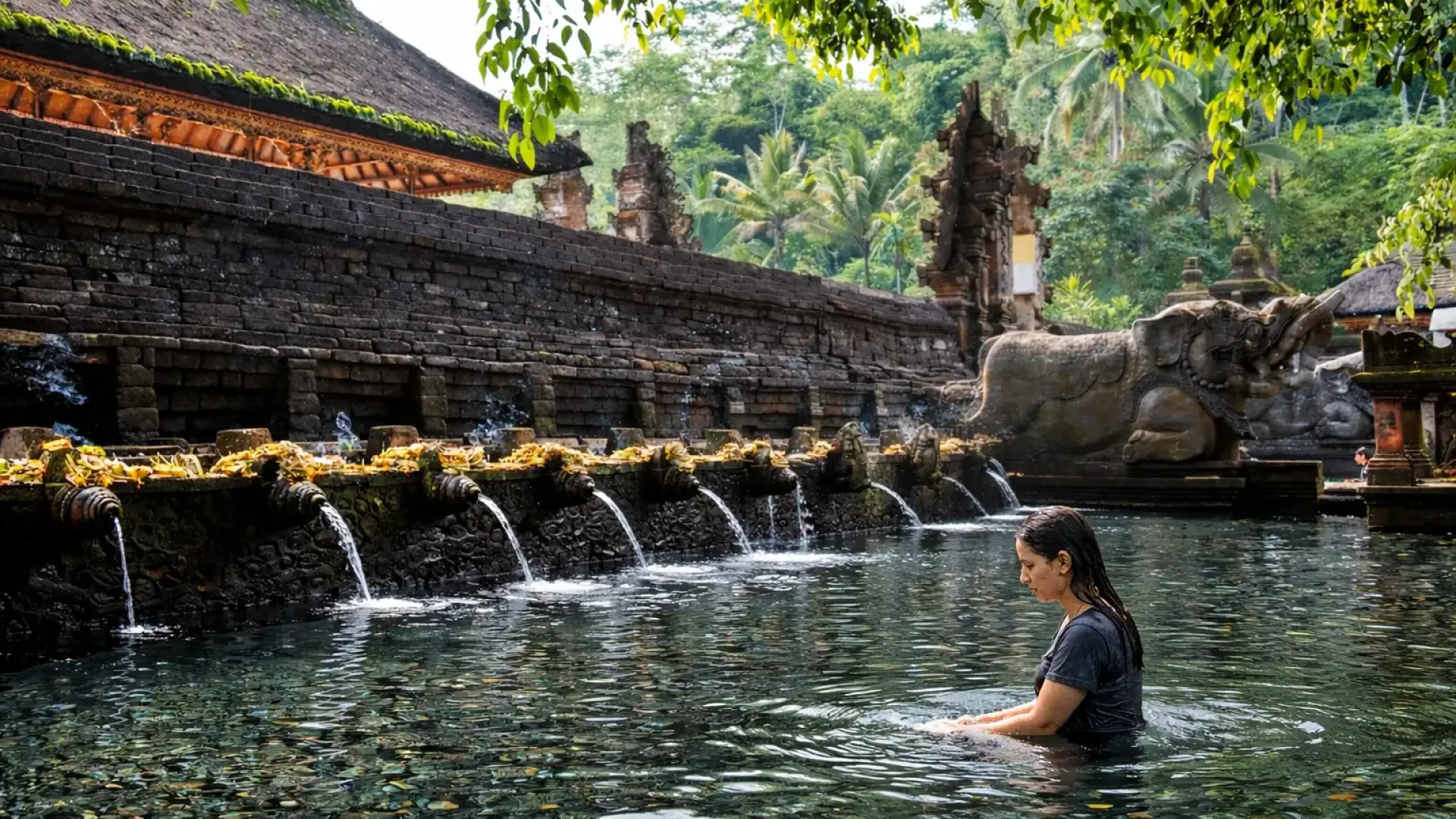
    Long before travelers wrote reviews about feeling calm, blessed, or reborn, Tirta Empul Temple was already sacred. Not because it was beautiful, but because it was believed to be powerful. The water that flows here is not just clear, it is storied, shaped by myth, devotion, and centuries of belief.

    Many visitors describe Tirta Empul as mysterious. They feel something they cannot fully explain. To understand why, we must look beyond the pools and into the stories that gave this place meaning long before tourism arrived.

    The Legend of Indra and the Birth of the Holy Spring

    According to Balinese mythology, Tirta Empul’s holy spring was created by Indra, the god of thunder and war. The story begins with a powerful king, Mayadenawa, who rejected the gods and forbade religious worship across his kingdom. His arrogance disrupted cosmic balance, prompting the gods to intervene.

    Indra descended to restore harmony, but Mayadenawa poisoned a water source used by Indra’s troops, causing them to fall ill and die. In response, Indra pierced the earth with his spear, creating a new spring whose water revived the fallen soldiers.

    This spring became Tirta Empul, meaning “holy water that springs from the earth.” From this moment, the water was believed to carry divine restorative power, capable of cleansing corruption and restoring balance.

    Why the Water Is Considered Alive

    In Balinese Hindu belief, water is not passive. It is a living medium that carries spiritual energy. This belief explains why Tirta Empul is still actively used for purification rituals today, not preserved as a historical artifact.

    The spring flows continuously, never drying, even during long dry seasons. For locals, this constancy reinforces faith. The water’s reliability mirrors divine presence, steady, unseen, but always there.

    Visitors often describe the water as unusually cold and invigorating. While science explains mineral composition and underground sources, belief explains meaning. At Tirta Empul, both coexist without conflict.

    Sacred Architecture That Protects the Source

    The temple complex was built to protect and honor the spring, not to dominate it. Shrines, courtyards, and bathing pools are arranged in a symbolic hierarchy, guiding visitors from the outer world toward spiritual center.

    The most sacred areas are not the most visually dramatic. They are enclosed, quiet, and deliberately modest. This design reflects a core Balinese value: true power does not need display.

    Stone carvings around the spring depict guardians, deities, and protective symbols. Their role is not decorative. They serve as spiritual sentinels, reminding visitors that this is not merely water, but a sacred gift.

    Why Visitors Feel Something They Cannot Name

    Modern visitors often arrive without knowing the mythology. Yet many still report similar emotions: calm, release, humility, and emotional clarity. This is where mystery emerges.

    Part of the experience comes from ritual repetition. Bowing, rinsing, praying, moving slowly through spouts creates a meditative rhythm that quiets the mind. Another part comes from collective belief. Thousands of years of prayer leave an imprint that visitors sense even if they cannot articulate it.

    The mystery is not about superstition. It is about atmosphere shaped by continuity. Tirta Empul has never stopped being sacred, and that uninterrupted devotion matters.

    The Role of Faith in a Modern World

    Tirta Empul exists in a modern context, surrounded by parking lots, ticket booths, and souvenir stalls. Yet the core ritual remains unchanged.

    This contrast creates tension for some visitors. They struggle to reconcile ancient belief with modern tourism. Others find the coexistence comforting, proof that tradition can survive adaptation.

    The mystery lies in how the sacred persists despite change. Tirta Empul has not been diluted by time. It has absorbed it.

    Sacred Water Beyond Belief

    You do not need to believe in Indra to feel the weight of the place. You do not need to understand Balinese Hinduism to respect it. Tirta Empul does not demand belief, only presence.

    Those who approach the spring with sincerity often leave with questions rather than answers. And that, perhaps, is the true mystery.

    The water does not explain itself. It invites reflection.

    Why the Mystery Endures

    Tirta Empul Temple remains mysterious because it resists simplification. It cannot be reduced to a legend, a ritual, or a tourist attraction. It is all of these, and more.

    In a world that values explanation, Tirta Empul offers experience. In a time obsessed with certainty, it allows ambiguity.

    And that is why, centuries later, people still step into its waters seeking something they cannot fully name.
  • How to Experience the Peaceful Side of Tirta Empul Temple

    How to Experience the Peaceful Side of Tirta Empul Temple

    Finding Calm in One of Bali’s Most Visited Sacred Sites

    Many travelers worry that Tirta Empul Temple is too crowded to feel spiritual. Reviews often mention large tour groups and busy pools, creating the impression that serenity has been lost. Yet those who time their visit well tell a different story, one of silence between water drops, soft prayers, and moments of genuine calm.

    The peaceful side of Tirta Empul still exists. It simply asks for patience, awareness, and a willingness to move against the usual rhythm of tourism.

    This article shows how to experience Tirta Empul Temple as it was meant to be felt: slow, grounded, and quietly transformative.

    Understanding the Rhythm of the Temple

    Tirta Empul is busiest when visitors arrive all at once, usually between late morning and early afternoon. Large tour buses follow similar schedules, creating waves of activity that move through the temple grounds.

    Outside these hours, the atmosphere changes noticeably. The sound of water becomes clearer. Movement slows. Even the koi fish seem less hurried.

    Understanding this rhythm is the first step to finding peace. Tirta Empul is not chaotic by nature, it is cyclical. Visit at the right moment, and the calm reveals itself.

    The Best Time to Visit for a Quiet Experience

    Early morning is the most reliable window for tranquility. Arriving close to opening time allows you to enter before tour groups appear. Locals often come early, and their unhurried presence sets a respectful tone.

    Late afternoon can also be gentle, especially on weekdays. As tour schedules thin out, the temple regains its natural pace. The light softens, shadows stretch across stone pathways, and the air feels cooler.

    Avoid weekends and public holidays if possible. These days bring both domestic and international crowds, making it harder to find quiet corners.

    Choosing Where to Pause, Not Just Where to Walk

    Many visitors rush directly to the purification pools, missing the quieter spaces designed for reflection. The outer courtyards, shaded walkways, and small shrines often remain calm even during busy hours.

    Pause before entering the pools. Sit near the koi pond. Watch how the water moves. These moments of stillness prepare the mind for the ritual more effectively than rushing ahead.

    Peace at Tirta Empul is often found by stopping, not progressing.

    Experiencing Melukat Without the Rush

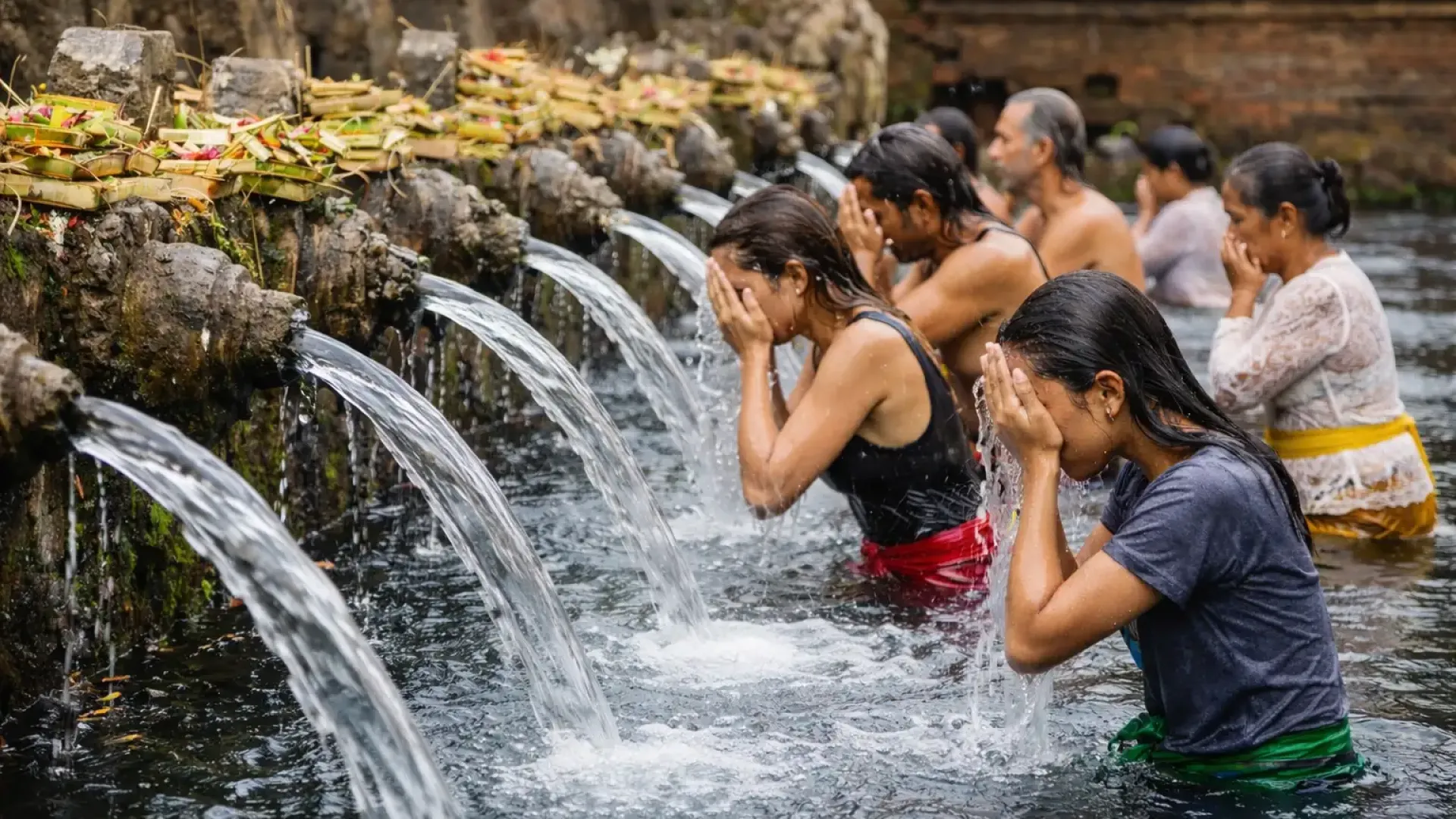
    If melukat is your intention, patience becomes essential. Even during quieter hours, the ritual flows slowly by design. Allow space between spouts. Do not feel pressured by people behind you.

    Those seeking peace often find it by focusing inward rather than on the crowd. Close your eyes beneath the spout. Let the sound of water replace surrounding noise.

    The ritual itself creates a personal sanctuary, even when others are nearby.

    The Power of Early Light and Sound

    Morning light changes how Tirta Empul feels. Sunlight filters gently through temple gates, reflecting softly off water surfaces. The soundscape is quieter too, more water than voices, more birds than footsteps.

    This sensory shift affects perception. Visitors often report feeling calmer simply because the environment encourages it.

    Photography lovers will notice this immediately, but even those without cameras feel the difference.

    Managing Expectations to Preserve Peace

    Expecting complete solitude at Tirta Empul can lead to disappointment. Peace here is not the absence of people, but the presence of intention.

    By accepting that others will share the space, frustration dissolves. When expectations align with reality, calm follows naturally.

    Viewing the crowd as part of the experience, rather than an obstacle, changes everything.

    Leaving the Temple Mindfully

    The transition out of Tirta Empul matters. After completing the ritual, many visitors rush through the exit market, breaking the calm too abruptly.

    Slow your pace. Observe rather than react. Treat the market walk as a grounding return to daily life.

    Peace does not end at the pool’s edge. It continues as long as you choose to carry it.

    A Temple That Rewards Stillness

    Tirta Empul does not hide its peaceful side. It simply waits for those willing to meet it halfway.

    Those who arrive early, move slowly, and respect the rhythm of the place often leave with a sense of quiet fulfillment. In a world that constantly accelerates, Tirta Empul offers a rare invitation: slow down, and the calm will find you.

  • Photographing Tirta Empul Temple

    Photographing Tirta Empul Temple

    How Water, Stone, and Silence Create One of Bali’s Most Photogenic Sacred Sites

    At first glance, Tirta Empul Temple looks like a dream for photographers. Crystal-clear water, ancient stone spouts, koi fish gliding beneath the surface. But those who linger longer realize something important: this is not a place to hunt images, it is a place to receive them.

    Many visitors arrive with cameras ready and leave with fewer photos than expected, yet stronger memories. Tirta Empul teaches a quieter kind of visual storytelling, one rooted in patience, light, and respect.

    This article explores how to photograph Tirta Empul Temple thoughtfully, capturing not just beauty, but atmosphere.

    The Koi Fish Pond: Stillness in Motion

    Just before entering the main temple area, many visitors pause by the koi fish pond. The water here is so clear it feels unreal, revealing layers of stone beneath the surface. Orange, white, and black koi move slowly, unbothered by footsteps or whispers.

    For photographers, this pond offers a lesson in restraint. Wide shots work best, allowing the fish to become part of the composition rather than the subject. Reflections of temple walls and overhanging trees often create more compelling images than close-ups.

    Early morning light enhances the transparency of the water, turning the pond into a natural mirror.

    Crystal Clear Water as a Visual Language

    Water is the soul of Tirta Empul, and visually, it tells the entire story. Unlike dramatic waterfalls or crashing waves, the spring water here flows gently, continuously, without spectacle.

    Photographing the purification pools requires sensitivity. Long exposures can soften movement, but often a simple still frame captures more truth. Look for ripples caused by hands in prayer or water cascading from stone spouts.

    Avoid framing people’s faces directly during melukat. Instead, focus on gestures, hands pressed together, water flowing over bowed heads. These details preserve privacy while conveying emotion.

    Ancient Stone Spouts and Carvings

    The stone spouts at Tirta Empul are worn smooth by centuries of ritual. Each carries a quiet authority, shaped not just by craftsmen but by time itself. Moss, mineral stains, and flowing water add texture that no restoration could recreate.

    For composition, side angles reveal depth and repetition. Symmetry works, but imperfection tells a stronger story. Include chipped edges, uneven stone, and signs of age.

    The carvings throughout the temple are not decorative excess. They are symbolic, layered with meaning. Photograph them with context, allowing surrounding space to show their relationship to water, earth, and ritual.

    Light, Shadow, and Timing

    Tirta Empul responds dramatically to light. Midday sun creates harsh contrasts and busy highlights on water surfaces. Early morning and late afternoon offer softer tones, deeper shadows, and a calmer atmosphere.

    Cloudy days are not a disadvantage here. Diffused light reduces glare on water and brings out stone textures. Shadows become gentle rather than dramatic, aligning better with the temple’s serene mood.

    Patience is key. Waiting for a moment when a space clears or when light shifts can transform an ordinary frame into something timeless.

    Ethical Photography in a Sacred Space

    Photography at Tirta Empul is allowed, but intention matters. This is a functioning temple, not a staged backdrop. Always observe before shooting.

    Never interrupt someone praying. Avoid using flash near the purification pools. If in doubt, lower the camera and simply watch. Some moments are meant to be experienced, not captured.

    The most powerful images often come after you stop trying to take them.

    Seeing Before Shooting

    Many photographers leave Tirta Empul with fewer images but stronger stories. The temple encourages a slower way of seeing, one where composition follows feeling, not trends.

    If you allow yourself to move quietly, notice light, and respect the rhythm of the place, Tirta Empul offers visuals that feel honest and alive.

    Sometimes, the most meaningful photograph is the one you carry in memory.

  • Why Tirta Empul Temple Feels So Sacred

    Why Tirta Empul Temple Feels So Sacred

    How a Holy Spring in Bali Leaves Visitors Feeling Reborn

    From the first step through its ancient gates, Tirta Empul Temple announces itself not as a spectacle, but as a living sanctuary. Travelers often arrive curious, sometimes skeptical, and leave quiet, reflective, and changed. Reviews repeat the same words again and again: sacred, peaceful, blessed, reborn. The question is why.

    This article explores the deep spirituality of Tirta Empul Temple, not from myth alone, but from lived experience. Why do people from different cultures, beliefs, and backgrounds feel something so similar here? Why does a simple ritual with water carry such emotional weight?

    A Sacred Space That Still Breathes

    Tirta Empul is not a relic frozen in time. It is an active temple where Balinese Hindus still come to pray, cleanse, and reconnect with the unseen. The holy spring that flows here has been revered for over a thousand years, and its water continues to emerge clear and steady, as if time itself slows at its source.

    Unlike many tourist landmarks, the energy of this place does not rely on silence or emptiness. Even with the sound of flowing water, footsteps, and whispered prayers, there is a calm rhythm that settles into your body. Many visitors describe feeling grounded the moment they enter, before they even touch the water.

    This is the foundation of the sacred feeling. Tirta Empul is not asking to be admired. It asks to be entered, physically and emotionally.

    The Meaning of Holy Water in Balinese Life

    In Balinese Hinduism, water is not symbolic. It is alive. Known as tirtha, holy water is believed to carry divine energy that cleanses both the physical body and the spiritual self. This belief is not abstract theology; it is practiced daily in homes, temples, and ceremonies across the island.

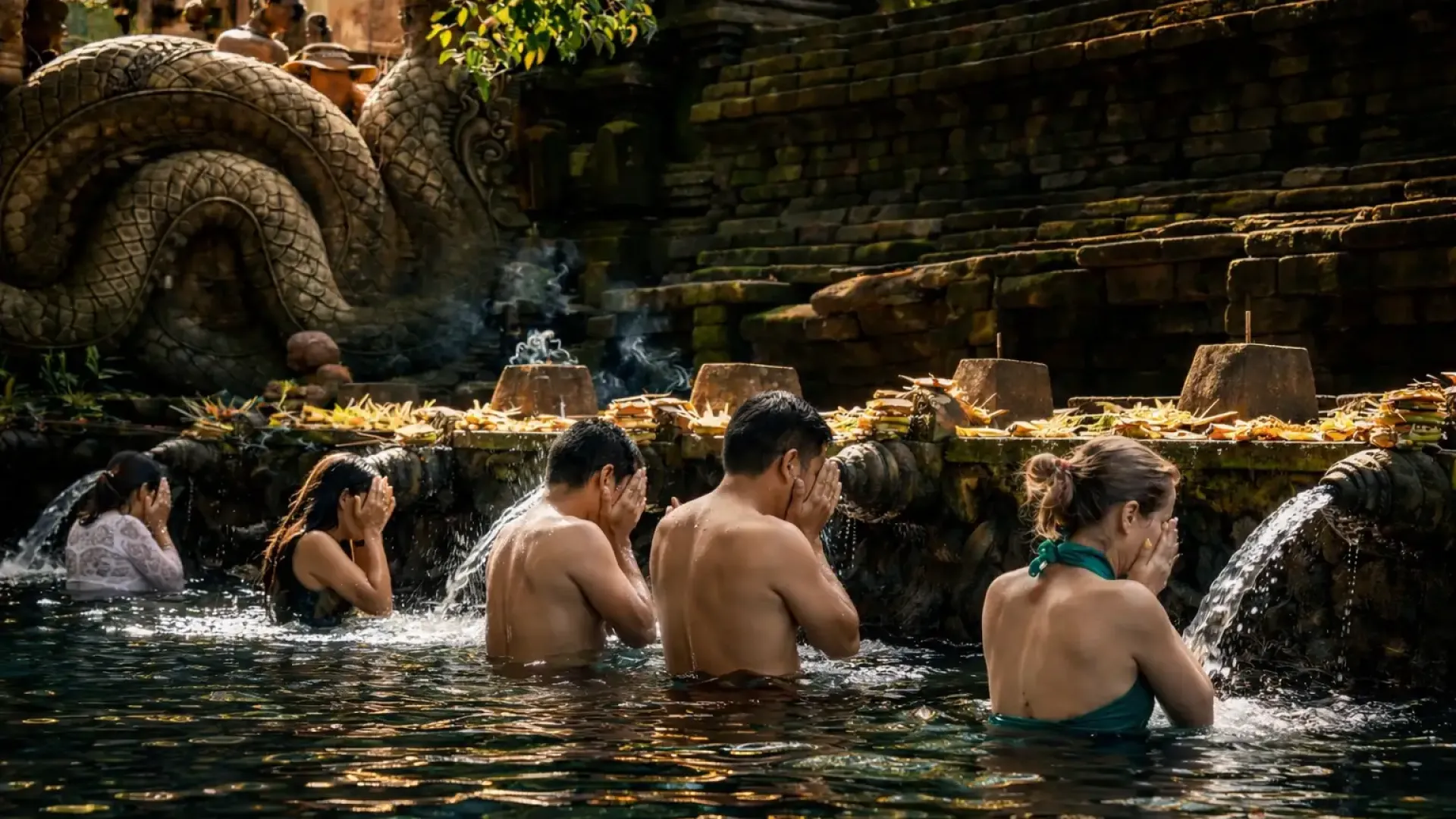
    At Tirta Empul, the holy spring feeds a series of stone spouts where visitors perform melukat, a purification ritual. Each spout has a specific intention, from releasing negative thoughts to restoring balance. Locals approach the ritual with quiet focus, while visitors often follow with curiosity that slowly turns into reverence.

    The act itself is simple: bow, rinse, pray, move on. Yet the repetition, the cold clarity of the water, and the shared rhythm with others create a meditative flow that strips away distraction.

    Why Many Visitors Feel “Reborn”

    The word reborn appears frequently in visitor reflections, and it is not accidental. Melukat is not about erasing problems or granting miracles. It is about release.

    As water pours over the head, many people report an unexpected emotional response. Thoughts slow. Breath deepens. The body reacts before the mind can explain it. In that moment, people often let go of something they have been carrying, stress, grief, exhaustion, or simply noise.

    There is also power in vulnerability. Wearing a sarong, standing barefoot in water, surrounded by strangers doing the same ritual, dissolves social roles. Titles, professions, and expectations fade. What remains is presence.

    That sense of reset, of stepping out lighter than you entered, is what many describe as rebirth.

    Collective Energy and Shared Intention

    One of the quiet strengths of Tirta Empul is its communal nature. This is not a private ritual performed in isolation. You move alongside others, locals and travelers alike, all focused on their own intentions yet connected by the same flow of water.

    In Balinese belief, intention matters as much as action. When many people come with sincerity, the space absorbs it. Visitors often sense this collective energy, even if they do not have the language for it.

    It explains why the experience can feel powerful even on busy days. While crowds are a practical challenge, they do not necessarily dilute the spiritual atmosphere. For some, they amplify it.

    Architecture That Guides the Spirit

    The physical design of Tirta Empul Temple subtly leads visitors inward. The outer courtyard prepares the mind. The inner courtyard slows the body. Stone carvings, moss-covered walls, and symmetrical pools create a visual order that mirrors spiritual balance.

    Nothing feels rushed. Pathways encourage pause. The sound of water is constant, grounding every step. Even the act of changing into a sarong becomes part of the transition from ordinary space to sacred ground.

    This harmony between architecture, nature, and ritual is a hallmark of Balinese temple design, and at Tirta Empul, it feels especially intact.

    Respect as the Key to the Experience

    Visitors who leave disappointed often come with expectations of spectacle. Those who leave moved usually come with openness.

    Respecting local customs, dressing properly, moving patiently, and observing before acting all shape how the experience unfolds. Tirta Empul does not perform for its visitors. It responds to them.

    Those who approach the ritual as a checklist item may feel little. Those who pause, breathe, and follow with humility often feel more than they expected.

    Leaving Changed, Even Subtly

    Not every transformation is dramatic. For many, the change is quiet. A calmer mood. A lighter chest. A memory that lingers longer than a photograph.

    Tirta Empul Temple offers no promises, only presence. Yet for centuries, people have returned to this spring seeking balance, clarity, and peace. That continuity, across generations and cultures, is what makes the place truly sacred.

    You may arrive as a visitor. But if you allow yourself to fully enter the experience, you may leave carrying something far more personal than a souvenir.

  • Discover Uluwatu Temple: Your First-Time Guide to Bali’s Cliffside Sanctuary

    Discover Uluwatu Temple: Your First-Time Guide to Bali’s Cliffside Sanctuary

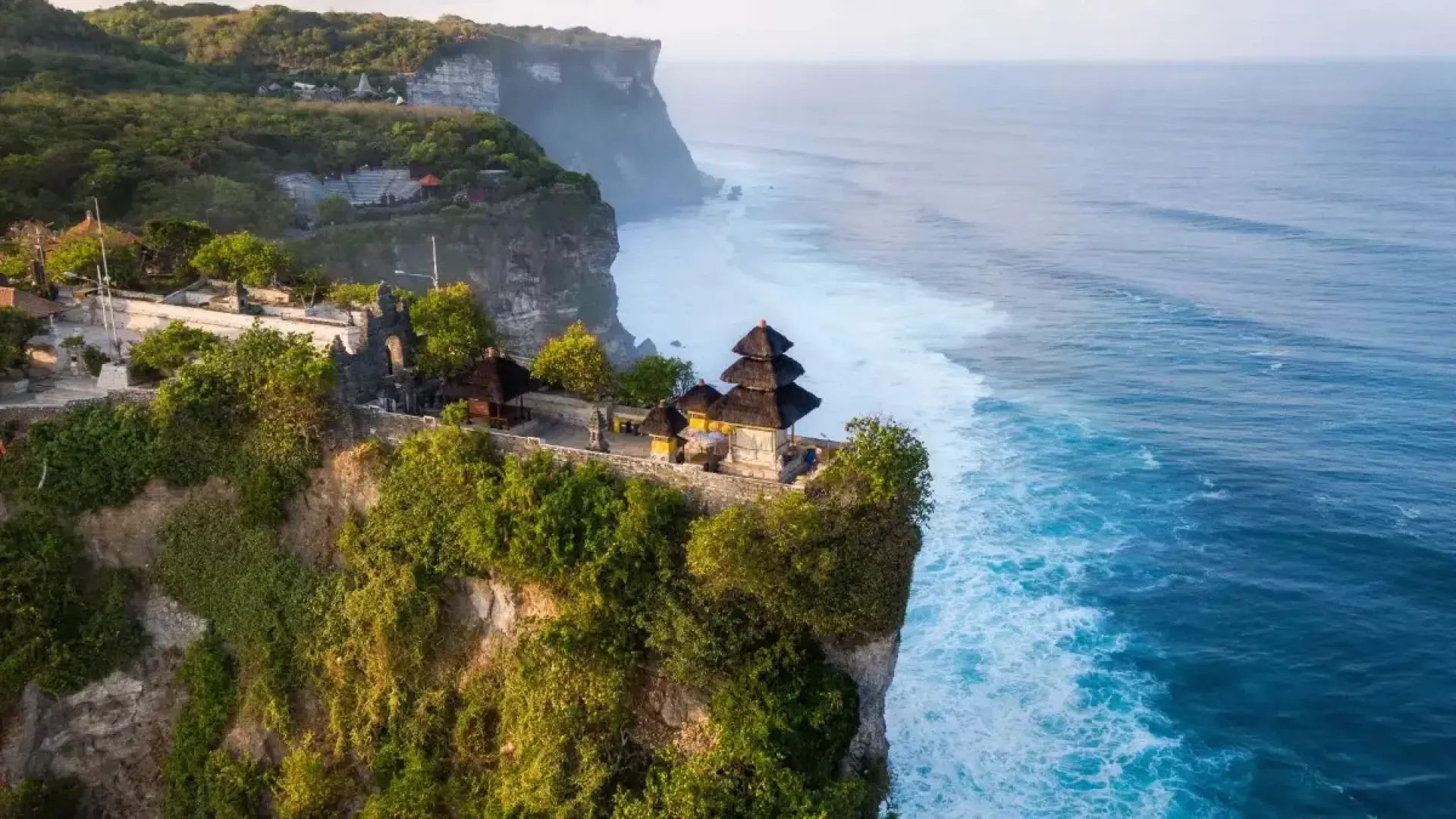
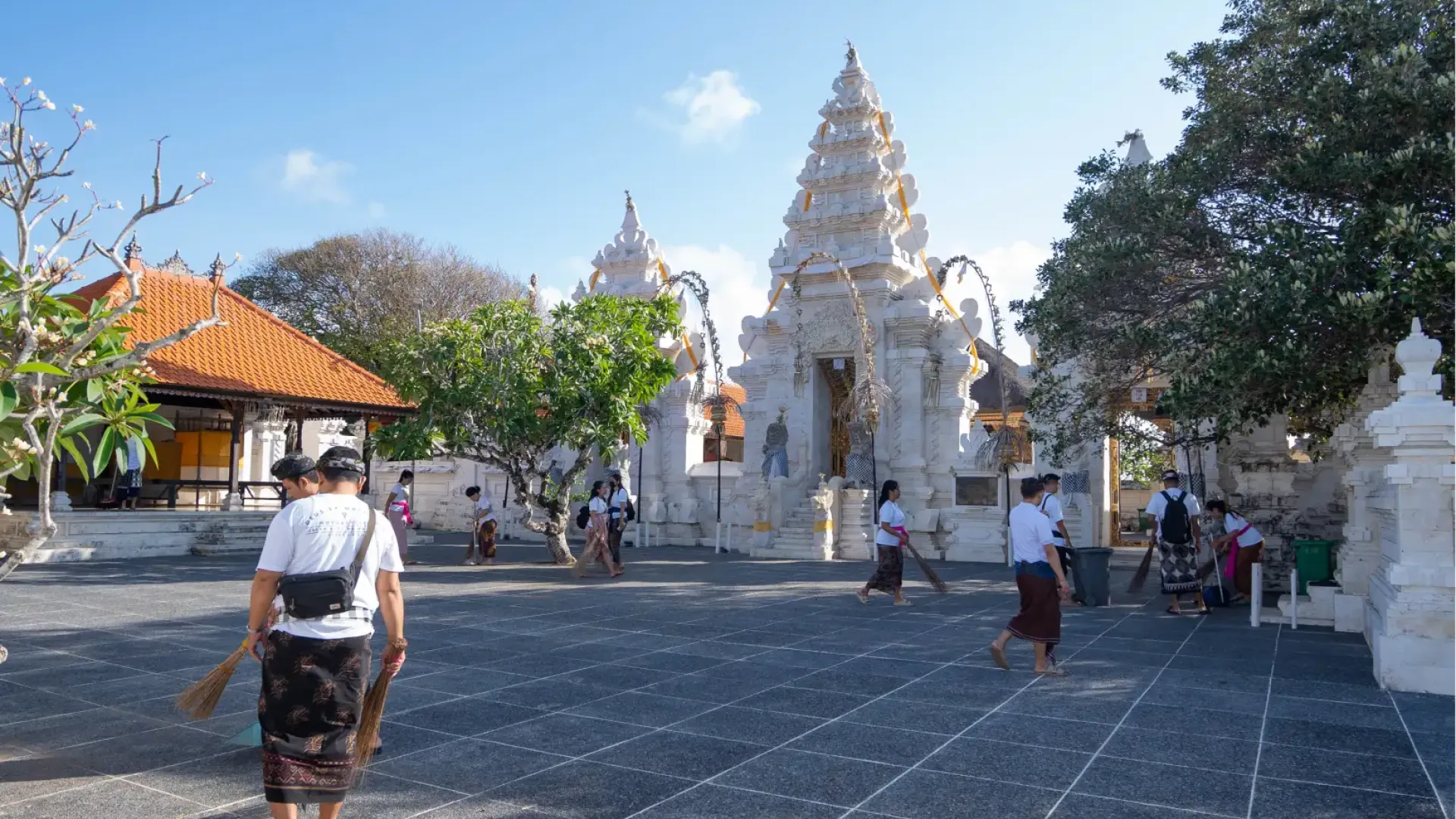
    For many international travelers, Uluwatu Temple is the moment Bali reveals its dramatic soul. Perched high above the Indian Ocean, this sacred site is often the first encounter with Bali’s spiritual landscape, where mythology, ritual, and raw nature meet. If this is your first time to Uluwatu Temple, consider this a calm, respectful guide written from the island itself, not just a checklist, but a story you step into.

    Experience

    The name Uluwatu comes from two Balinese words: ulu meaning edge and watu meaning rock. True to its name, the temple stands on the edge of a 70 meter cliff, projecting boldly into the sea. Local folklore tells that this rock was once part of Dewi Danu’s petrified barque, grounding the temple not only in stone but in story.

    While a modest shrine may have existed earlier, Uluwatu Temple took its present form in the 11th century through the influence of Empu Kuturan, a revered Javanese sage. Centuries later, in the 16th century, Dang Hyang Nirartha introduced the padmasana shrine here. It is believed he attained moksha at this very spot, an event known locally as ngeluhur, to ascend. From this moment, the temple earned its sacred epithet, Luhur, meaning elevated or exalted.

    Uluwatu is not only protected spiritually but also legally. Today, it is governed by both customary law and provincial regulations that define sacred zones around the temple. After years of legal tension between state planning and village tradition, a balanced zoning system was established. Uluwatu Temple is classified as a Type II sacred site, with a core zone, buffer zone, and utilization zone that protect its spiritual integrity while allowing community life to continue. For visitors, this means the cliffs, forests, and pathways you walk through are preserved with intention, not coincidence.

    Reaching Uluwatu Temple from Ngurah Rai International Airport takes around 50 minutes by car or about 42 minutes by motorcycle, depending on traffic. The journey itself is part of the transition, moving from urban Bali to limestone cliffs and open sea.

    One unforgettable part of the experience is the sunset. As daylight softens, the ocean below turns copper and gold. Just before dusk, the famous Kecak Fire Dance begins, performed on an open-air stage overlooking the sea. The chanting, the fire, and the horizon align in a way that feels both theatrical and deeply ritual.

    Reflection

    First-time visitors often hear warnings about the monkeys, and yes, they are clever, fast, and occasionally mischievous. Still, they are part of the temple’s ecosystem and sacred guardians of the forest. Understanding them is the key to staying safe.

    Know which monkeys are aggressive. Avoid those holding babies, eating, fighting, or showing bald patches. Remove jewelry before entering. Necklaces, bracelets, earrings, and even phones can attract attention. Do not bring snacks or drinks into the area. Avoid direct eye contact, which monkeys perceive as a challenge. If something is taken, never hit or chase them. Calmly ask temple staff for assistance.

    Dress respectfully. As one of Bali’s major temples, modest attire is required. Sarongs and sashes are provided free at the entrance, even if your clothing already covers your knees. Bare shoulders are generally accepted, but covering them shows deeper respect.

    Plan your visit with intention. Uluwatu Temple is open daily from 07:00 AM to 07:00 PM. Entrance fees for international visitors are IDR 50,000 for adults and IDR 30,000 for children. The ticket does not include parking or the Kecak Dance, which requires a separate purchase. Arriving before 5:00 PM allows you to explore calmly before sunset crowds gather.

    Follow the temple’s do’s and don’ts. Wear the sarong and sash, behave respectfully, secure your belongings, and stay within permitted areas. Do not feed the monkeys, use drones, bring food, or enter restricted sacred zones. Women on their period are traditionally not allowed to enter the temple area, a customary rule observed across Balinese Hindu temples.

    Facilities are thoughtfully provided. You will find clean public toilets, shaded gazebos, a wantilan pavilion, spacious parking, first aid and ambulances, wheelchair access, prayer rooms, warungs, souvenir shops, ATMs, and even EV charging stations.

    Conclusion

    Visiting Uluwatu Temple for the first time is not about ticking off a landmark. It is about standing at the edge of land and belief, feeling how Bali holds its sacred spaces with care and quiet strength. Walk slowly, dress respectfully, watch the sunset, and let the chants linger. Uluwatu is not only a place you see, it is a place that stays with you long after you leave the cliff

    Image Source: badungkab.go.id

  • Chasing Sunrise Above the Clouds: A Gentle Adventure with Mount Batur Trekking in Bali

    Chasing Sunrise Above the Clouds: A Gentle Adventure with Mount Batur Trekking in Bali

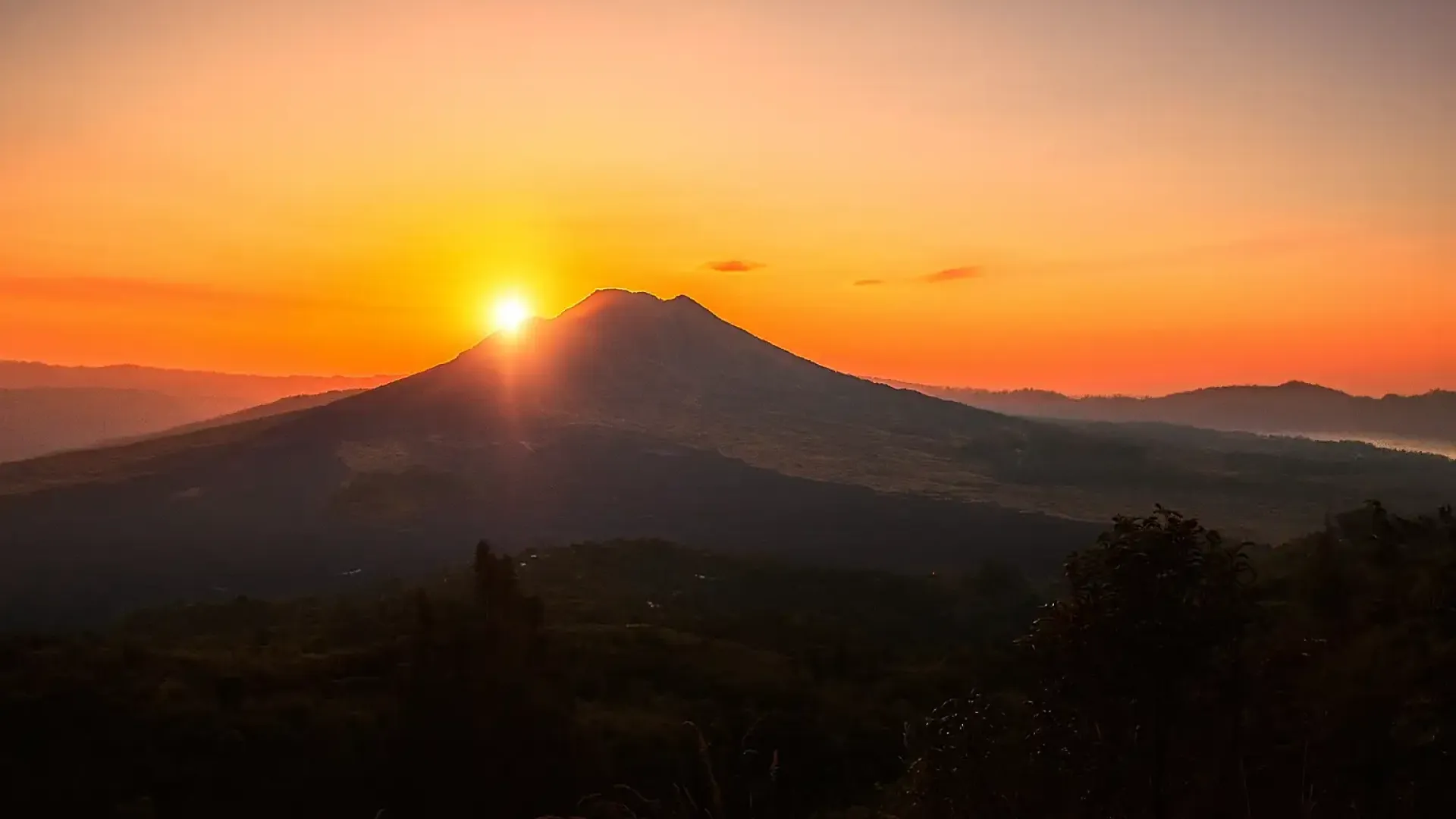
    Mount Batur Trekking is often the first mountain adventure many travelers experience in Bali, and for good reason. As a Balinese who grew up seeing this volcano dominate the Kintamani skyline, I have always felt that Mount Batur is not about conquering nature, but about walking alongside it. Rising 1,717 meters above sea level, Mount Batur is an active volcano shaped by powerful eruptions thousands of years ago. Those eruptions created a vast caldera with a serene lake at its heart, Lake Batur, considered one of the most beautiful volcanic calderas in the world.

    Despite its dramatic geological history, Mount Batur Trekking is known as a light and accessible hike. The trail is not extreme, the elevation is manageable, and the experience is suitable even for beginners who want to try mountain trekking for the first time in Bali.

    A First Step into Volcano Trekking in Bali

    Mount Batur is located in Toya Bungkah Village, Kintamani, Bangli Regency. From Ubud, the drive takes around 2 hours, while from Denpasar, Kuta, or Seminyak it usually takes about 3 to 4 hours. The journey itself already feels like an escape, as the air gets cooler and the landscape shifts from coastal bustle to misty highlands.

    Mount Batur Trekking is most famous for its sunrise hike. The climb usually starts between 3:30 and 4:00 AM, guided by local residents as required by the Toya Bungkah customary village. Walking in the dark with only a headlamp and the sound of gravel under your feet creates a quiet sense of anticipation. You are not racing the mountain, but slowly approaching dawn.

    The best time to do Mount Batur Trekking is during the dry season from April to October. During these months, the trail is safer and the chances of a clear sunrise are much higher. The rainy season, from November to March, often brings slippery paths and thick fog that can obscure views from the summit.

    Reaching the Summit and Watching the Sun Rise

    As you reach the top, the reward comes quietly. The horizon begins to glow, and suddenly Mount Agung, Mount Abang, and even Mount Rinjani in Lombok appear as dark silhouettes against the morning light. This sunrise moment is what makes Mount Batur Trekking one of the most popular nature experiences in Bali.

    Standing there, you can feel the mountain breathing. Steam still rises from the volcanic craters, reminding you that this is an active volcano. Some guides even show visitors how eggs can be boiled using natural volcanic heat, a simple yet unforgettable experience that connects you directly with the earth beneath your feet.

    The Beauty Beyond the Trail

    Mount Batur Trekking is not only about reaching the peak. Along the way and from the summit, the massive caldera unfolds below you. Lake Batur curves naturally inside it, calm and reflective in the early morning light. This view alone explains why the area has been recognized as part of a UNESCO Global Geopark.

    Photography lovers will find countless natural frames here. From sunrise silhouettes and soft morning mist to panoramic lake views, Mount Batur Trekking offers scenery that feels raw and untouched. Some operators also provide simple photo spots like wooden frames, hammocks, or swings on the slopes, perfect for travelers who want to capture the moment.

    Practical Tips Before Mount Batur Trekking

    Preparation is key to enjoying Mount Batur Trekking safely. Make sure your physical condition is good and your health is stable. While the hike is beginner-friendly, it still requires stamina and mental readiness.

    Choose the right season and check weather conditions before going. Wear comfortable, warm clothing as temperatures can be surprisingly cold before sunrise. Proper hiking shoes or sandals, a headlamp, a small backpack, and a hiking stick will make the climb easier. Bring enough water and light snacks to keep your energy up.

    Most importantly, always use a local guide. Besides being mandatory, local guides ensure safety and share insights about the mountain, its history, and its cultural significance.

    After the Trek: Relax and Reflect

    One of the simple pleasures after Mount Batur Trekking is soaking in natural hot springs at Toya Bungkah. Sitting in warm water while looking out at Lake Batur feels like a gentle reward after the early climb.

    You can also extend your journey by visiting Pura Ulun Danu Batur, one of the most important temples in Bali, or continue to Trunyan Village, known for its ancient Bali Aga traditions. Coffee lovers will enjoy nearby agrotourism spots where local Kintamani coffee, including civet coffee, is served with mountain views.

    Conclusion

    Mount Batur Trekking is not about technical difficulty or extreme adventure. It is about witnessing Bali from a quieter, higher perspective. For beginners, it offers confidence. For seasoned travelers, it offers reflection. And for me, as someone born and raised in Bali, Mount Batur remains a reminder that the island’s beauty often reveals itself to those willing to wake up early and walk patiently toward the light.

  • The Power of Peninsula Island Nusa Dua

    The Power of Peninsula Island Nusa Dua

    The Power of Peninsula Island: Free, Spacious, and Aesthetic

    Peninsula Island has become one of Nusa Dua’s most refreshing escapes. It proves that a place does not need elaborate features to feel uplifting. With wide open space, coastal scenery, and gentle light, the island offers a kind of beauty that feels honest and restorative. Here are the highlights that define its quiet power.

    Free Entrance Ticket Visitors only pay for parking, making Peninsula Island one of the most accessible coastal spots in the area.

    Calm White Sand Beach Safe for Children The shoreline is gentle and protected, allowing families to relax while children enjoy the shallow water and soft sand.

    Water Blow The Thrilling Sensation of the Ocean Waves The powerful burst of water against the limestone cliff adds a dramatic edge to the island’s calm landscape.

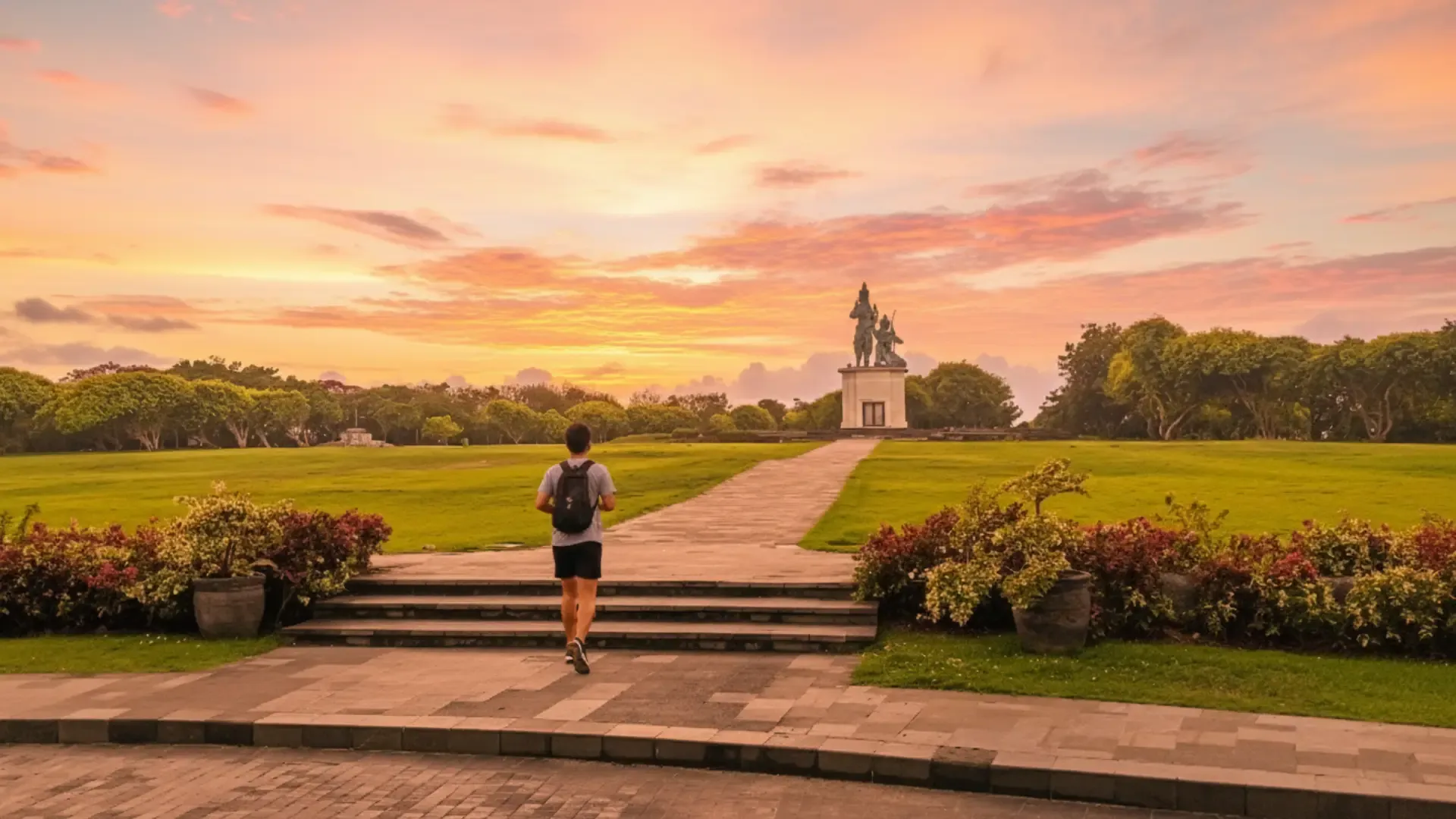
    Jogging Track with Stunning Ocean Vistas The coastal trail invites morning and afternoon joggers to enjoy fresh air and shifting ocean colors.

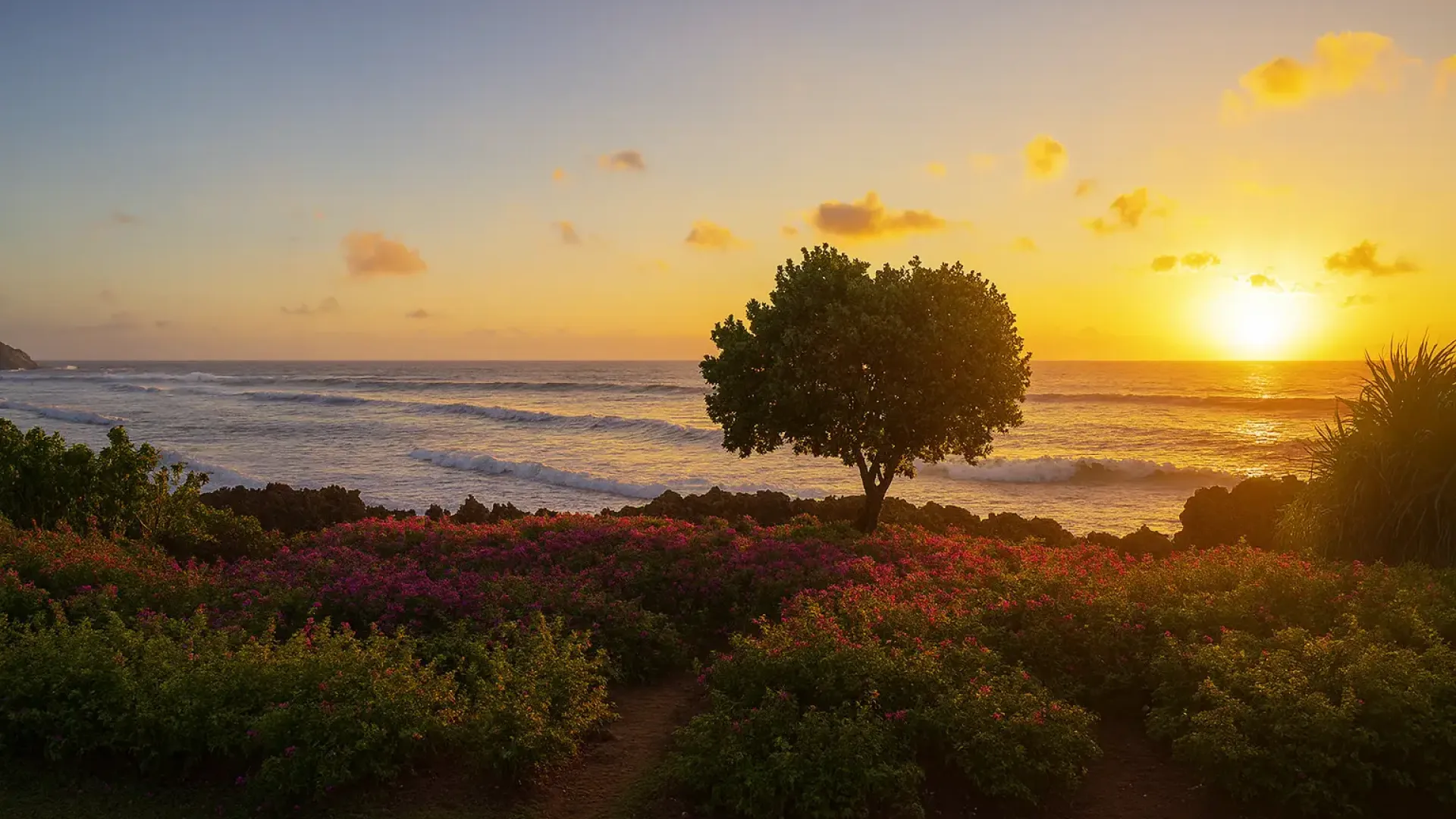
    The Best Sunrise Spot in Nusa Dua Mornings unfold slowly here, painting the horizon with soft gold and offering a peaceful start to the day.

    Peninsula Island stands as a reminder that healing moments often arise from simple elements. A quiet coastline, open lawn, and the generosity of space can create an experience that lingers far beyond the visit.

  • Peninsula Island The Green Oasis in Nusa Dua

    Peninsula Island The Green Oasis in Nusa Dua

    Peninsula Island: The Green Oasis Amidst an Exclusive Enclave

    Hidden within the polished ITDC Nusa Dua complex lies Peninsula Island, a quiet stretch of land that feels more like a coastal sanctuary than part of a luxury enclave. The contrast is captivating. One moment you pass five star resorts with marble lobbies and manicured gardens, and the next you arrive at an open green space that invites you to breathe deeper. Peninsula Island reveals itself as a rare pocket of nature where serenity stands at the center of the experience.

    The island’s accessibility sets the tone for its charm. Despite being surrounded by high end hotels, the entrance remains free and open to the public. The simplicity of stepping onto a perfectly trimmed lawn that rolls gently toward the ocean feels like a privilege shared with everyone. Shady trees sway with the coastal wind, while the Indian Ocean unfolds in shades of blue that deepen toward the horizon.

    The Water Blow stands as Peninsula Island’s most dramatic element. Here, the ocean roars against a rugged limestone cliff, sending sprays of water high into the air. Watching the waves rise and collapse is a reminder of how incredibly alive this coastline is. People gather at the viewpoint with a sense of anticipation, waiting for the sea to reveal its power. It is nature performing without script, and Peninsula Island provides the perfect stage.

    As I walked the trails surrounded by greenery and sea breeze, I felt that Peninsula Island holds a certain purity. It does not overwhelm the senses. Instead, it centers them. In an area defined by luxury, the island offers a different kind of richness, one shaped by open air, sound, and light. It teaches the value of quiet spaces and the importance of slowing down.

    Peninsula Island may be small, but its sense of place feels vast. It is a green oasis that reminds travelers why coastal landscapes continue to inspire reflection, grounding, and gratitude.

  • Discover the Hidden Beji for Melukat at Pura Geger Dalem Pemutih

    Discover the Hidden Beji for Melukat at Pura Geger Dalem Pemutih

    Hidden on the southern cliffs of Bali, overlooking the vast Indian Ocean, Pura Geger Dalem Pemutih stands as one of the island’s most spiritually charged coastal temples. Located in Peminge Village, Benoa, South Kuta, the temple is part of the revered Dang Kahyangan network, sacred sites closely tied to the spiritual history of Bali.

    Beyond its cliffside beauty and ancient shrines, the temple hides one of its most intriguing features: a beji, a natural spring used for melukat, Bali’s traditional purification ritual. This secluded beji, tucked among coral rocks, has transformed Pura Geger Dalem Pemutih into a complete spiritual landscape where prayer, history, and cleansing merge into one powerful experience.

    A Sacred Cliffside Temple with Strong Cosmic Alignment

    Perched on limestone cliffs facing the open sea, Pura Geger Dalem Pemutih is believed to form a spiritual axis with Pura Agung Besakih on Mount Agung to the north and Pura Penataran Ped in Nusa Penida to the east. Together, these three sites form a symbolic spiritual triangle, reinforcing the temple’s role in maintaining cosmic harmony throughout Bali.

    The temple’s elevated position at the very edge of the island strengthens its connection to the unseen world. Many Balinese believe that rituals performed here must follow strict timing, as the energies of the ocean and the temple are deeply intertwined.

    Ancient Legends: From Nirartha’s Journey to Babad Dalem Pemutih

    The origins of the temple remain wrapped in legend. One story links it to the sacred journey of Dang Hyang Nirartha (Dang Hyang Dwijendra), who is said to have meditated beneath a sawo kecik tree in this area before continuing toward Uluwatu. That ancient tree, considered a silent witness of his presence, is still preserved today.

    Another historical layer comes from the Babad Dalem Pemutih. It describes the arrival of Dalem Petak Jingga and his followers in 1652 Saka after a rebellion in the Gelgel Kingdom. Here, on the quiet shores of Geger, he performed deep meditation and received a divine revelation about his future. These overlapping narratives place the temple at the crossroads of Bali’s spiritual and political history.

    The Divine Seat of Dalem Segara

    The name “Dalem Pemutih” refers to the sacred seat of Ida Batara Dalem Segara or Ida Batara Dalem Pamutih, a divine manifestation symbolizing purity and clarity. In Balinese tradition, the color white represents truth, cleansing, and the power of Siwa–Iswara, making this temple an important place for rituals of purification, protection, and balance.

    A three-tiered meru tumpang telu stands on the east side of the temple, serving as the main shrine where Ida Batara is worshipped. Its simple yet commanding presence reflects the coastal character of this temple: functional, devotional, and deeply symbolic.

    Rituals That Must Never Be Delayed

    As a temple facing the open ocean, rituals at Pura Geger Dalem Pemutih are bound by strict timing. Local priests emphasize that major ceremonies cannot be moved, not even by a single day. The temple hosts cycles of rituals that vary from every 15 days to grand ceremonies held once every 100 years.

    This precision is believed to protect the island from imbalance or natural disturbances, acknowledging the unpredictable and powerful nature of the sea below.

    Sacred Structures Within the Temple Complex

    Several key shrines and structures are found within the temple’s utama mandala:

    • Padmasana, dedicated to the supreme God
    • Meru tumpang tiga, the sacred shrine of Ida Batara Dalem Pemutih
    • Gedong Pasadegan
    • Tugu Penyarikan
    • A second meru tumpang tiga for the lineage of Puri Satria
    • A shrine for Ida Batara Ratu Gde Panataran Dalem Ped from Nusa Penida

    Even with its modest layout, the temple holds layers of spiritual meaning deeply rooted in Balinese tradition.

    Piodalan: A Living Ritual Tradition

    The temple’s annual piodalan is held on Purnama Keenem Panglong Apisan, the day before the sixth full moon. The temple is cared for by Banjar Peminge and Banjar Sawangan, with pemangku priests conducting daily prayers to ensure the spiritual flame never goes out.

    The Hidden Beji: A Sacred Place for Melukat

    About 100 meters south of the main temple lies its most extraordinary feature: a hidden beji used for melukat, the Balinese ritual of spiritual cleansing.

    Situated between coral rocks and marked by yellow–white ceremonial umbrellas, the beji features shrines dedicated to Ganesha and Lingga Yoni, symbols of wisdom, fertility, and cosmic balance.

    A narrow passage leads down to a small, quiet beach. Here, a freshwater spring emerges from the rocks, but only when the tide is low. During high tide, especially in the morning, the spring disappears beneath the ocean.

    Because of this natural rhythm, the best time to perform melukat is:

    • late afternoon,
    • one or two days after Tilem (the dark moon),
    • when the tide has receded enough to reveal the sacred spring.

    Why This Temple Matters Today

    The beji completes Pura Geger Dalem Pemutih as a holistic spiritual complex, uniting shrines, ritual spaces, cosmic symbolism, and a natural source of purification. On days such as Kajeng KliwonPurnamaTilem, and Banyupinaruh, both locals and visitors come to the temple to pray and cleanse themselves.

    For travelers seeking an authentic spiritual experience, this temple offers an intimate glimpse into Bali’s living traditions, far beyond the typical tourist path.

  • The Ancient Height of Pura Puncak Penulisan

    The Ancient Height of Pura Puncak Penulisan

    Most travelers reach the temple via the main Kintamani road near Penelokan, which provides direct access to the caldera ridge and panoramic views of Mount Batur and Lake Batur.

    Perched at 1,745 meters above sea level in the quiet village of Sukawana, Kintamani, stands Pura Puncak Penulisan, one of the oldest and most historically significant temples in Bali. Surrounded by dense pine forests and often wrapped in a mystical fog that locals call “sayong”, this site offers an atmosphere unlike any other sacred place on the island.

    In recent decades, the tall TVRI transmission tower beside the temple has become a landmark that signals travelers they have reached the highest ridge of Sukawana. Yet long before modern structures appeared, Pura Puncak Penulisan was already revered as a royal sanctuary and a cradle of Balinese civilization.

    This article explores the history, archaeological heritage, cosmological role, and the unique environmental setting that shapes the identity of Pura Puncak Penulisan.

    Origins of Pura Puncak Penulisan: Tracing the Bali Kuna Period

    Historically, Pura Puncak Penulisan also known as Pura Tegeh Koripan dates back to the Bali Kuna era (8th–11th centuries CE). Archaeologists identify it as one of the earliest mountain temples constructed during the rule of the Warmadewa Dynasty, the first recorded royal family in Bali.

    Several inscriptions and artifacts found around the temple link the site to early Balinese kings such as:

    • Sri Kesari Warmadewa
    • Udayana Warmadewa
    • Gunapriya Dharmapatni

    The elevated location was not chosen randomly. In ancient Balinese cosmology, mountain peaks represented access points to the divine realm, places where rulers sought guidance and legitimized their spiritual authority. Puncak Penulisan, therefore, served as a ritual center for kings seeking divine sanction, a site where power and spirituality converged.

    Archaeological Significance: A Living Museum of Early Balinese Culture

    The temple complex contains an impressive collection of megalithic stones, ancient altars, and arca (statues) that showcase the transition from prehistoric belief systems to the classical Hindu-Balinese tradition.

    Key archaeological elements include:

    • Terraced stone stairways leading to the upper sanctums
    • Lingga-yoni symbols, representing the early Shaivite influence
    • Statues of deities resembling art styles from Java’s Mataram period
    • Megalithic platforms believed to be older than the temple structures themselves

    This makes Pura Puncak Penulisan an invaluable site for understanding how early Balinese religion evolved before the rise of the Majapahit influence in the 14th century.

    Temple Structure: Three Rising Courtyards Toward the Sky

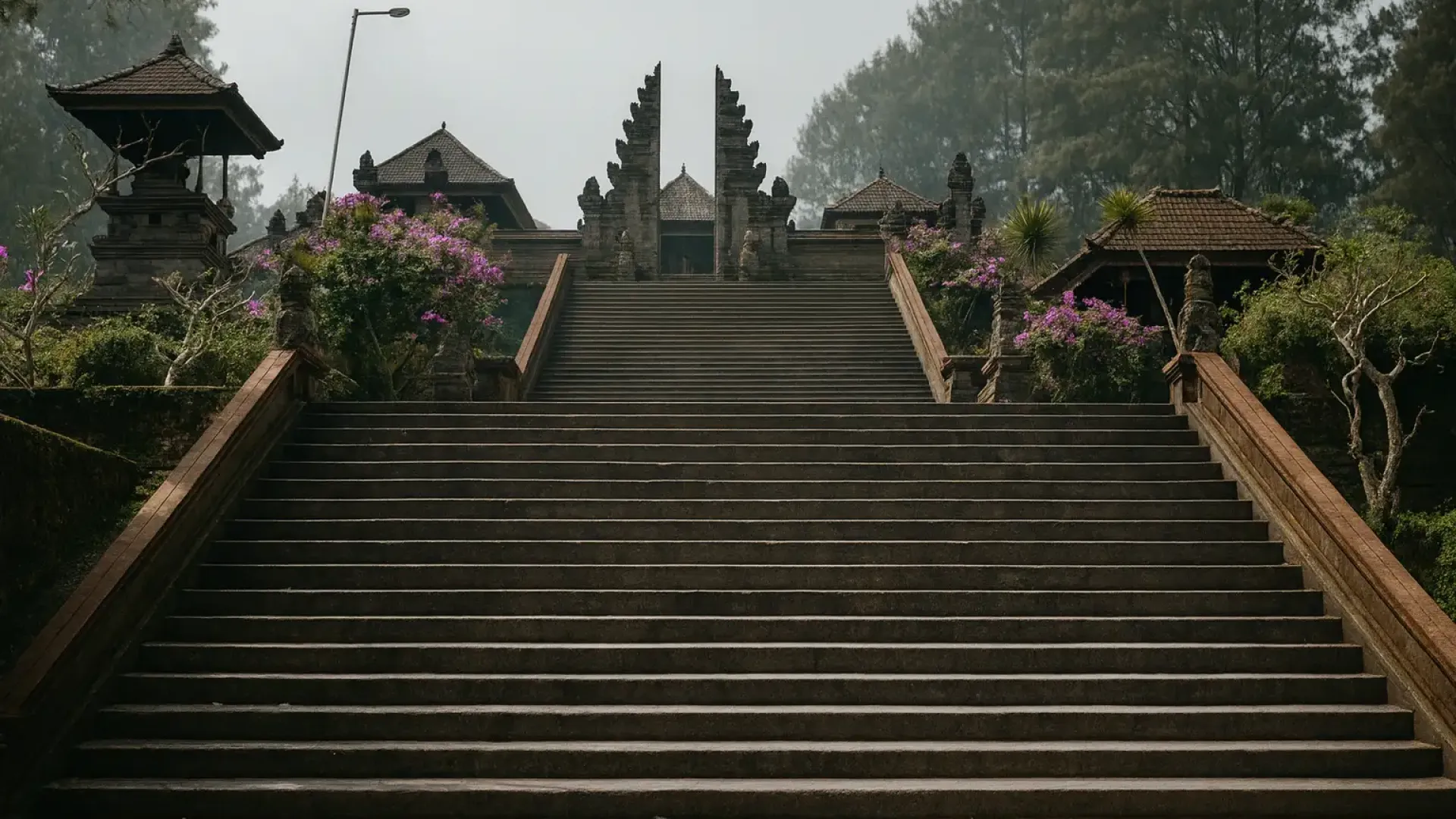
    The architecture of the temple follows the concept of ascending sacred space. Visitors climb a long, steep series of stone steps through three main courtyards:

    1. Jaba Pura (outer courtyard) – the transitional space
    2. Jaba Tengah (middle courtyard) – where ritual preparations take place
    3. Jeroan (inner sanctum) – the holiest area, home to ancient shrines and statues

    From the topmost pelinggih, the panorama extends across pine-covered hills, the caldera walls of Kintamani, and when the sky clears the distant line of the Bali Sea.

    Environmental Setting: Fog, Pine Forests, and the Chill of the Highlands

    One of the defining features of the temple is its unique climate. Its elevation and orientation cause the area to be frequently swept by thick fog, especially in the early morning and late afternoon.

    Locals refer to this shifting blanket of mist as “sayong” a natural phenomenon that adds a mystical and almost ancient ambiance to the temple.

    The surrounding landscape is dominated by towering pine forests, a vegetation type uncommon in many other regions of Bali. These forests create a serene, cool microclimate and provide habitat for birds, butterflies, and other highland wildlife.

    The combination of pine resin aromacold mountain air, and rolling sayong fog makes the temple feel like a sacred outpost hidden between eras.

    Pura Puncak Penulisan in Balinese Spiritual Geography

    In traditional Balinese cosmology, the temple is considered a part of the “Catur Loka Pala”, a network of mountain temples that guard the island’s spiritual balance. Its strategic position on the ridge connecting Mount Batur and Mount Catur symbolizes its role as a northern spiritual sentinel.

    Many Balinese families, especially from the Pasek lineages, perform pilgrimage to this temple as part of their ancestral obligations. Certain royal rituals were historically carried out here as well, linking the site to the spiritual legitimacy of rulers.

    Access, Landmarks, and Preservation

    Today, Pura Puncak Penulisan remains less crowded than other famous temples partly due to its steep climb and remote location. Beside the temple compound stands the TVRI tower, a contemporary marker that contrasts with the ancient stone structures.

    The site is maintained by the local community of Sukawana and protected as a historical heritage area due to its archaeological value. Conservation efforts focus on stabilizing stone structures and preventing erosion caused by mountain humidity and thick fog.

    Conclusion: A Sacred Summit Holding the Memory of Bali’s Beginnings

    Pura Puncak Penulisan is more than a highland temple—it is a living chronicle of Bali’s earliest spiritual history. Its ancient stones tell the story of early kings, shifting belief systems, and the island’s connection between humanity and the mountains.

    Wrapped in the quiet presence of pine forests, brushed by the mystical sayong fog, and standing tall above the modern landscape of Kintamani, the temple holds the memory of Bali’s beginnings. For historians, pilgrims, and travelers seeking authenticity, Pura Puncak Penulisan offers a rare window into a time when Bali’s sacred traditions were first taking shape.